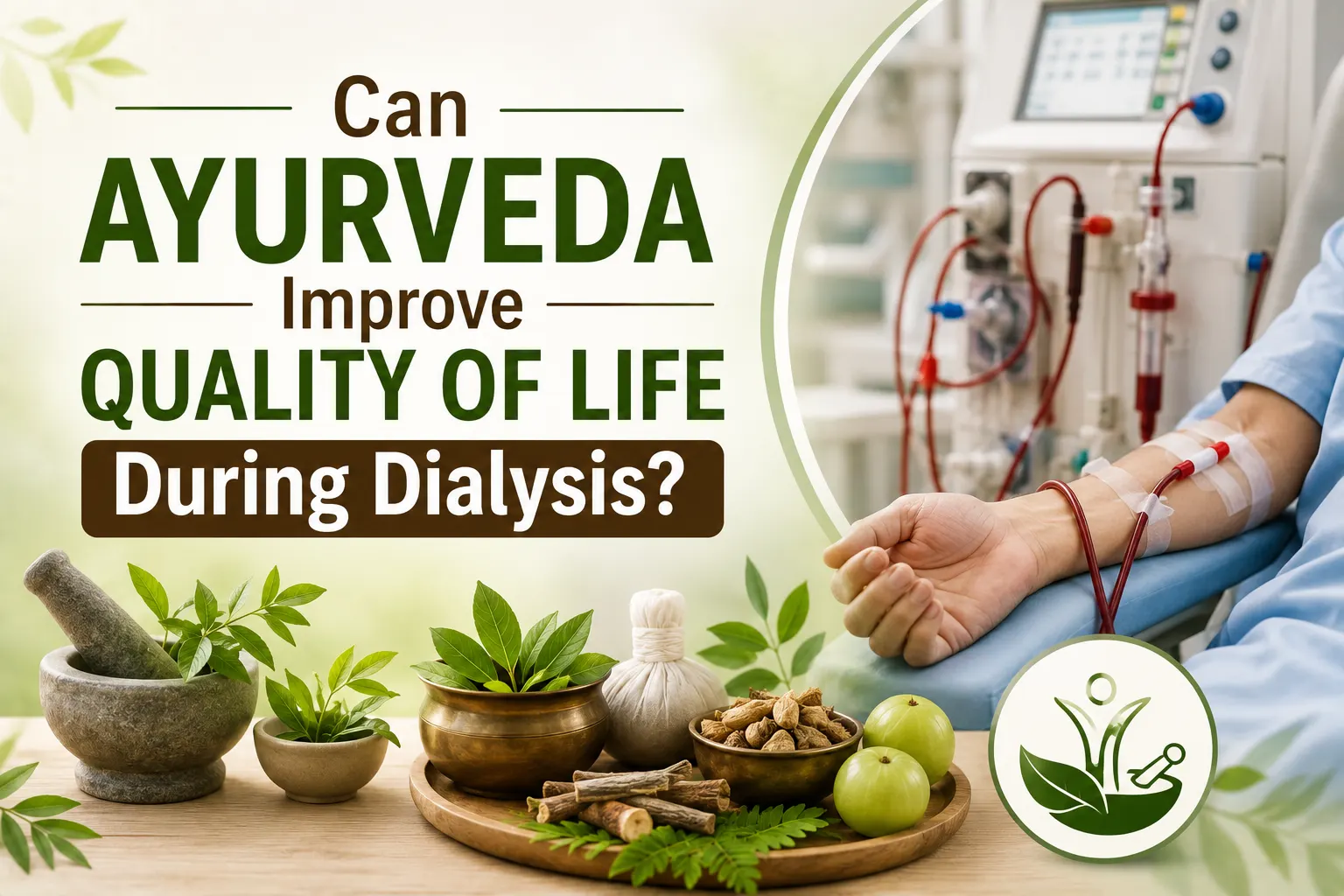

Short answer: yeah, it genuinely can help you feel more human on the days between dialysis sessions. Longer answer: it's not going to replace your machine, so if anyone tells you that, walk away, slowly, and maybe block their number.
I've spent time around dialysis units (through family, not choice; nobody chooses this), and here's the thing nobody warns you about going in: the disease is one battle, but the fatigue, the food rules, the itchy skin, the 3 am insomnia; that's a whole second battle you weren't prepared for. This is exactly the gap where Ayurveda for dialysis patients tends to step in. Not as the hero. More like the friend who shows up with soup when you're too tired to cook.
The Part Dialysis Doesn't Fix
Dialysis does one job really, really well; it filters your blood when your kidneys have clocked out. That's non-negotiable; that's the machine's whole personality, and thank God for it.
But here's what it doesn't do: it doesn't fix your appetite. It doesn't fix your sleep. It doesn't make you feel less like a wrung-out towel by Thursday. A 2025 study in the Journal of Natural Remedies looked at hemodialysis patients and found something that honestly matched everything I'd seen firsthand; their physical and mental quality-of-life scores were dragging way lower than their "kidney disease" scores alone. Translation: it's not just the kidneys that suffer. It's the whole person. That's where improving quality of life in dialysis patients becomes its own separate project, and that's the project Ayurveda quietly works on.
Okay, So What Does Ayurveda Actually Do Here?
Nothing dramatic, and that's kind of the point. It's not chasing a cure. It's chasing the boring-but-important stuff: digestion, energy, sleep, appetite, the will to eat breakfast.
A few things that actually come up a lot in Ayurvedic management of chronic kidney disease:
-
Diet tweaks (Pathya-Apathya): Old-school Ayurvedic food guidance that, weirdly, lines up quite closely with what renal diets already recommend. Coincidence? Probably not.
-
Rasayana herbs like Punarnava, Gokshura, and Shilajit; used for their antioxidant and general "let's get some life back into you" effect. A 2025 review in AYUSHDHARA on Ayurvedic perspectives on CKD mentioned clinical observations of better digestion, vitality, and quality of life with these.
-
Yoga and Pranayama; basically free therapy that you can do in a chair if you're too wiped out to stand.
-
Panchakarma detox therapies; used carefully, and only with proper supervision, because this is not a "try it at home" situation.
There's a case report in the Journal of Ayurveda and Integrated Medical Sciences (2025) about a CKD patient who went through Panchakarma along with personalized Ayurvedic formulas and came out reporting real, tangible improvement in symptoms and day-to-day quality of life. Not a miracle. Just... better. Which, when you're exhausted all the time, is a big deal.
Now, The Honest Bit
Here's what nobody's marketing team wants to admit: most dialysis patients don't actually know much about Ayurveda's role here at all. That same Journal of Natural Remedies study flagged low awareness of Ayush systems among CKD patients on dialysis and basically said: look, people need proper education on this, not vague WhatsApp forwards from a cousin. Fair point.
Ayurveda vs. Dialysis: Who Does What
|
Job |
Modern Dialysis |
Ayurveda (the sidekick, not the star) |
|
Actually removes toxins from blood |
Yep, its entire job |
Nope, not touching this one |
|
Helps with appetite and digestion |
Rarely its strong suit |
Often where it shines |
|
Helps you sleep at night |
Not really involved |
Yoga, herbs, routine; yes |
|
Saves your life in an emergency |
100%, no substitute |
Zero, and it never pretends otherwise |
|
Needs a doctor watching over it |
Obviously |
Also yes, always, no exceptions |
Key Takeaways
-
Ayurveda and dialysis aren't rivals; one keeps you alive, the other can help you feel less like a ghost of yourself.
-
Quality-of-life scores in CKD patients often dip in the physical and mental areas specifically, not just "kidney" numbers.
-
Herbs like Punarnava, Gokshura, and Shilajit show up often in Ayurvedic kidney care discussions, always under supervision.
-
Yoga and Pranayama are about as low-risk as it gets, and worth bringing up with your care team.
-
Awareness of Ayush systems for CKD is still pretty low; talk to an actual qualified Ayurvedic doctor, not a forwarded message.
-
Never, under any circumstance, skip or delay dialysis because of Ayurvedic treatment. That's not the deal here.
Wrapping This Up
Dialysis keeps the lights on. Ayurveda just makes the house a little more livable while you're in it. Neither one needs to compete with the other, and honestly, the best results seem to happen when your nephrologist and an Ayurvedic practitioner are actually talking to each other instead of you playing messenger between two camps that don't know the other exists. It's less "pick a team" and more "build a bench."
FAQs
Can Ayurveda cure kidney failure or replace dialysis?
No; it can make daily life more bearable alongside dialysis, but it's not a substitute for it.
Are Ayurvedic herbs safe to take during dialysis?
Only with a doctor's supervision, since some herbs can mess with kidney function or clash with medications.
Does Ayurveda actually help with dialysis fatigue?
A lot of patients report better appetite and energy with Ayurvedic diet support, though it varies from person to person.
Is yoga realistic for someone on dialysis?
Gentle yoga and breathing exercises are usually fine and genuinely help with sleep and stress.
Can I combine Ayurveda with my regular nephrology treatment?
Yes, as long as both your nephrologist and your Ayurvedic doctor know exactly what the other is doing.
Disclaimer: This blog is meant for general reading, not medical advice. Dialysis and CKD need proper medical supervision, always. Please talk to your nephrologist and a qualified Ayurvedic practitioner before changing anything about your treatment.