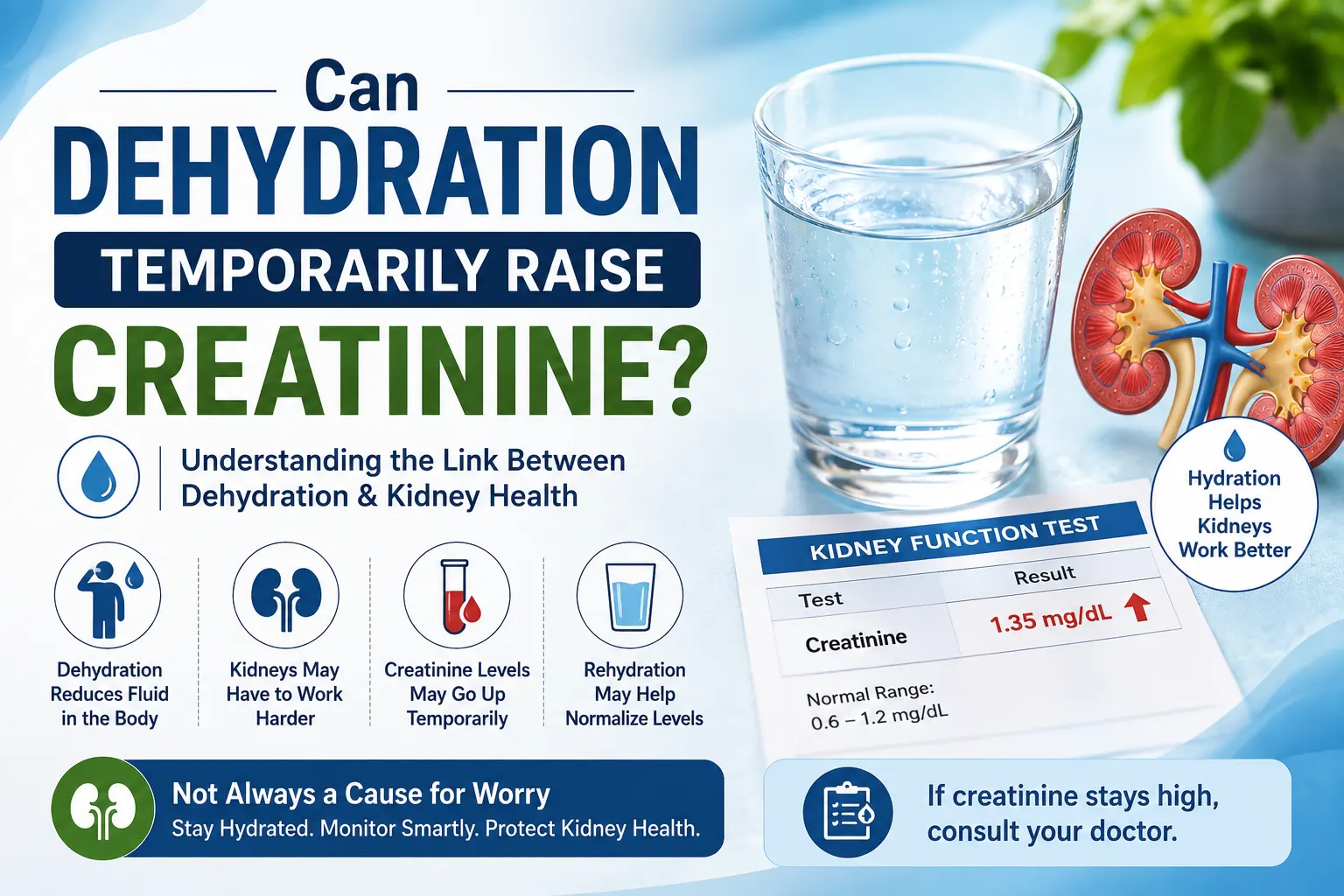

Short answer: yeah, it can. Go drink some water, then come back and read the rest of this.
I say that half-jokingly, but I mean it. If you got a lab report back with a slightly high creatinine number on it and your brain immediately jumped to "oh no, my kidneys are failing," take a breath. Nine times out of ten, this is your body waving a little flag that says "hey, I'm thirsty," not a five-alarm organ emergency. Let me walk you through why that number moves around, what actual researchers have found when they've poked at this, and, more importantly, when a high reading is worth an actual phone call to your doctor instead of a Google spiral at 1am.
Okay, But What Is Creatinine Even
Quick refresher, no textbook voice, promise. Your muscles produce a waste product called creatinine when they break down creatine (same word you've seen on that tub of powder in your friend's gym bag). Your kidneys' whole job here is to grab that waste out of your blood and flush it out through urine. Normal kidney function, normal creatinine number. Simple.
But the second something interferes with how well your kidneys are filtering; even for a few hours; creatinine starts piling up in your bloodstream. And honestly? Not drinking enough water is one of the most common, most boring reasons that happens.
📞 Get a Kidney Health Consultation – Call Now!
Why Skipping Water Messes With This Number
Here's the mental image I use: your kidneys are like a strainer trying to catch pasta, except the strainer needs a steady stream of water pushing through it to actually work. Cut the water flow way down, and stuff starts backing up.
That's basically dehydration in a nutshell. Your blood volume drops when you're not drinking enough, and your body; trying to protect your brain and heart first; pulls blood away from "less important" places. Kidneys included. Less blood moving through them means slower filtering, which means creatinine hangs around longer than it should.
There's also a second thing happening at the same time: your blood itself gets more concentrated. Same amount of creatinine, less water to dilute it in, so the number on paper looks higher than it "really" is in a hydrated version of you. Doctors call this hemoconcentration, which sounds fancy but really just means "less water in the mix."
And here's the part that should actually calm you down: none of this is your kidney tissue getting damaged. It's what's called a pre-renal change; meaning the issue is happening on the way to the kidneys, not inside them. Drink some water, wait a bit, retest, and the number usually drops right back where it belongs.
What Actual Studies Found (Not Just My Opinion)
I'm not just making this up to sound reassuring; there's real research backing it.
-
Researchers pulled data from the U.S. National Surgical Quality Improvement Program (NSQIP) covering over half a million hip and knee replacement patients. They used the BUN/Creatinine ratio to flag dehydration before surgery, and nearly half the patients showed signs of it; which was tied to more short-term complications afterward. So this isn't some rare fluke. It's showing up in huge datasets.
-
Yale School of Medicine nephrologist Dr. Sherry Mansour looked at Boston Marathon runners and found a big chunk of them had signs of acute kidney injury right after crossing the finish line; mostly from dehydration-driven creatinine changes. The good news, most of it cleared up within about 48 hours once runners rehydrated and rested.
-
A study in Frontiers in Sports and Active Living looked at ultramarathon runners and found that when dehydration and NSAID painkillers were kept out of the picture, running an absurd distance by itself didn't seem to permanently mess with kidney filtration. Translation: it's usually the lack of water (not the running) doing the damage to your lab numbers.
-
The clinical rulebook doctors actually use for diagnosing kidney injury; the KDIGO guideline; looks at creatinine changes alongside urine output together, precisely because a single creatinine blip with nothing else going on often just means someone needs a glass of water, not a nephrology referral.
So yeah, this isn't just something your hydration-obsessed coworker made up. It's genuinely well documented.
Dehydration Bump vs. "Okay Maybe Call a Doctor" Bump
|
Probably Just Dehydration |
Probably Worth a Call |
|
You forgot to drink water because life happened (we've all been there) |
Creatinine's still high even after days of actually hydrating |
|
Number drops back to normal after fluids and a retest |
Swelling around your eyes, hands, or feet |
|
Dark yellow pee, dry mouth, mild headache |
Blood or foam/protein in your urine |
|
You just ran, did hot yoga, or sat in a sauna |
Ongoing fatigue, nausea, or weird changes in how much you're peeing |
|
Just one odd reading, nothing else feels off |
Family history of kidney disease or diabetes plus a high number |
📞 Get a Kidney Health Consultation – Call Now!
How to Not Get Spooked By This In the First Place
-
Drink water like a normal, functioning human the day before any blood test; not a liter chugged in the parking lot beforehand
-
Skip the intense workout, sauna, or a few too many drinks right before kidney function tests
-
Keep an eye on your pee color as a lazy hydration check; pale yellow, good; apple juice, drink up
-
Maybe don't eat a giant steak dinner right before testing either, since a big protein hit can nudge creatinine up too
-
If your number does come back high, just ask about a recheck after hydrating properly before you start googling worst-case scenarios
Key Takeaways
-
Dehydration can temporarily raise creatinine by cutting blood flow to the kidneys and concentrating your blood
-
It's usually a pre-renal, totally reversible blip; not actual kidney damage
-
Marathon runner studies and large surgical datasets both back this up
-
One weird high number isn't a diagnosis on its own; look at symptoms and retest before panicking
-
When unsure, hydrate and retest, but don't blow off repeat high readings or other symptoms
📞 Get a Kidney Health Consultation – Call Now!
FAQs
Can drinking water lower creatinine levels?
Yes; if dehydration caused the spike, getting properly hydrated usually brings it back down within a day or two.
How much water should I drink before a creatinine test?
Just stay normally hydrated the day before instead of trying to chug a ton right before your appointment.
Is a creatinine level of 1.3 from dehydration serious?
Not usually on its own; get rehydrated and retested to see if it settles before worrying further.
Does exercise raise creatinine along with dehydration?
Yep, hard exercise plus fluid loss can bump it up temporarily, and it typically settles within a day or two of rest and water.
Should I panic over one high creatinine reading?
Nah; a single odd reading with no other symptoms is often just dehydration talking, so a simple retest is usually the right move.
Disclaimer: This article is for general information only, not medical advice, and it isn't a substitute for talking to an actual doctor. If you're worried about your kidney function, creatinine levels, or hydration, please check in with a healthcare professional for proper testing and guidance.