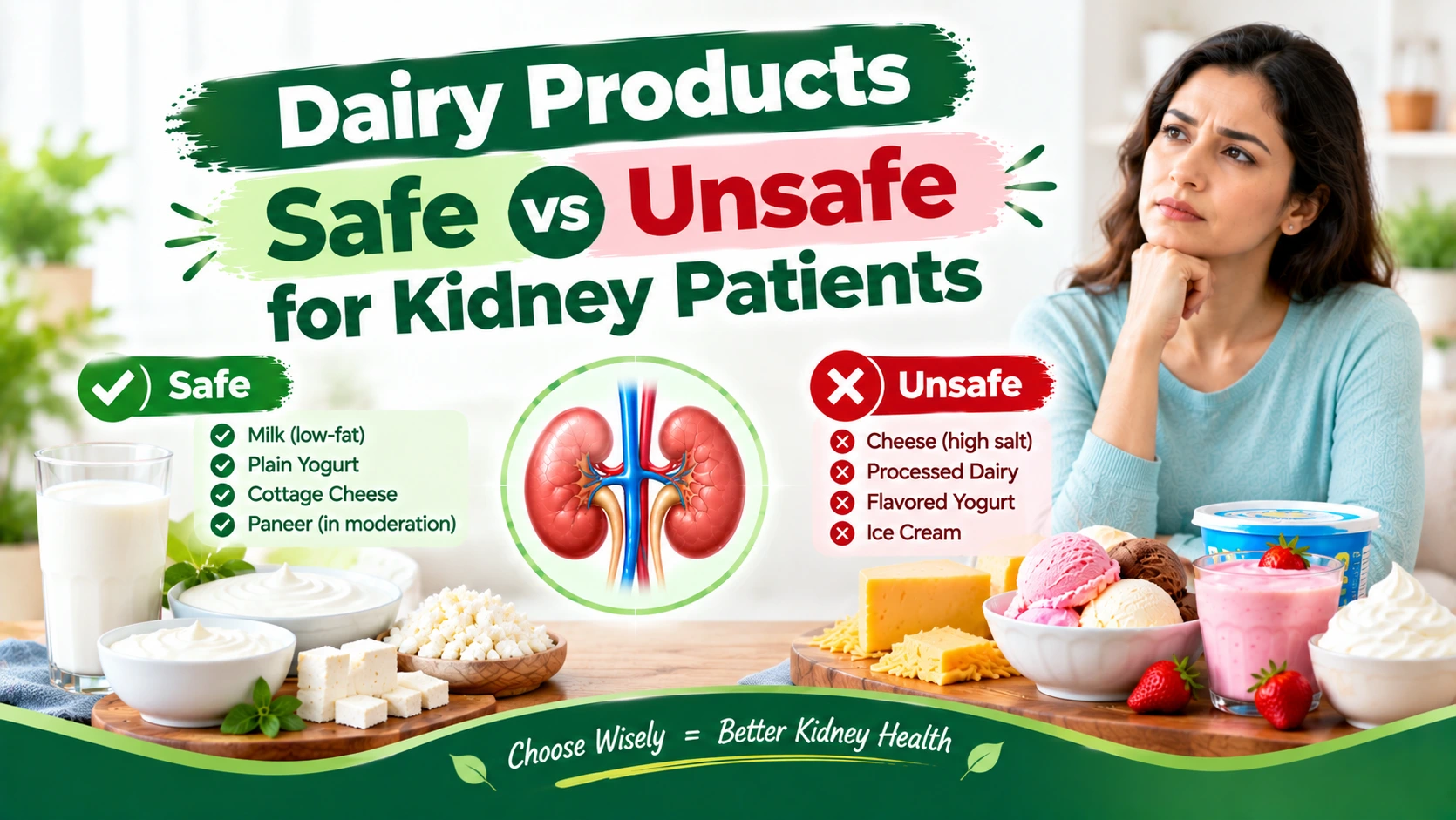

Are dairy products for kidney patients safe? Sometimes, yes, but only in small, planned portions, because milk, cheese, and curd pack a lot of phosphorus and potassium that tired filters struggle to clear. Where you land on the safe-to-unsafe scale depends on your stage of kidney disease, your latest blood reports, and your nephrologist's advice, so think of this blog as a chat over chai and not a prescription.
Why Does Dairy Get the Side-Eye in a Renal Diet?
Milk is a bit like that friend who is great at parties but leaves a mess for someone else to clean up. Here, the someone else is your renal system.
Healthy nephrons (the tiny filtering units in your body) flush out extra minerals without breaking a sweat. When they're damaged, as in chronic kidney disease (CKD), those minerals start piling up in the blood. Dairy brings four troublemakers to the table:
- Phosphorus: Too much can weaken bones and harden blood vessels over time.
- Potassium: Too much can mess with your heart rhythm, which is no joke.
- Protein: Useful in the right amount, but a heavy load can tire out already stressed filters.
- Sodium: Hiding in cheese, paneer brine and salted buttermilk.
What Do the Studies Say?
I know, I know, you came for paneer advice, not a research seminar. But a few named studies are worth knowing:
- Noori et al., 2010 (Clinical Journal of the American Society of Nephrology): In a group of dialysis patients, a higher phosphorus-to-protein ratio in the diet was linked with a higher risk of death. Translation: it's not just how much protein you eat; it's what phosphorus comes along for the ride.
- Cupisti & Kalantar-Zadeh, 2013 (Seminars in Nephrology): This review explains that phosphate additives in packaged foods are absorbed far better (roughly 90%) than natural phosphorus in food (about 40 to 60%). So processed cheese slices are a bigger villain than a spoonful of fresh curd.
- Moe et al., 2011 (Clinical Journal of the American Society of Nephrology): A small crossover study found that people with CKD who ate vegetarian protein had lower phosphorus levels than when they ate meat-based protein, even at the same protein amount.
- Noori et al., 2010 (American Journal of Kidney Diseases): Higher dietary potassium intake was linked to higher mortality in long-term dialysis patients.
- KDOQI Clinical Practice Guideline for Nutrition in CKD, 2020: It advises watching phosphorus intake, preferring plant-based sources where possible, and avoiding phosphate additives.
The studies aren't saying "never touch dairy." They're saying "know your numbers and read your labels."
Dairy Products for Kidney Patients: The Safer List
These are usually easier on the system when portions are small. "Usually" is doing heavy lifting here, so check with your doctor or an Ayurvedic expert like Dr. Puneet Dhawan.
- Ghee (small amounts): It's mostly fat, with very little protein, phosphorus, or potassium. It's kind to your minerals but not to your heart, so a teaspoon, not a swimming pool.
- Butter (unsalted): Same story. Low in minerals, high in enthusiasm.
- Cream cheese and cream (small portions): Lower in phosphorus than hard cheeses, but they're not health food either.
- Fresh paneer (a small piece): Moderate protein and phosphorus. Fine for some stages, off the menu for others.
- Homemade curd or unsalted buttermilk (a small katori): Only if your potassium levels allow it.
The Unsafe List: Handle With Care
- Processed cheese slices and spreads: Loaded with phosphate additives, the sneakiest phosphorus source on the block.
- Aged and hard cheeses (parmesan, cheddar): Concentrated phosphorus, protein and sodium in one delicious package.
- Large glasses of milk: A big glass of milk can bring a lot of potassium and phosphorus together.
- Milkshakes, flavoured yogurts and packaged lassi: Often carry added phosphates, sugar and potassium-rich fruit.
- Milk powder, condensed milk and dessert mixes: Concentrated minerals plus additives. Your barfi habit may need a chat.
- Salted, packaged buttermilk: Sodium sneaks in quietly.
Quick Comparison: The Dairy Report Card
|
Dairy Item |
Verdict |
What It's Really Thinking |
|
Ghee (1 tsp) |
Usually okay |
"I'm basically minerals-free, but don't push it." |
|
Fresh paneer (small) |
Sometimes okay |
"Fine in a tiny portion, dramatic in a big one." |
|
Curd (small katori) |
Depends on potassium |
"Let your blood report decide." |
|
Regular milk (large glass) |
Limit |
"Two sips and I've stacked up minerals." |
|
Processed cheese slice |
Avoid |
"Additive-phosphorus, reporting for duty." |
|
Flavoured milkshake |
Avoid |
"I look fun. I'm a mineral bomb." |
Portion Sense: How to Enjoy Dairy Without Drama
You don't need a lab coat to do this. A few small habits go a long way:
- Read the label. Any ingredient with "phos" in the name (like sodium phosphate) is a red flag.
- Measure, don't eyeball. Half a cup of milk in your tea is not the same as "just a little."
- Ask about leaching and swaps. Your renal dietitian may suggest lower-phosphorus alternatives, and they'll know which plant-based drinks suit your reports (many are fortified with phosphorus or potassium, so check).
- Track your labs. If your potassium or phosphorus is running high, dairy is often the first thing to trim.
- Watch the "hidden dairy." Breads, soups, sauces, and desserts sometimes sneak milk in.
Water, Ayurveda and Everything People Ask Me at Parties
Diet questions never travel alone. Right after dairy, people ask how much water kidney patients should drink. Honestly, there is no one-size-fits-all number. It depends on your stage, urine output, and whether you have swelling or are on dialysis, so your nephrologist sets the limit.
Then comes the kidney disease Ayurvedic treatment question. A lot of people look into Ayurvedic kidney disease treatment for diet and lifestyle guidance.
If you've googled the natural treatment for high creatinine at 2 a.m., you're not alone. But herbs are still substances that your body must process. Some can interact with medicines, and some are rich in potassium or oxalates. Please don't start any herb on your own, and always tell your nephrologist what you're taking.
Conclusion
So, are dairy products for kidney patients safe or unsafe? It's a "depends" answer, and I know that's annoying. A spoonful of ghee and a big glass of milk are not the same thing, and neither are fresh curd and a processed cheese slice. Your stage, your labs and your portion sizes matter far more than any one food's reputation.
Get your numbers checked, ask your care team for a personalised plan, and keep your sense of humor handy. You can still enjoy food without treating every meal like a courtroom drama and can also take refuge in the best herbs for lowering creatinine in Ayurveda.
Key Takeaways
- Dairy isn't automatically banned, but it's rich in phosphorus, potassium and protein, which can build up in CKD.
- Phosphate additives in processed cheese and packaged drinks are absorbed much more than natural phosphorus.
- Ghee, butter and small portions of fresh paneer or curd are often better tolerated.
- Large glasses of milk, processed cheese and flavoured dairy drinks are usually best avoided.
- Fluid limits, herbs and Ayurvedic support should always be discussed with your nephrologist first.
- Your blood reports decide the plan, not the internet.
📩 Ask a Kidney Expert (Free 10-Min Consultation)
Frequently Asked Questions
Can kidney patients drink milk?
Usually only in small, measured amounts, since milk carries phosphorus and potassium your body may struggle to clear.
Is paneer safe in kidney disease?
A small portion of fresh paneer may work for some stages, but ask your dietitian before making it a habit.
Is ghee okay for kidney patients?
In tiny amounts, yes, since it has very little phosphorus or potassium, but it's still fat, so go easy.
Which cheese is worst for kidney patients?
Processed cheese slices and spreads win that award because of their phosphate additives.
Are plant-based milks better for kidney patients?
Some can be, but many are fortified with phosphorus or potassium, so read the label first.
Disclaimer
This blog is for general awareness only and isn't medical advice. Every person with kidney disease has different needs based on their stage, medicines and lab reports. Please consult your nephrologist or a qualified renal dietitian before changing your diet, fluids, supplements, or herbal treatments.