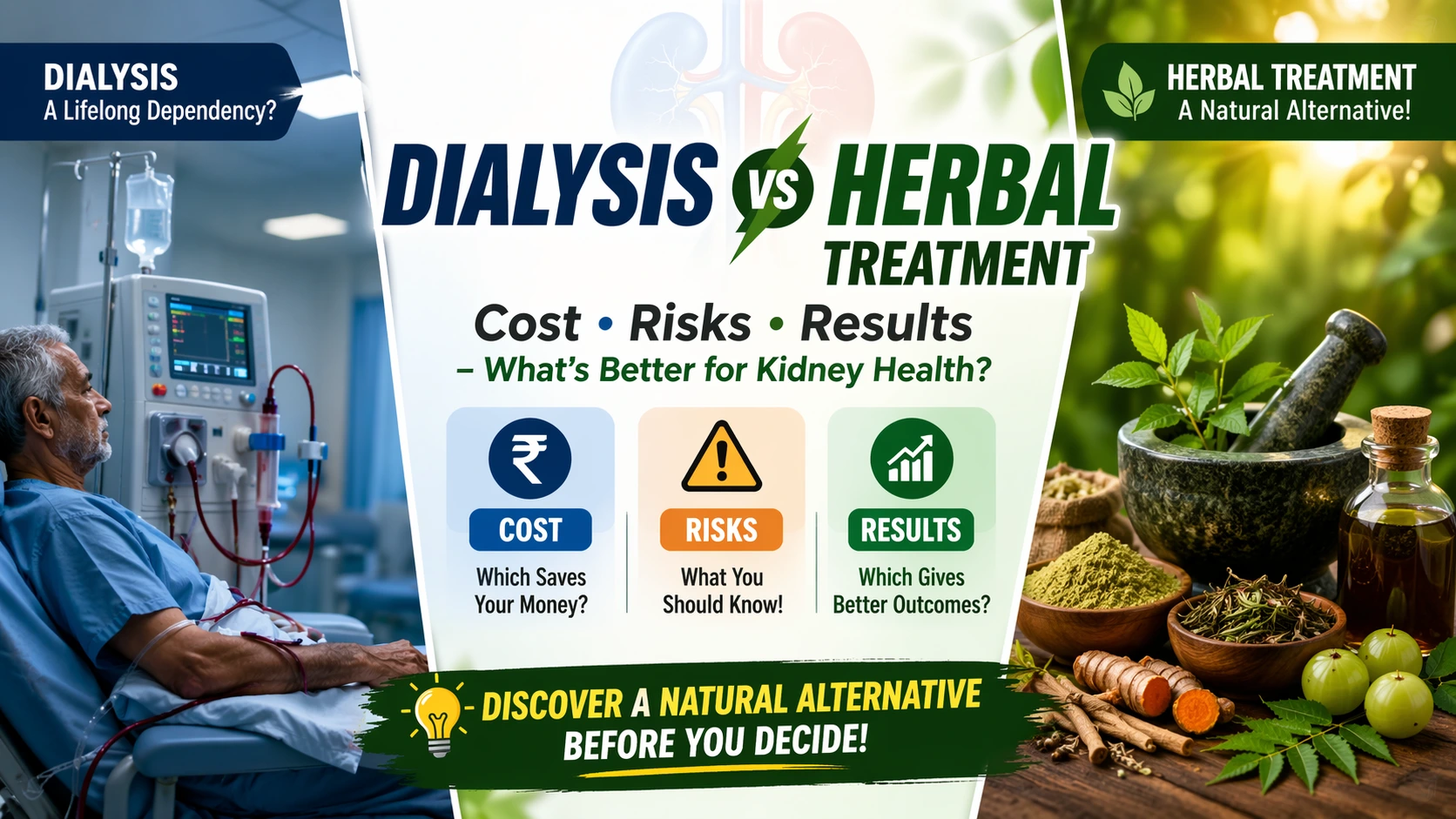

The Great Kidney Crossroads: Dialysis vs Herbal Treatment
So, here we are. If you’re reading this, either your kidneys have decided to take an unscheduled sabbatical, or you’re worried they’re currently packing their bags. It’s a stressful spot to be in, and the internet, bless its chaotic heart, is filled with everything from "miracle moss" to high-tech machines that look like they belong on a spaceship.
Let’s have a heart-to-heart (or a kidney-to-kidney) about the two paths people often consider: Dialysis vs. Herbal Treatments. We’re going to break down the costs, the risks, and the actual results without the medical jargon that usually requires a PhD to decode.
Have any renal issues? Fill in the details and get an expert advice.
The Players in the Ring
Before we dive into the "which is better" debate, let’s define our contenders.
-
Dialysis: This is the heavy hitter. Since your kidneys aren't filtering your blood properly, a machine steps in to do the heavy lifting. It’s the medical equivalent of hiring a professional cleaning crew because you haven't done the dishes in three years.
-
Herbal Treatment: This is the "natural" route. It involves roots, leaves, powders, and teas. Think of it as trying to fix a leaky pipe by pouring a very specific blend of organic soup down the drain.
1. The Cost: Your Wallet’s Perspective
Let’s talk money, because being sick is unfortunately expensive.
Dialysis Costs
Dialysis is, to put it bluntly, a budget-buster. If you don't have insurance, the cost of dialysis can feel like you’re buying a luxury car every single year, except you don’t get to drive the car; you just sit next to it for four hours.
-
The Sticker Price: Depending on where you live, a kidney dialysis price per session can cost anywhere from $500 to $1,000. Since you usually need three sessions a week, you’re looking at over $100,000 a year.
-
The Hidden Extras: You’ve got travel costs, medications (like EPO for anemia), and the "I’m too tired to cook" takeout costs.
-
The Good News: In many countries, government programs or insurance cover a massive chunk of this. Without that safety net, dialysis is financially terrifying.
Herbal Kidney Treatment Cost
At first glance, herbs seem like a bargain. You go to a shop, buy some dried leaves for $30, and call it a day.
-
The Low Entry Fee: Initially, it’s much cheaper. You aren't paying for specialized nurses or high-tech filters.
-
The "Scam" Tax: The danger here is the unregulated market. Some "special" herbal blends can cost hundreds of dollars, sold by people who claim they have a secret formula.
-
The Ultimate Cost: If the herbs don't work (or worse, make things worse), the cost of the emergency room visit later will far outweigh any savings you made on tea.
2. The Risks: What Could Go Wrong?
Everything in life has a risk. Even eating a sandwich has a risk if the mayo is from 2019. But with kidney health, the stakes are higher.
Dialysis Side Effects
Dialysis is invasive. You’re literally hooked up to a machine. The major risks of dialysis treatment are:
-
Infections: Since there’s an access point (a fistula or catheter) into your bloodstream, germs see that as a VIP entrance.
-
Low Blood Pressure: Sometimes the machine works a little too fast, and you might feel dizzy or faint during treatment.
-
The "Dialysis Hangover": Many people feel wiped out after a session. It’s physically draining to have your blood laundered three times a week.
Herbal Medicine Side Effects Kidney
This is where we need to be very careful. "Natural" does not always mean "safe." Arsenic is natural; so is poison ivy. You wouldn’t put either in a smoothie.
-
Lack of Regulation: Unlike a pharmacy, herbal shops don't always have to prove what’s in the bottle. Sometimes these "herbs" are laced with actual steroids or heavy metals to make you "feel" better temporarily while your kidneys suffer silently.
-
Interactions: If you are taking blood pressure meds, some herbs can play a dangerous game of "tug-of-war" with your heart.
-
The Heavy Metal Problem: Some traditional herbal medicines have been found to contain lead, mercury, or arsenic. Your kidneys are already struggling; the last thing they want is a side of mercury.
3. The Results: What Actually Happens?
We all want the same result: to live a long, happy life where we can eat a slice of pizza without worrying about our potassium levels.
Dialysis Results
-
It Works: This is the big one. Dialysis is a proven life-saver. It removes the toxins that would otherwise make you incredibly ill.
-
Stability: It keeps your body in balance. It manages your fluid levels and blood chemistry with mathematical precision.
-
The Trade-off: Your life becomes scheduled around the machine. It’s hard to take a spontaneous trip to the beach when you have an appointment on Tuesday at 8:00 AM.
Herbal Treatment Results
-
Early Stage Support: In very early stages of kidney disease (CKD), some herbs might help manage symptoms like inflammation. For example, some people find relief from swelling.
-
The "Cure" Myth: There is currently no scientific evidence that herbal treatments can "cure" end-stage renal failure. If your kidneys have stopped working, a tea cannot make them start again.
-
The Danger Zone: Many people try herbs as a replacement for dialysis. This is incredibly dangerous. Waiting too long to start dialysis because you’re hoping the herbs will kick in can lead to permanent damage or worse.
The "Middle Way" Approach
Is it a total "either/or" situation? Not necessarily. Some people use a Complementary approach. This means they stick to their dialysis or medical plan, but use safe, doctor-approved herbs to manage minor side effects like itchy skin or nausea. Better consult a reputed medical facility like Karma Ayurveda USA for a safe and natural treatment for kidney issues.
Crucial Rule: Never, ever take a supplement without telling your nephrologist (your kidney doctor). They aren't trying to be "party poopers"; they just don't want your supplements to accidentally stop your heart or clash with your life-saving meds.
Have any renal issues? Fill in the details and get an expert advice.
Quick Comparison Table
|
Feature |
Dialysis |
Herbal Treatment |
|---|---|---|
|
Primary Goal |
Filtering blood/Staying alive |
Managing symptoms/Wellness |
|
Scientific Backing |
Extremely High |
Low to Moderate (varies) |
|
Cost |
Very High (but often insured) |
Low to Medium (out of pocket) |
|
Time Commitment |
12-15 hours per week |
Minimal (brewing tea/taking pills) |
|
Safety |
Highly Regulated |
Unregulated/Variable |
|
Side Effects |
Fatigue, Low BP, Infection risk |
Potential toxicity, Medication clashes |
Which is Better Dialysis or Herbal Treatment for Kidney Failure?
If you’re standing at this crossroads, here is the truth:
-
If your kidneys are failing (Stage 5), you need dialysis. No herb on Earth can replicate the complex filtering process of the human kidney or a dialysis machine once the organs have shut down. It is one of the best treatment options for kidney failure.
-
If you are in early stages, focus on diet and lifestyle. This is where "natural" stuff actually shines. Eating less salt, managing your blood sugar, and staying hydrated are the best "herbal" treatments you can give yourself.
-
Ignore the "Miracle Cures." If someone on the internet says their $200 powder will regrow your kidneys, they are interested in your wallet, not your health.
Can Kidney Disease be Treated without Dialysis?
Yes, in early stages, lifestyle changes, diet, and medications play a crucial role in managing renal health. So, dialysis can easily be averted.
Is Dialysis Permanent or Temporary?
It can be temporary or long-term, depending on kidney function and treatment options. If you have stage 5 CKD, then dialysis is your permanent companion, unless you opt for a kidney transplant.
The Final Verdict
Dialysis is like a sturdy, slightly annoying umbrella in a rainstorm. It’s heavy, it’s a bit of a hassle to carry, but it keeps you dry. Herbal treatment, when used alone for serious failure, is like trying to use a lace doily as an umbrella. It looks nice, it’s a "natural" fiber, but you’re going to get soaked.
The best results usually come from trusting the science that keeps us alive, while maintaining a healthy, natural lifestyle to support the rest of our bodies.
Stay salty (but not too salty, because... kidneys), stay informed, and always keep your doctor in the loop!
Have any renal issues? Fill in the details and get an expert advice.
FAQ
What is the best alternative to dialysis?
Natural treatments like Ayurveda, diet, and lifestyle changes can help slow kidney damage in some cases.
How to remove toxins without dialysis?
Through proper diet, hydration, herbal therapies, and kidney-supporting lifestyle habits.
Can kidneys be repaired without dialysis?
Yes, early-stage kidney damage can sometimes improve with natural treatments, but advanced stages need expert care.