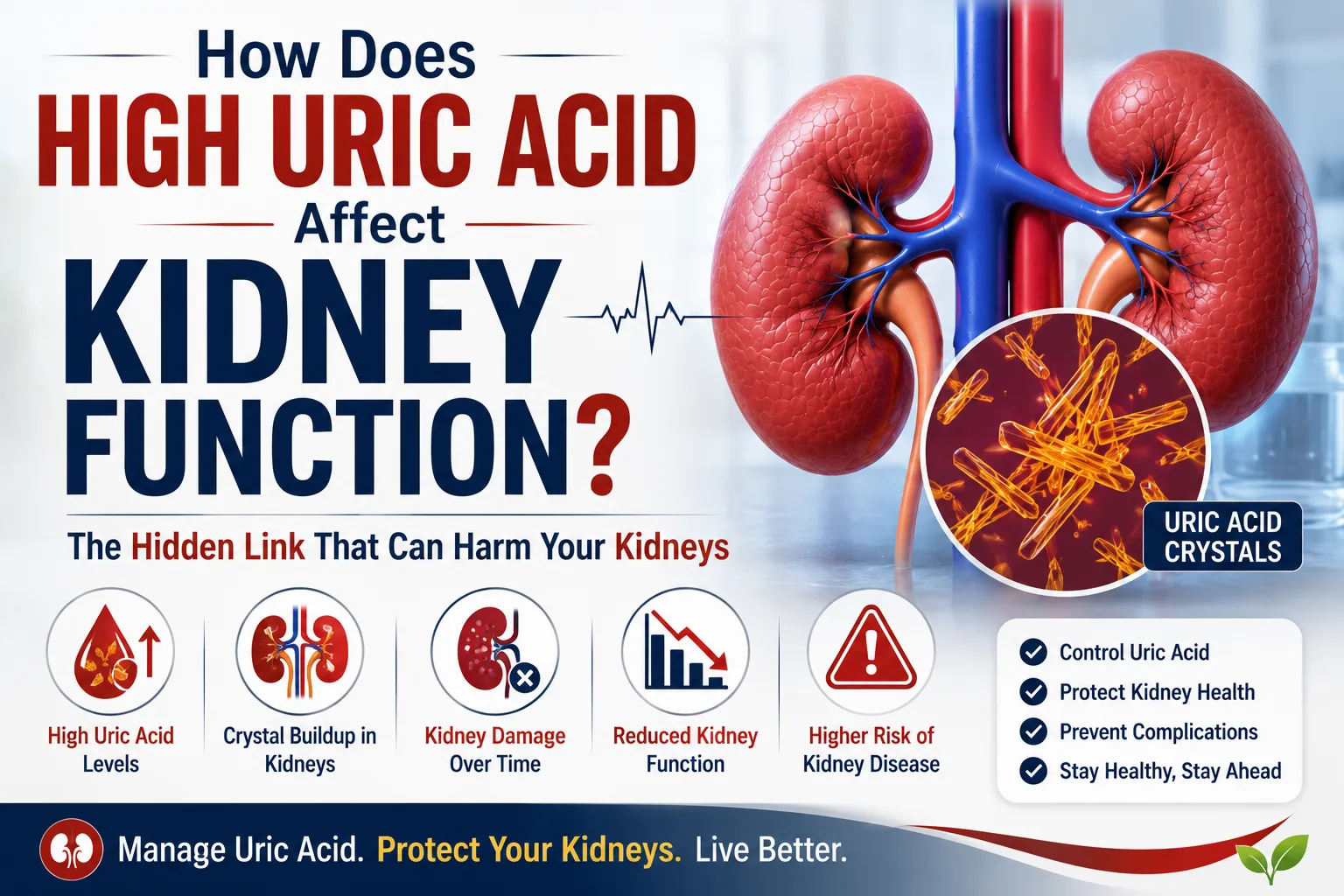

Short answer: high uric acid can slowly wreck your kidneys by clogging their filters, sparking inflammation, and messing with the blood flow that keeps them running. And the annoying part? You usually don't feel any of this happening until things are already fairly far along.
I'll be honest, I didn't think much about uric acid until a relative of mine got a "your levels are a bit high" comment from her doctor during a routine checkup. No pain, no symptoms, nothing dramatic. Just a number on a blood report that apparently deserved attention. That's the thing with uric acid; it's a quiet troublemaker. So, let's actually get into what it's doing in there.
What Is Uric Acid, Anyway?
Every time your body breaks down purines- compounds found in certain foods, and also just produced naturally as your cells turn over- you end up with uric acid as a waste product. Under normal circumstances, this isn't a big deal. Your kidneys filter most of it out (roughly two-thirds), and the rest heads out through your gut. In and out, no drama.
The trouble starts when there's too much uric acid being made, or when the kidneys can't clear it fast enough. That pile-up has a name: hyperuricemia. Think of it as uric acid deciding it likes your bloodstream a little too much and refusing to leave.
Here's Where It Gets Interesting (and a Bit Gross)
I promise this isn't going to turn into a biology lecture, but a few things are worth knowing because they explain why doctors care so much about this one blood marker.
-
When uric acid levels climb too high, it can actually crystallize. Picture tiny, jagged little shards forming and getting stuck in the kidneys' filtering units. Not exactly a spa day for your organs.
-
There's also good evidence that excess uric acid stirs up inflammation and oxidative stress inside kidney tissue; basically putting the kidneys under a slow, constant strain rather than one big dramatic hit.
-
It can affect the small blood vessels that feed the kidneys too, which reduces blood flow over time. Researchers sometimes call this renal arteriolopathy, which is a fun word to say but a less fun thing to have.
-
And yes, uric acid crystals are also the culprit behind certain kidney stones; the kind of pain that apparently makes people say things like "just knock me out."
Alright, Let's Look at the Actual Research
I don't love blog posts that just say "studies show" and move on without telling you anything real, so here's what the research actually looks like.
One meta-analysis pulled together 18 different cohort studies covering more than 75,000 patients, trying to figure out whether high uric acid was linked to acute kidney injury. Turns out, it was; people with hyperuricemia had more than double the odds of developing acute kidney injury compared to those with normal levels. That's not a subtle difference.
Then there's a large cross-sectional study out of South Korea, using national health survey data on over 11,000 people, which found something pretty consistent: the higher the uric acid, the worse the kidney function tended to be, in both men and women; with adjusted odds of reduced kidney function reaching 5.55 in men and a striking 7.52 in women when comparing the highest uric acid group to the lowest.
There's also longer-term data. A cohort study out of Taipei followed over 44,000 older adults for close to a decade and found that people with higher uric acid saw a meaningfully faster decline in kidney function over time, with the increased risk showing up starting around 6.0 mg/dL and climbing from there. So it's not just a one-time snapshot study; this pattern shows up across different populations and different lengths of follow-up.
One thing worth flagging honestly: this relationship goes both directions. Kidneys that are already struggling don't filter out uric acid well, so levels rise as a result of kidney trouble too, not just as a cause of it; since roughly two-thirds of uric acid is normally cleared by the kidneys, kidney disease itself can push uric acid levels up even as elevated uric acid may also show up before kidney disease develops. It's a bit of a "which came first" situation, and honestly, researchers are still untangling it.
A Quick, Slightly Silly Comparison
|
Normal Uric Acid |
High Uric Acid |
|
|
Kidney's general vibe |
Doing its job, unbothered |
Overworked and grumbling about it |
|
Chance of kidney stones |
Low |
Higher, and painfully so |
|
Inflammation |
Nothing to report |
Simmering away in the background |
|
Filtering speed |
Smooth |
Sluggish, like a printer that's out of ink but won't say so |
|
Long-term risk |
Kidneys probably fine |
Rising odds of chronic kidney disease |
Who Tends to Run Into This?
Not everyone's equally likely to end up with high uric acid, and if you check a few of these boxes, it might be worth getting a blood test:
-
You eat a lot of red meat, organ meat, or shellfish
-
Beer is a regular feature of your week (sorry)
-
You're carrying extra weight, especially around the middle
-
You're on certain diuretics for blood pressure
-
You already have diabetes or hypertension
-
Gout or kidney stones run in your family
So What Can You Do About It?
None of this is doom and gloom, by the way. Uric acid is one of those things that actually responds pretty well to everyday changes:
-
Drink more water than you think you need to. It genuinely helps flush uric acid out.
-
Ease up on the purine-heavy stuff; organ meats and certain seafood are the biggest offenders.
-
Watch the sugary drinks. Fructose has an odd habit of pushing uric acid up.
-
Cut back on alcohol, beer especially, since it's one of the more direct triggers.
-
Move around regularly. It helps with weight, and weight is tied to uric acid levels.
-
If you tick a few risk boxes above, just get a blood test. It's cheap, quick, and tells you exactly where you stand instead of guessing.
Key Takeaways
-
Hyperuricemia can damage kidneys through crystal buildup, inflammation, and reduced blood flow to the kidneys.
-
Large studies consistently link high uric acid with a greater risk of both sudden kidney injury and long-term kidney decline.
-
It's a two-way street; struggling kidneys can also push uric acid levels up.
-
Diet, hydration, alcohol habits, and weight all genuinely move the needle on uric acid.
-
A simple blood test is really the only way to know where your levels actually stand.
FAQs
Can high uric acid harm kidneys even if I've never had gout?
Yes, research shows kidneys can take a hit from high uric acid even without any gout symptoms showing up at all.
At what uric acid level should I start worrying about my kidneys?
Most research flags levels above roughly 6-7 mg/dL as the point where kidney risk starts climbing.
Does drinking more water genuinely lower uric acid?
Pretty much, yes; staying well-hydrated helps your kidneys clear out uric acid more efficiently.
Can I fix high uric acid with diet changes alone?
Mild cases often improve nicely with diet and lifestyle tweaks, though more stubborn cases may still need medication.
Does high uric acid always mean something's wrong with my kidneys?
Not necessarily; diet, genetics, alcohol, and metabolic issues can all raise uric acid on their own.
Disclaimer: This post is meant for general information and isn't medical advice. Everyone's body handles uric acid a little differently, and kidney health depends on a lot of individual factors, so please talk to an actual doctor before changing anything based on what you've read here.