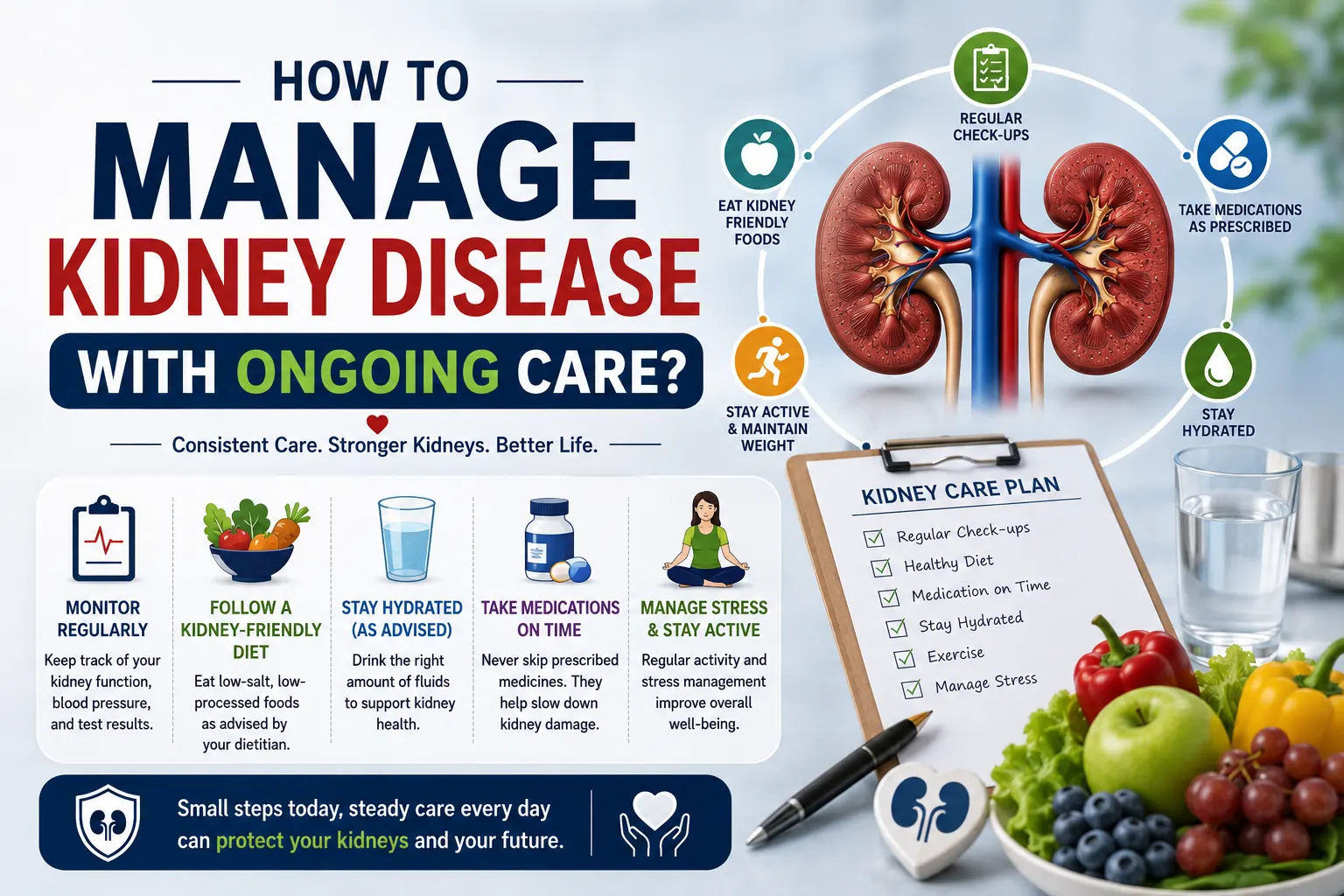

So, how do you actually manage kidney disease for the long haul? Short answer: consistent monitoring, the right medications, smart lifestyle tweaks, and a doctor who doesn't ghost you after the first visit. That's really the whole game of chronic kidney disease management in a nutshell, but stick around, because the "how" is where it gets interesting.
Your kidneys are those quiet overachievers tucked under your ribcage, filtering waste, balancing fluids, and generally keeping your blood chemistry from turning into a soup you wouldn't want to drink. When something goes wrong with them, it usually doesn't announce itself with fireworks. It's sneaky. Fatigue that you blame on your job. Puffy ankles you blame on your shoes. That's exactly why ongoing care matters so much; kidney disease is a slow burn, and slow burns need steady attention, not one dramatic hospital visit followed by radio silence.
Why "Ongoing" Is the Operative Word?
A one-time checkup won't cut it here. Chronic kidney disease (CKD) is, well, chronic; it sticks around and evolves. Good CKD treatment isn't a single prescription; it's a relationship you build over months and years with your body, your labs, and your care team.
Here's what that relationship typically involves:
-
Regular blood and urine tests to track creatinine, eGFR, and protein levels
-
Blood pressure monitoring, because your kidneys and your blood pressure are basically in a toxic situationship; each one makes the other worse if left unchecked
-
Medication adjustments as your kidney function changes
-
Diet tweaks around sodium, potassium, and protein
-
Honest conversations with your doctor about how you're actually feeling, not just how you think you're supposed to feel
The landmark AASK trial (African-American Study of Kidney Disease and Hypertension), published in the New England Journal of Medicine, found that tightly controlling blood pressure could meaningfully slow disease progression in patients with higher protein levels in their urine; proof that the boring, unglamorous stuff (checking your BP, taking your pills on time) genuinely moves the needle.
Blood Pressure: The Kidney's Frenemy
If your kidneys could talk, they'd probably beg you to get a blood pressure cuff and actually use it. A national US analysis using NHANES data tracked blood pressure control among CKD patients from 1999 to 2018 and found real improvement over the years, followed by a bit of backsliding more recently; a reminder that renal function doesn't stay protected on autopilot. It needs consistent effort, not a one-time New Year's resolution.
Kidney Care Isn't Just a Doctor's Job
Here's the part nobody tells you: kidney care is a team sport, and you're the team captain, not the mascot. Your kidney disease doctor (usually a nephrologist) handles the medical strategy, but the daily choices; what's on your plate, how much water you're drinking, whether you actually took your evening pills; are on you.
A study on structured disease management programs for CKD patients with hypertension or diabetes found that regular education and monitoring sessions helped delay disease progression compared to standard, hands-off care. Translation: showing up matters. Consistently. Even when you feel fine. Especially when you feel fine.
A Quick (Slightly Cheeky) Comparison
|
Approach |
What It Looks Like |
Your Kidneys' Reaction |
|
"I'll deal with it later" |
Skipping labs, ignoring meds, googling symptoms at 2 a.m. |
Silent suffering |
|
Bare minimum check-ins |
Annual visit, nodding along, forgetting everything by the parking lot |
Cautiously unimpressed |
|
Actual ongoing care |
Regular labs, BP checks, medication routine, real talk with your doctor |
Relieved, functioning, thriving |
Building Your Long-Term Game Plan
Effective chronic kidney disease management rests on a few unglamorous pillars: monitoring your numbers, controlling blood pressure and blood sugar, eating with your kidneys in mind (less salt, mindful protein, watch the potassium if your doctor says so), staying active, and not skipping appointments just because you "feel fine." Feeling fine is often the disease being sneaky, not the disease being gone.
Long-term kidney care also means planning ahead; knowing your CKD stage, understanding what the next stage might look like, and having conversations early about options rather than scrambling later. It's less scary when you're not doing it in a panic.
And here's the honestly reassuring bit: none of this requires perfection. Chronic kidney disease management is a marathon, not a "nail every single day" situation. Missing one walk or having one salty meal isn't going to undo months of good habits. Consistency over time is what your kidneys are actually asking for; not perfection, just showing up.
Key Takeaways
-
Kidney disease often progresses quietly, so regular testing (not just symptoms) is your best early-warning system
-
Blood pressure control is one of the most proven ways to slow CKD progression
-
Ongoing care beats one-off visits; think relationship, not transaction
-
Diet, movement, and medication adherence work together, not in isolation
-
Feeling okay doesn't mean everything's okay; keep the appointments anyway
FAQs
Can chronic kidney disease be reversed?
Usually not fully, but its progression can often be slowed down a lot with the right ongoing care.
How often should I get my kidneys checked if I have CKD?
Most doctors recommend blood and urine tests every three to six months, though it depends on your stage.
Does diet really make a difference in kidney disease?
Yes; cutting back on excess sodium and managing protein and potassium intake can genuinely ease the load on your kidneys.
Is high blood pressure a cause or a result of kidney disease?
Honestly, it's both; they feed into each other, which is exactly why controlling it matters so much.
When should I see a kidney specialist instead of my regular doctor?
If your kidney function keeps declining or your regular doctor suggests it, that's usually the right time to bring in a nephrologist.
Disclaimer: This blog is for general informational purposes only and isn't a substitute for professional medical advice, diagnosis, or treatment. Kidney disease varies a lot from person to person, so please talk to a qualified doctor or nephrologist about your specific situation before making any health decisions.