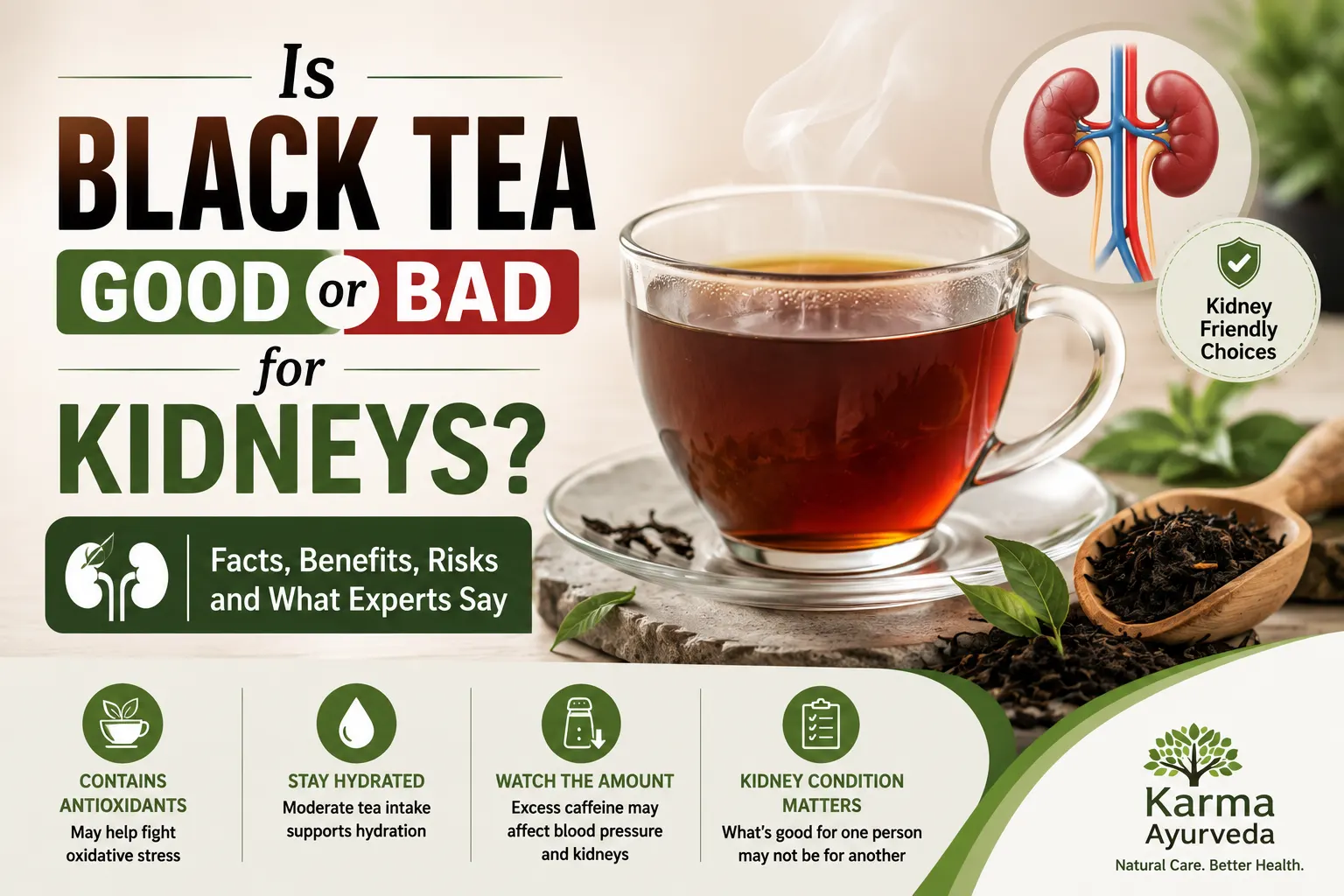

Black tea is fine for most people, and it can even be mildly helpful, but whether black tea is good for kidneys or not depends on your renal function. That's it. That's the whole verdict. Everything else in this post is just me explaining why, because "it depends" without an explanation is basically the "we need to talk" text of health advice; technically true, deeply unsatisfying.
I got curious about this question the same way most people probably do: sitting with a mug of chai, half-reading some scary headline about tea and kidney stones, wondering if my evening habit was secretly plotting against me. So, I went down the rabbit hole. Read the studies. Argued with myself a little. And landed somewhere much calmer than the internet wants you to be.
Okay, But What Even Is Black Tea Doing to Your Body?
Black tea and green tea come from the same plant: Camellia sinensis, if you want to sound fancy at a dinner party. The difference is just processing. Black tea leaves get fully oxidized, basically left out to "mature," which is what gives them that deep amber color and bold, slightly malty flavor. That oxidation process also creates two compounds you've probably never heard of unless you're a tea nerd: theaflavins and thearubigins. Think of them as green tea's catechins, but with a bit more swagger.
Here's the part most articles skip because it's less clickbait-y and more "actually complicated": black tea has stuff that's good for your kidneys and one thing that gets side-eyed a lot: oxalate. So whether the answer is "good" or "bad" really depends on which ingredient you're focused on, and honestly, on your own health history too.
The Good Stuff (Because Tea Deserves Some Credit Here)
Let's not bury the nice things black tea does, because there are a few.
-
It's genuinely packed with antioxidants. Some renal-health research points out that the polyphenols in black tea may help lower uremic toxins and support healthier blood urea nitrogen levels; basically, they help clean up cellular junk before it causes bigger problems.
-
There's an older rat study (published in Medical Science Monitor, if you want to look it up) where long-term black tea drinking protected both liver and kidney tissue from oxidative stress. Not human data, sure, but it's a decent clue that the antioxidant angle isn't just marketing.
-
Bigger population studies, including work using UK Biobank and CARDIA data, found associations between regular tea drinking (black and green combined) and better markers of kidney function over time. Association isn't causation, I know, but it's a pattern worth noting.
-
It counts as hydration. People love saying caffeine dehydrates you, but that myth has been debunked more times than I can count. A cup of black tea still adds to your fluid intake, and staying hydrated is honestly one of the simplest things you can do for your kidneys.
So no, your evening cup isn't quietly sabotaging you. If anything, it's doing a few things right without you even noticing.
The Not-So-Good Stuff (Where People Start Panicking)
Now for the part that gets tea a bad rap in certain corners of the internet.
-
Black tea does have oxalate in it; an organic acid that can bind with calcium and, in the wrong circumstances, contribute to kidney stones. And black tea indeed has noticeably more oxalate than green tea.
-
But here's the twist nobody mentions enough: your body barely absorbs most of it. A study looking at oxalate load from black tea (published in the American Journal of Clinical Nutrition) found that only around 2 to 5% of the oxalate in a cup actually makes it into your system when you drink it without milk. So the scary "oxalate content" number on paper is not the same as what your body actually deals with.
-
Adding milk seems to help even more; the calcium in milk grabs onto oxalate in your gut before it gets absorbed, and the whole thing just passes through and leaves. So if you're a milk-tea person, you might accidentally be doing yourself a favor.
-
There's a solid German study by Siener and Hesse, published in Nutrients, where healthy men drank black tea daily and researchers tracked their urine chemistry closely. The tea didn't meaningfully raise urinary oxalate, and it actually bumped up citrate; a compound that helps prevent stones from forming in the first place. No real increase in stone risk showed up.
-
Caffeine is worth a quick mention too. Regular high caffeine intake has been loosely tied to small increases in blood pressure, which matters more if you're already managing hypertension or existing kidney issues. For most people drinking a normal amount of tea, it's a non-issue.
So if you're healthy with no history of stones, this whole oxalate scare is mostly noise. If you've had stones before, or you're managing an existing kidney condition, it's not "never drink tea again"; it's just "maybe don't drink six cups a day and skip talking to your doctor about it."
A Quick, Slightly Silly Comparison Table
|
Category |
Verdict |
Why |
|
Antioxidant content |
Pretty great |
Theaflavins and thearubigins doing quiet cleanup work |
|
Oxalate content |
Present, but overhyped |
It's there, but your body barely absorbs it |
|
Hydration factor |
Counts fully |
Caffeine dehydration myth needs to retire already |
|
Safe if you get stones often |
Depends |
Fine in moderation, worth a chat with your doctor |
|
Safe with advanced kidney disease |
Be careful |
Caffeine and fluid load might need monitoring |
|
Everyday vibe |
Totally chill |
It's tea. Enjoy it. Don't overthink your Tuesday cup |
Where Ayurveda Comes Into the Picture?
This is usually the point where people start looking for gentler, more traditional options; fair enough, because Ayurveda has been dealing with kidney and urinary health for a very long time, way before anyone was measuring "oxidative stress markers."
Ayurvedic treatment for kidney disease doesn't chase one magic ingredient. It's more about balancing the body overall, calming internal inflammation (called "ama" in Ayurvedic terminology), and supporting the body's natural filtration rhythm rather than forcing a fix.
A few herbs that come up again and again when people talk about the best herbs for kidney disease
-
Punarnava; traditionally used to help with fluid balance and reduce swelling
-
Gokshura; often used for urinary comfort and as a gentle diuretic
-
Varun; a classic herb tied to supporting healthy urinary function
-
Red sandalwood (Rakta Chandan); used traditionally for its cooling, anti-inflammatory properties
This all fits into the broader idea of natural kidney disease treatment, which usually mixes diet changes, proper hydration, herbal support, and stress management rather than betting everything on one "superfood." It's a big part of why kidney disease Ayurvedic treatment keeps coming up in conversations; people want something that supports the body's rhythm instead of fighting it.
One honest note though: Ayurvedic approaches work best as a supportive add-on alongside proper medical care, not as a replacement, especially if you already have a diagnosed kidney condition.
So, Should You Drink Black Tea or Not?
If you were hoping for some dramatic plot twist, sorry; the real answer is pretty undramatic. For most healthy adults, a cup or two (or even three) of black tea a day is a completely reasonable, and possibly even beneficial, habit. The whole is black tea good or bad for kidneys debate really only gets sharper if you've already had stones, have advanced kidney issues, or are managing blood pressure closely.
Basically: black tea for kidneys isn't the drama the internet makes it out to be. Your tea isn't out to get you. It's just tea. Drink it like a sensible adult; a little awareness, zero anxiety.
Key Takeaways
-
Black tea has both antioxidants (good) and oxalates (a mild concern for some people)
-
Your body absorbs very little of the oxalate in black tea, especially with milk added
-
Healthy people show no meaningful increase in stone risk from regular black tea, based on actual clinical research
-
If you have stones or advanced kidney disease, moderate your intake and talk to your doctor
-
Ayurvedic herbs like Punarnava, Gokshura, and Varun are commonly used alongside medical care for natural kidney support
-
Moderation and personal medical advice matter way more than a blanket "good" or "bad" label
FAQs
Is black tea good for kidneys?
For most healthy people, yes; a moderate amount is more helpful than harmful.
Is black tea good or bad for kidneys if I've had kidney stones before?
If you're prone to stones, it's smart to cut back a bit and check with your doctor since black tea does contain oxalate.
What are the best herbs for kidney disease in Ayurveda?
Punarnava, Gokshura, and Varun are the ones that show up most often for supporting natural urinary and kidney health.
Can natural kidney disease treatment replace regular medical treatment?
No; think of it as support alongside proper medical care, not a swap for it.
Does adding milk to black tea make it safer for kidneys?
Yes, the calcium in milk binds oxalate in your gut, so less of it actually gets absorbed.
Disclaimer
This blog is meant for general information only, not medical advice. It's not a substitute for a proper diagnosis or treatment plan. Please talk to a qualified doctor or Ayurvedic practitioner before changing your diet, herbs, or treatment routine, especially if you already have a health condition.