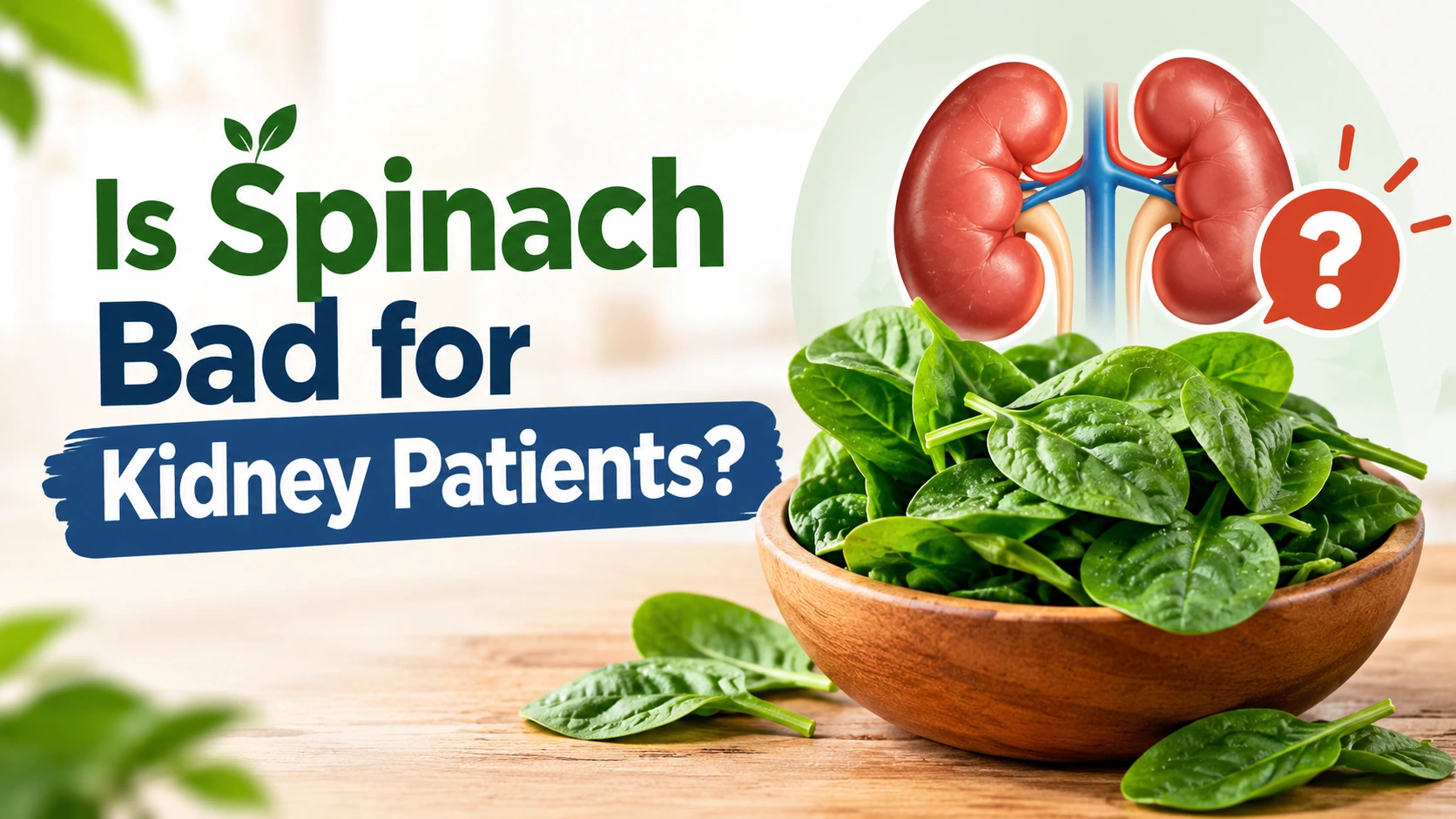

If someone's told you to stay away from leafy greens because of your kidneys, you're probably wondering: Is spinach bad for kidney patients? Honestly, it can be; mainly because it's loaded with oxalates and potassium, and those are exactly the two things a struggling filtration system has trouble keeping up with.
But before you dramatically clear out your entire crisper drawer, let's actually talk about why this happens, how much really matters, and what you can do about it without giving up on eating well altogether.
The Great Spinach Paradox: Hero or Villain?
We all grew up on cartoons where eating your greens basically turned you into a superhero. But when your kidneys aren't running at full strength, those same nutrient-packed leaves start causing two real problems:
- Oxalate Overload: Spinach is naturally high in oxalates. When there's too much oxalate floating around, and it binds with calcium in your urine it forms tiny crystals; over time, those crystals can turn into full-blown, painful stones.
- Potassium Spikes: Potassium is great for a healthy heart, but when your kidneys can't clear the extra amount efficiently, it builds up in your blood instead, a condition called hyperkalemia.
A well-known study published in the Journal of the American Society of Nephrology (JASN) found that eating a lot of dietary oxalate significantly raises the risk of forming calcium oxalate stones. So yeah, if you're prone to stones, or your electrolytes are already a bit off, loading up on raw spinach salads isn't doing you any favors.
Raw vs. Boiled: Can You Outsmart the System?
|
Veggie Variety |
Oxalate Content |
Potassium Level |
The Verdict |
|
Raw Greens |
Sky-high |
Very High |
Proceed with extreme caution |
|
Boiled Greens |
Moderately Lowered |
Reduced |
Safe in small, controlled portions |
|
Cabbage & Kale |
Low |
Low to Moderate |
Your new best friends in the kitchen |
Where Modern Diet Advice Meets Older Traditions
When strict dietary rules start feeling like you're chewing cardboard for the rest of your life, it's understandable to look for a broader perspective. Kidney disease Ayurvedic treatment approaches things a bit differently; it centres on balancing the body's internal energies (doshas) while using herbs believed to support the body's natural pathways.
Rather than just handing you a list of foods to avoid, Ayurvedic kidney disease treatment tends to focus on strengthening how the body filters and processes things overall. Practitioners often look at root causes behind metabolic imbalances, which is part of why natural treatment for kidney disease has become a popular complement to conventional care for people who don't want to rely purely on medication.
Key Takeaways
Oxalates Matter: High oxalate levels in greens can trigger calcium oxalate stones in people who are prone to them.
Watch the Potassium: If your lab work is showing elevated potassium, raw greens should take a back seat for a while.
Boil It Out: Cooking greens in boiling water and tossing the liquid cuts oxalate content down noticeably.
Holistic Support: Pairing smart dietary changes with time-tested herbal approaches can be a useful part of managing kidney health long-term.
📩 Ask a Kidney Expert (Free 10-Min Consultation)
Frequently Asked Questions
Is spinach completely off-limits if my kidney function is impaired?
Not necessarily for everyone, but raw portions should be kept quite limited given how high it is in oxalates and potassium.
How exactly does boiling reduce the risk from leafy greens?
Boiling draws a large share of the soluble oxalates out into the water, which makes the cooked leaves noticeably safer to eat.
Are there gentler leafy green alternatives out there?
Yes; options like cabbage, arugula, and kale tend to be much easier on the kidneys since they're lower in potassium.
Can herbal remedies completely dissolve stones that are already there?
Not reliably, no. Some Ayurvedic herbs are traditionally used to support smaller crystal buildup and help it pass more easily, but there isn't strong clinical evidence that they can dissolve existing stones outright; so they're best seen as support, not a guaranteed fix.
Disclaimer: This article is for informational purposes only and doesn't count as medical advice. Everyone's dietary needs are different depending on lab results and where they are in their kidney health journey. Always check with a qualified physician like Dr. Puneet Dhawan or a renal dietitian before changing your diet or starting any new herbal treatment for kidney stones.