
eGFR is basically your kidney's report card, and yes, you can absolutely give it a natural boost. That's it, that's the whole answer in one line. Now let's actually talk about why this random acronym keeps popping up on your blood test and why your doctor's face changes slightly when they see the number.
Okay But What IS eGFR?
I'll be honest, the first time I saw "eGFR" on a lab report, I assumed it was some kind of typo. It's not. It stands for estimated Glomerular Filtration Rate, and all it really means is: how well are your kidneys filtering your blood right now?
Picture your kidneys as two exhausted, unpaid interns who never get a day off. Every single day, they filter around 150 liters of blood, pulling out waste, balancing your fluids, and quietly keeping you alive while you binge a show and forget to drink water. eGFR is just the number that tells you how well those two interns are holding up.
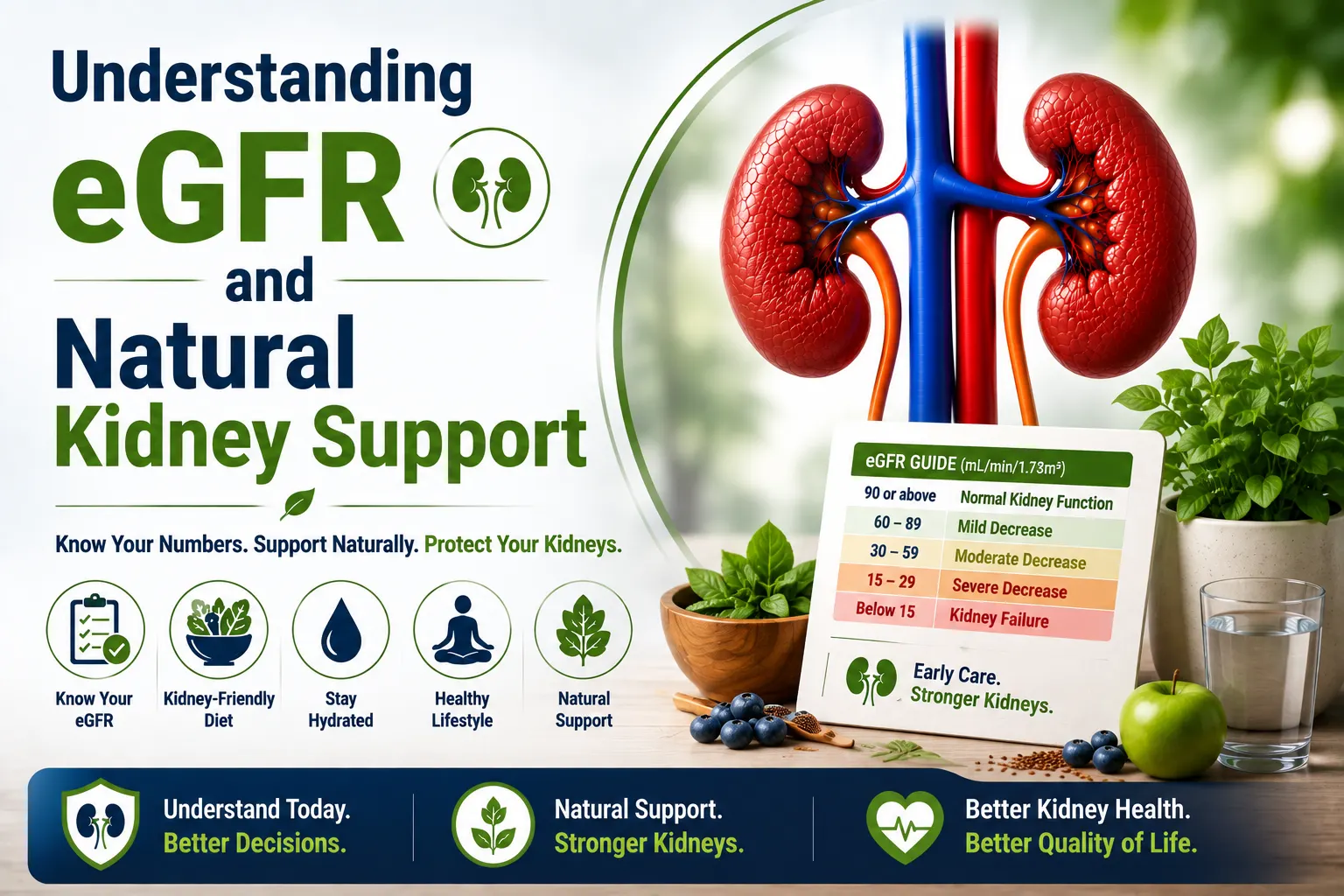
Labs calculate it using your creatinine levels along with your age and sex, run through a formula called the CKD-EPI equation (yes, doctors love acronyms; we've established this). A score of 90 or higher is generally considered normal. Once it dips below 60 and stays there for a few months, that's usually when doctors start using the phrase "chronic kidney disease," and start paying closer attention.
But don't spiral if one test comes back a little low. Dehydration, a rough gym session, even too much steak the night before your test can nudge that number around. Kidneys are dramatic sometimes. One low reading isn't a diagnosis; it's a nudge to retest.
Why This Number Actually Deserves Your Attention?
Here's the annoying thing about kidney health: it doesn't shout, it whispers. Unlike, say, a stomach ache that ruins your whole day, early kidney trouble is sneaky quiet. No dramatic symptoms, no warning sirens. Just a slow decline that shows up on paper long before you feel anything.
That's exactly why organizations like KDIGO (Kidney Disease: Improving Global Outcomes) keep pushing for regular eGFR checks; catching a dip early genuinely changes outcomes. Their widely cited 2012 guidelines are pretty much the reason your annual check-up includes this test in the first place.
So no, it's not your doctor being paranoid. It's them being sneaky-smart on your behalf.
Fine, So How Do You Support Your Kidneys Without Overhauling Your Whole Life
Good news, nobody's asking you to become a wellness influencer overnight. Small, boring, consistent habits genuinely do most of the work here.
-
Drink water, but don't turn it into a competition. Steady hydration helps your kidneys flush waste efficiently. Chugging 6 liters a day isn't heroic; it's just more bathroom breaks and no extra benefit, as research in the Clinical Journal of the American Society of Nephrology has pointed out.
-
Go lighter on the salt. Extra sodium makes your kidneys work overtime trying to balance things out. The well-known DASH diet research has repeatedly shown lower sodium intake helps control blood pressure, which directly protects kidney function.
-
Don't go overboard on protein. The classic MDRD study (Modification of Diet in Renal Disease) found that people with already-reduced kidney function benefited from moderating protein intake. If your kidneys are healthy, protein isn't the villain here; excess of it just isn't necessary either.
-
Keep an eye on blood sugar and blood pressure. Not to sound dramatic, but diabetes and hypertension are responsible for the majority of kidney disease cases worldwide. Managing these two is basically kidney insurance.
-
Move your body regularly, even if it's just brisk walks. Better circulation means better kidney perfusion.
-
Don't treat painkillers like candy. Long-term, unsupervised NSAID use has repeatedly shown up in research as a strain on kidney function.
A Quick, Slightly Judgmental Table Because Why Not
|
Habit |
Kidney's Reaction |
Why |
|
Drinking water consistently |
"Finally, thank you" |
Helps flush waste without overworking anything |
|
Salty snacks, always |
"Again? Really?" |
Raises blood pressure, adds extra strain |
|
Leafy greens, berries |
Quietly pleased |
Antioxidants, low-processed junk |
|
Painkillers on repeat |
Visibly nervous |
Linked to reduced kidney function over time |
|
Regular walks |
Low-key thriving |
Improves circulation and blood pressure |
Key Takeaways
-
eGFR tells you how efficiently your kidneys are filtering waste from your blood.
-
A reading under 60 for several months can signal chronic kidney disease and needs medical follow-up.
-
Kidney issues rarely show symptoms early, which is exactly why routine testing matters.
-
Hydration, lower sodium, moderate protein, and regular movement genuinely support kidney health.
-
Diabetes and high blood pressure remain the two biggest causes of kidney damage globally.
FAQs
What counts as a good eGFR number?
Ninety or above is generally considered healthy, though it naturally dips a little as you age.
Can eGFR actually improve on its own?
Yes, especially early on, with better hydration, lower sodium intake, and controlled blood pressure.
Does drinking extra water push eGFR higher?
Steady hydration helps kidney function, but chugging excessive water won't magically spike the number.
Is a low eGFR always chronic kidney disease?
Not necessarily; things like dehydration, certain medications, or intense exercise can temporarily lower it.
How often should eGFR actually be checked?
Once a year for most healthy adults, more often if diabetes, high blood pressure, or existing kidney concerns are in the picture.
Disclaimer
This article is written for general awareness and isn't medical advice. Everyone's kidney health depends on individual factors, so please talk to an actual doctor before changing your diet, habits, or medications based on anything you read here.