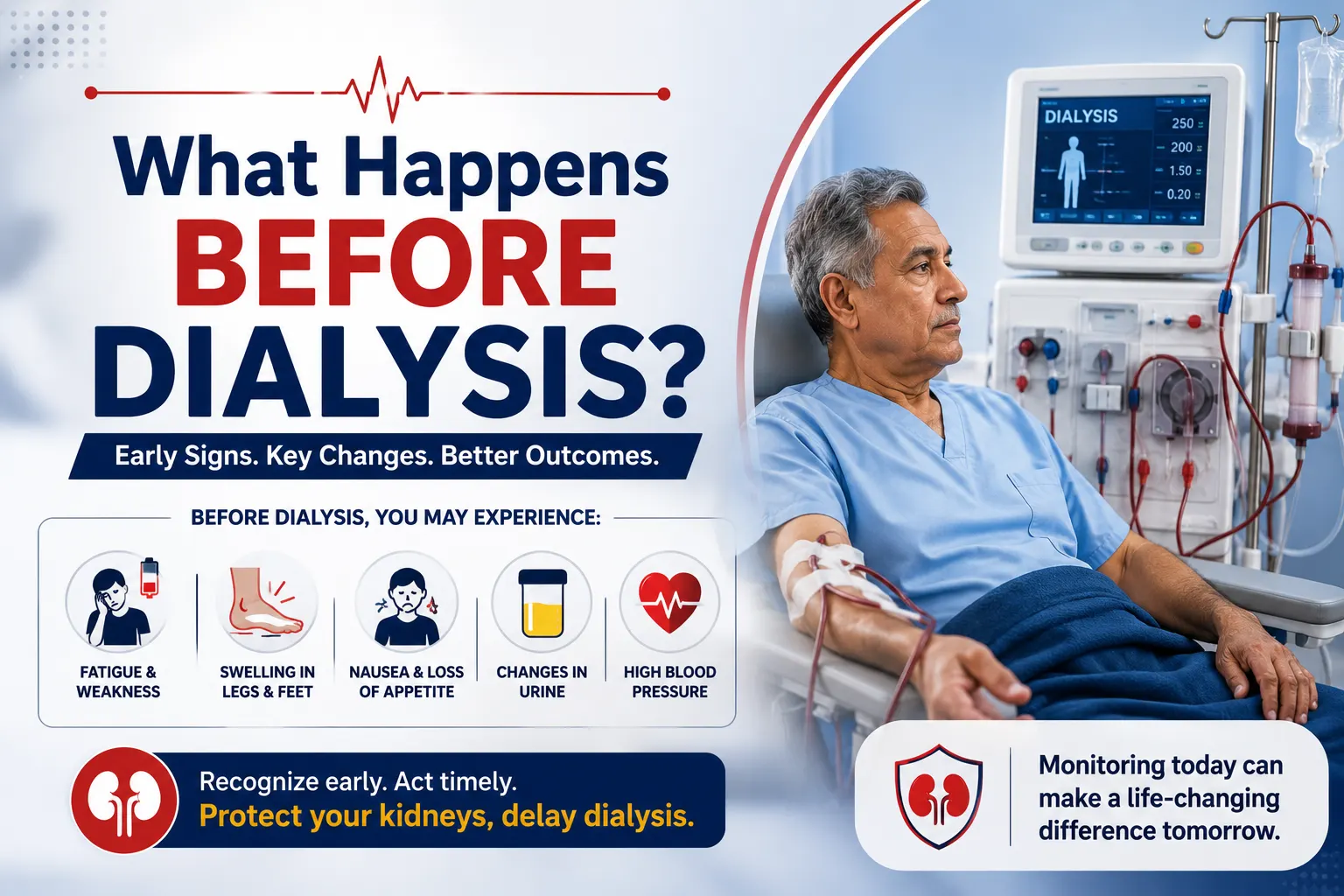

Short answer: nothing sudden. Your kidneys don't just clock out one Tuesday morning; they fade slowly, over months or often years, and doctors spend that whole stretch trying to slow the fade down with diet changes, medication tweaks, and a bunch of monitoring that falls under the umbrella of pre-dialysis care. It's less "emergency stop" and more "long, slow yellow light"; you've got time to ease off the gas before anyone forces you to brake.
If you've just heard the words chronic kidney disease (CKD) attached to your name, or your dad's, or your neighbor's, you've probably already panicked and Googled "dialysis" at some ungodly hour. I get it. The word alone sounds like the plot of a medical drama. But here's the thing nobody bothers to mention up front: dialysis is usually where the story ends, not where it starts. There's a whole middle section before that, and it's honestly the part where you actually get some say in how things go.
Why Your Kidneys Take So Long to "Fail"?
Kidneys are weirdly humble for how much they do. Every single day, they filter close to 50 gallons of your blood and never once ask for a thank-you. When CKD enters the picture, that filtering ability- the number doctors call GFR (glomerular filtration rate)- starts sliding down a scale of stages. Stage 1 barely makes a dent. Stage 5 is where "kidney failure" stops being a scary phrase and becomes an actual diagnosis.
And doctors don't just sit there watching that number drop like it's a stock ticker. A cohort study out of Scientific Reports followed more than 7,000 CKD patients and found something worth noting: people who got into structured pre-dialysis care programs early, especially by Stage 4, did noticeably better than those who wandered in late. Moral of the story? Showing up early to this particular party actually counts for something.
Okay, So What Is Actually Happening During This Time?
Nobody hands you a laminated checklist, but if they did, it'd probably look something like this:
-
Blood and urine tests, over and over, to keep tabs on GFR, creatinine, and potassium
-
Blood pressure control, because high BP and struggling kidneys feed off each other in the worst way
-
A kidney disease diet; meaning less salt, watched protein, and yes, sometimes fewer bananas (sorry, potassium fans)
-
A hard look at your medicine cabinet, since some painkillers and even a few diabetes drugs need to sit this one out
-
Keeping an eye on anemia and bone health, because kidneys quietly help with red blood cells and calcium too
-
Planning for vascular access; if dialysis does end up happening, doctors like to have a fistula or catheter site ready instead of scrambling last-minute
There's also research on renin-angiotensin system (RAS) blockade; a fancy name for a very common class of blood pressure pills; that looked specifically at advanced pre-dialysis CKD patients and found these medications had a real, measurable effect on kidney outcomes. So that boring pill you take every morning without thinking about it? Turns out it's doing more than you'd guess.
It's Not a One-Doctor Job
This is the part that sounds like it belongs on a hospital pamphlet, but it's genuinely one of the nicer things about pre-dialysis care: your nephrologist isn't out there alone. A review of CKD Stage 5 outpatient clinics found that when a multidisciplinary team; nephrologist, dietitian, nurse, sometimes a social worker- works together with proper patient education, complications tend to show up later and hit less hard.
Basically, it takes a village. Or, at minimum, a well-run clinic with a decent waiting room and people who actually explain things to you.
Does Starting Dialysis Earlier Actually Help?
Here's a twist that surprises most people. The well-known IDEAL trial compared starting dialysis early; based purely on lab numbers; against waiting until symptoms actually showed up. And early didn't win. Survival rates were about the same either way. So, the point of pre-dialysis care isn't to rush toward dialysis at all; it's to squeeze as much life as possible out of the kidneys you've still got.
Pre-Dialysis vs. Dialysis, Side by Side (With a Bit of Attitude)
|
Feature |
Pre-Dialysis Phase |
Dialysis Phase |
|
Your kidneys |
Running on fumes, still showing up |
Officially off the clock |
|
Diet |
Watch the salt, mind the protein |
Watch the salt, protein, AND fluids |
|
Appointments |
A few times a year |
Multiple times a week |
|
General mood |
"Let's slow this thing down" |
"Fine, machine, you take it from here" |
|
The upside |
More freedom, more choices |
Someone else does the heavy lifting for you |
Key Takeaways
-
Pre-dialysis care is about slowing down CKD, not just prepping for dialysis
-
Regular checks on GFR, blood pressure, and diet genuinely change how this plays out
-
A multidisciplinary team tends to delay complications better than a solo nephrologist ever could
-
Starting dialysis early "just because the numbers say so" doesn't automatically mean better survival; the IDEAL trial backs this up
-
Getting vascular access sorted in advance makes the eventual transition a lot less chaotic
FAQs
Q: How long does the pre-dialysis phase usually last?
A: Honestly, it's different for everyone; could be a couple of years, could stretch past a decade if things are managed well.
Q: Can diet alone push dialysis further away?
A: It helps a lot, but diet works best as part of a team effort with meds and blood pressure control, not as a solo hero.
Q: Does everyone with CKD eventually end up on dialysis?
A: Not at all; plenty of people live with CKD for years and never need it, especially when it's caught early.
Q: Does starting dialysis earlier mean living longer?
A: Not necessarily; the IDEAL trial found no real survival edge to starting early just based on lab numbers alone.
Q: What actually makes a doctor say "it's time" for dialysis?
A: It's usually a steady, real drop in GFR paired with symptoms like fatigue, swelling, or nausea; not one bad test result.
Disclaimer: This blog is meant for general reading, not medical advice. It's not a replacement for talking to an actual nephrologist or doctor about your own situation. Anything related to kidney health or dialysis timing should be decided with your healthcare provider, based on your own reports and history.