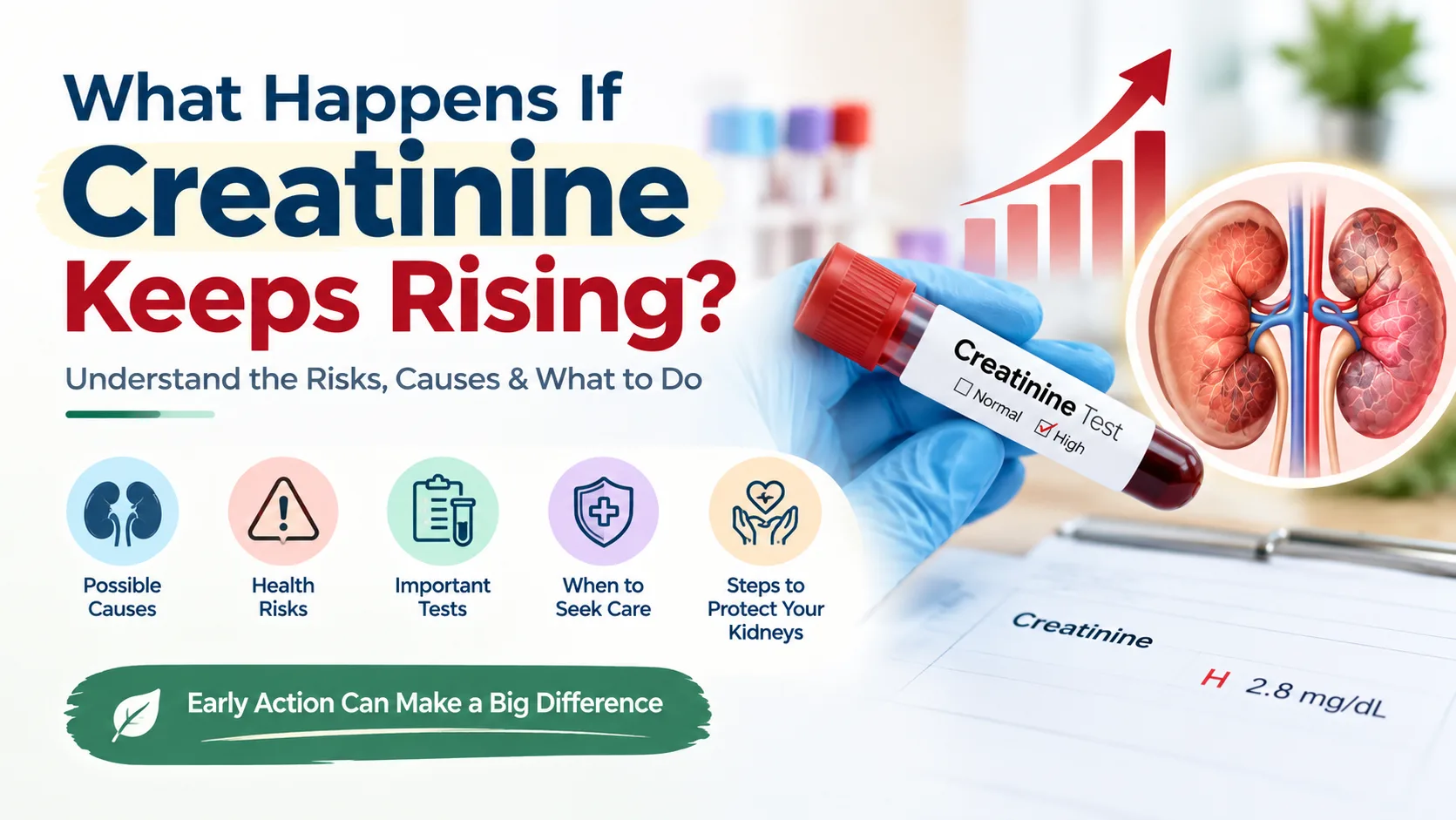

Short answer: your filtering system is falling behind on its cleanup duty. If you have high creatinine, the waste that should be leaving your body through urine is piling up in your blood instead. Keep ignoring it, and it goes from a number your doctor frowns at to something that genuinely affects how you feel day to day.
Okay, now that the panic-Googling part of your brain has an answer, let's actually sit with this for a bit, because there's more to unpack here than one scary sentence.
I'll be honest, I've had this conversation with my own uncle, who found out his creatinine was "a little high" during a routine check-up he almost skipped because he "felt fine." That phrase; I felt fine; comes up a lot with this stuff, and it's exactly why the number matters more than how you're feeling on any given Tuesday.
Okay, But What Even Is Creatinine
Your muscles burn through a compound called creatine to get energy for basically everything you do; walking, lifting, scrolling Instagram at 2 am, all of it counts as "muscle activity," apparently. Creatinine is what's left over after that process, the ash after the fire, if you want to be poetic about it.
Your bloodstream picks it up, carries it around, and hands it off to be filtered out and flushed away. On a good day, this whole system runs so smoothly you never think about it once. It's only when the filtering slows down that creatinine starts building up instead of leaving, and that's when a blood test starts flagging numbers nobody wants to see.
High Creatinine Causes (Because "Why" Is Always the First Question)
Here's the thing nobody tells you upfront: a high reading doesn't automatically mean something catastrophic is happening. High creatinine causes cover a pretty wide range, from "you didn't drink enough water this week" to "this has been building for years."
Some of the usual suspects:
-
Not drinking enough water; genuinely, dehydration alone can throw your numbers off
-
Long-standing diabetes or high blood pressure quietly wearing down filtering tissue over years
-
Certain medications, painkillers especially, when used regularly for a long stretch
-
A brutal workout or a very high-protein diet right before the test
-
Urinary blockages or infections creating pressure in the system
-
An underlying, ongoing decline in how well things are filtering; the one that actually needs real attention
A single high number after a hot day and a protein shake isn't the same story as three tests in a row trending upward. Doctors know this, which is why they usually want a pattern before they get worried. You should probably borrow that patience too, even if 1 AM Google doesn't come with any.
So What Actually Happens If It Keeps Going Up
This is the question you're really here for, so no more stalling.
When the number keeps climbing over weeks or months, it usually mirrors a drop in something called the filtration rate; basically, a score for how well your internal plumbing is doing its job. As that score drops, waste hangs around in the blood longer than it should, and that's where symptoms start creeping in.
It rarely happens overnight, and it doesn't skip straight to the worst-case scenario. It's more of a slow slide, and it tends to go something like this:
Early on, you probably feel completely normal. Nothing. This is the stage where the lab report knows more than your body does, and it's honestly the best time to catch it.
A bit further along, you might notice you're tired more than usual, maybe some puffiness around your ankles by evening, appetite that's just a little off. Nothing dramatic; the kind of stuff people brush off as "just getting older" or "bad week."
Push past that, and it stops being subtle. Nausea, persistent exhaustion that sleep doesn't fix, changes in how often you're using the bathroom, muscle cramps that show up for no reason, a kind of mental fog that coffee just can't cut through anymore.
And if it's allowed to go further still: swelling that's hard to ignore, trouble breathing, confusion; that's the stage where toxins are genuinely affecting the heart and brain, and it usually means urgent care, sometimes dialysis.
I want to be clear, though: most people never get anywhere near that last stage, because they catch the early signals and actually do something about it. This isn't a doom-and-gloom piece. It's more of a "please don't ignore your check-engine light" piece.
Can Herbs Or Ayurveda Actually Move The Needle Here?
This is what half of you scrolled down here to ask about, so let's not tiptoe around it; do herbal remedies for high creatinine actually work, or is this wishful thinking dressed up as ancient wisdom?
Ayurveda has been talking about renal health for a very long time, just in a different language: channels, balance, doshas; instead of lab values. What's more interesting is that modern researchers have actually started testing some of these traditional herbs properly, not just taking the old texts at their word.
A few things worth knowing, because they're not just internet folklore:
There's a randomized clinical trial that gave people with chronic kidney disease and high uric acid an extract of Terminalia bellerica for 24 weeks, and it showed a real, measurable drop in both uric acid and creatinine, without any major safety red flags. That's not a random blog claim; that's published, peer-reviewed data sitting on PubMed Central.
Separately, a scoping review looking across a bunch of Ayurvedic case reports on chronic kidney disease found that certain herbo-mineral formulations were repeatedly linked to drops in serum creatinine and improvements in filtration rate. Even the researchers who wrote it said, essentially, "promising, but we need bigger, better trials before we get too excited." Which, fair.
And then there's the old reliable duo: Punarnava and Gokshura, that show up constantly in Ayurvedic literature for their mild diuretic and anti-inflammatory effects, with some case documentation showing creatinine trending down alongside their use.
Here's my honest read on this: natural treatment for high creatinine through these herbs isn't nothing, but it's also not a replacement for actual medical care, especially once things have progressed. Think of it as support, not a substitute. Somewhere between "worth exploring" and "don't cancel your doctor's appointment for this."
Best Herbs For Creatinine, Ranked By Vibe (Not Just Science)
Because a wall of herb names is boring, here's the cheat-sheet version:
|
Herb |
Known For |
Personality, Basically |
|
Punarnava |
Mild diuretic, eases swelling |
Shows up on time, every time |
|
Gokshura |
Supports filtration, calms inflammation |
Does the work quietly, no drama |
|
Varun (Crataeva nurvala) |
Traditional urinary support |
The specialist you call for one job |
|
Terminalia bellerica |
Actually studied in a clinical trial |
Brings receipts to the argument |
|
Rehmannia |
Traditional renal nourishment |
The grandparent of the group, respected |
Not a prescription, just a starting point for a conversation with someone qualified; an Ayurvedic practitioner or your doctor, ideally both talking to each other.
What Kidney Disease Ayurvedic Treatment Usually Looks Like In Real Life
If somebody goes down the kidney disease Ayurvedic treatment route alongside their regular doctor visits (and honestly, that combination tends to work better than picking just one side), it usually isn't a single magic herb. It's more of a full routine: specific formulations picked for that person's situation, dietary changes like cutting sodium and watching protein, better sleep and less stress, and actually going back for lab tests to see if any of it is working instead of just hoping.
Nobody drinks one cup of some herbal tea and wakes up cured. It's slow, it's a bit boring honestly, and it needs consistency; which, to be fair, is how basically every chronic condition improves anyway.
When This Stops Being A "Watch And Wait" Situation
Most rises aren't emergencies. But a few things mean you skip the wait-and-see approach entirely and call your doctor today:
-
Sudden swelling in your legs, feet, or face
-
Barely any urination
-
Genuine trouble breathing
-
Confusion or unusual drowsiness
-
Chest pain or pressure
If any of that shows up along with rising numbers, that's not a "let's try some herbs first" moment. That's a "go now" moment.
Key Takeaways
-
A rising number usually points to your filtration slowing down, not an instant emergency
-
High creatinine causes range from something as simple as dehydration to long-term conditions like diabetes
-
Symptoms tend to sneak up gradually; feeling fine, then tired, then genuinely unwell if it's left alone
-
Some best herbs for creatinine, like Terminalia bellerica, Punarnava, and Gokshura, have actual research behind them, not just tradition
-
Ayurvedic creatinine treatment works best alongside medical care, not instead of it
-
Catching the trend early, and staying consistent with monitoring, matters more than any single remedy
FAQs
Can creatinine actually go back down once it's high?
Often, yes; especially if the cause was something temporary like dehydration or a medication, and it's caught and fixed early.
Does one high reading mean something is seriously wrong?
Not really; one number can shift from exercise, diet, or a rough hydration day, so doctors care more about the trend than a single test.
Do Ayurvedic herbs genuinely lower creatinine, or is that just marketing?
Some, like Terminalia bellerica, have actual clinical trial data showing a measurable drop, though results differ from person to person.
How often should someone with elevated levels get retested?
It really depends on how high and how severe, but many doctors suggest every few weeks to a few months; ask yours for a schedule that fits your case.
Can diet changes alone fix rising creatinine?
Diet genuinely helps, especially cutting back on excess protein and staying well hydrated, but it works best as a partner to medical guidance, not a solo act.
Disclaimer: This piece is written for general awareness and isn't medical advice, diagnosis, or treatment. Please talk to a qualified doctor or Ayurvedic practitioner before trying any herbal remedy, especially if you already have a health condition or take regular medication.