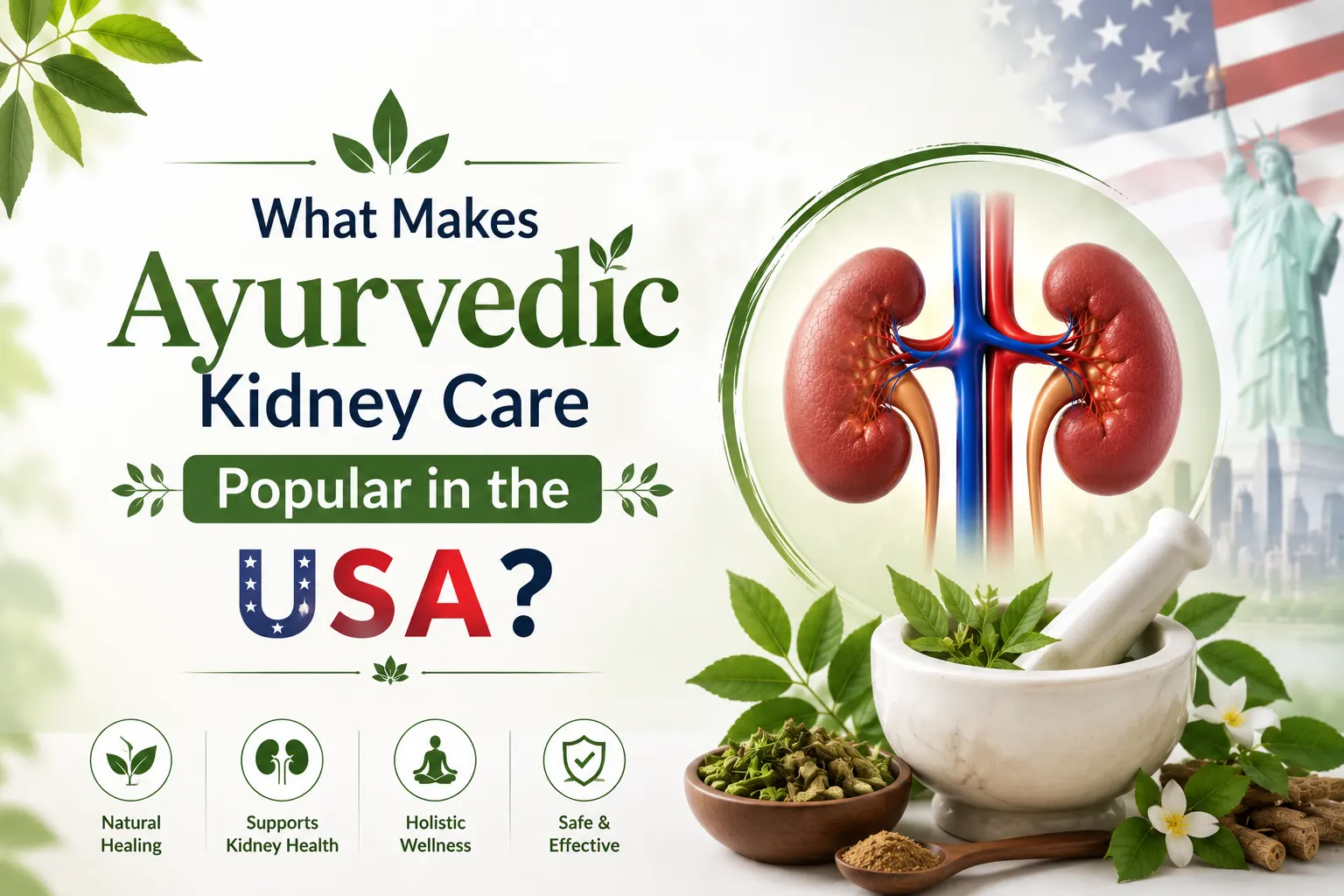

Short answer: people are tired of feeling like a science experiment, and they want something gentler that actually explains why their body is acting up. That's the real reason Ayurvedic kidney care popular in the USA trend keeps showing up in Google searches, Reddit threads, and every other wellness group chat you're secretly a member of.
Now, before you picture someone chanting mantras over a kidney stone, let's slow down. This isn't about ditching your nephrologist for turmeric tea and good vibes. It's about a growing number of Americans who are pairing modern medicine with older, slower, root-cause-focused practices, and honestly, the combo is working better for a lot of people than either approach alone.
So Why Is Everyone Suddenly Into This?
Let's be real: kidney problems are sneaky. They don't announce themselves with fireworks. You just feel "off" for months before a blood test says otherwise. That slow-burn nature is exactly why so many USA patients are drawn to Ayurveda; it treats the body as one connected system instead of playing whack-a-mole with symptoms.
A few reasons this approach has caught fire:
-
It's personalized. Ayurveda looks at your body type (dosha), diet, stress levels, and daily habits; not just your creatinine number.
-
It leans on food first. Diet tweaks, hydration rhythms, and herbs come before anything drastic.
-
It fits the "prevention over panic" mindset that's become huge in American wellness culture post-2020.
-
It doesn't ask you to abandon your doctor. Most people use it alongside conventional treatment, not instead of it.
The Herbal Support Angle
Here's where it gets genuinely interesting. Herbs like Punarnava, Varuna, and Gokshura have been used in Indian medicine for centuries for kidney and urinary health, and now researchers are actually poking at them under lab conditions. Studies published in journals like the Journal of Ethnopharmacology have looked at Punarnava's diuretic and anti-inflammatory properties, and early research on Varuna suggests it may help with mineral balance related to stone formation. Nothing here is a magic cure, but it's enough real data that herbal support isn't just a marketing buzzword anymore; it's a legitimate area of ongoing research.
This scientific curiosity is a big part of why Ayurvedic kidney care is popular in the USA. Conversations aren't fringe anymore; they're showing up in integrative medicine clinics, not just yoga studio bulletin boards.
Natural Kidney Treatment vs. "I'll Just Google It at 2 AM"
Let's compare the vibe, because comparison tables are basically the internet's love language:
|
Category |
Random 2 AM Google Search |
Ayurvedic Approach |
|
Diagnosis method |
WebMD says it's either dehydration or a rare tropical disease |
Looks at diet, lifestyle, and dosha imbalance |
|
Herbs involved |
None, just panic |
Punarnava, Varuna, Gokshura, etc. |
|
Follow-up plan |
Bookmark 14 tabs, do nothing |
Diet shift + hydration routine + herbal support |
|
Emotional outcome |
Mild existential crisis |
Weirdly calm, slightly smug |
In all seriousness, natural kidney treatment methods work best as a complement, filling in the lifestyle and prevention gaps that a 12-minute doctor's visit just doesn't have time for.
It's Also About Kidney Wellness, Not Just Kidney Repair
This is probably the biggest cultural shift. Americans didn't just start caring about fixing sick kidneys; they started caring about kidney wellness as an ongoing thing, like skincare but for your insides. Ayurveda's whole philosophy is built around this "maintain, don't just repair" idea, which lines up nicely with how people already think about fitness apps, sleep tracking, and gut health.
A small clinical review in Frontiers in Pharmacology even noted that several Ayurvedic herbs traditionally used for urinary tract support show measurable anti-inflammatory and antioxidant activity in preliminary trials; which is basically science saying "okay, fine, there might be something here."
Why Trust in Ayurvedic Care Keeps Growing
Ayurvedic care in the USA isn't spreading because of hype alone. It's spreading because:
-
Chronic kidney issues are rising, and people want options that don't feel like a last resort.
-
Integrative and functional medicine doctors are increasingly open to blending Eastern and Western approaches.
-
Word of mouth (and yes, social media) has made these practices feel less "exotic" and more mainstream.
-
People genuinely like feeling like an active participant in their own health, not a passive patient.
Key Takeaways
-
Ayurvedic kidney care popular in the USA trend is growing because people want prevention-focused, personalized options.
-
It works best alongside; not instead of; conventional medical care.
-
Herbs like Punarnava and Varuna have some early scientific backing, though more research is needed.
-
Diet, hydration, and lifestyle changes are core to the approach, not an afterthought.
-
The bigger cultural shift is toward ongoing kidney wellness, not just crisis-mode treatment.
FAQs
Is Ayurvedic kidney care a replacement for medical treatment?
Nope; think of it as a helpful sidekick, not the main superhero of your treatment plan.
Are Ayurvedic herbs for kidneys backed by science?
Some early studies show promise, especially for herbs like Punarnava, but research is still catching up to centuries of tradition.
Why has this become so popular in the USA specifically?
Because Americans love a good "treat the root cause" story, and Ayurveda has been telling that story for thousands of years.
Can I start Ayurvedic kidney care on my own?
You can start with diet and lifestyle basics, but herbs and dosage should really go through a qualified practitioner or your doctor.
Does Ayurveda help prevent kidney stones?
Some traditional herbs are believed to support healthy mineral balance, though it's not a guaranteed stone-prevention plan.
Disclaimer: This blog is for general informational purposes only and isn't medical advice. Always talk to a licensed healthcare provider before starting any new treatment, herbal or otherwise, especially if you have an existing kidney condition. Your kidneys deserve real professionals, not just a well-meaning blog.