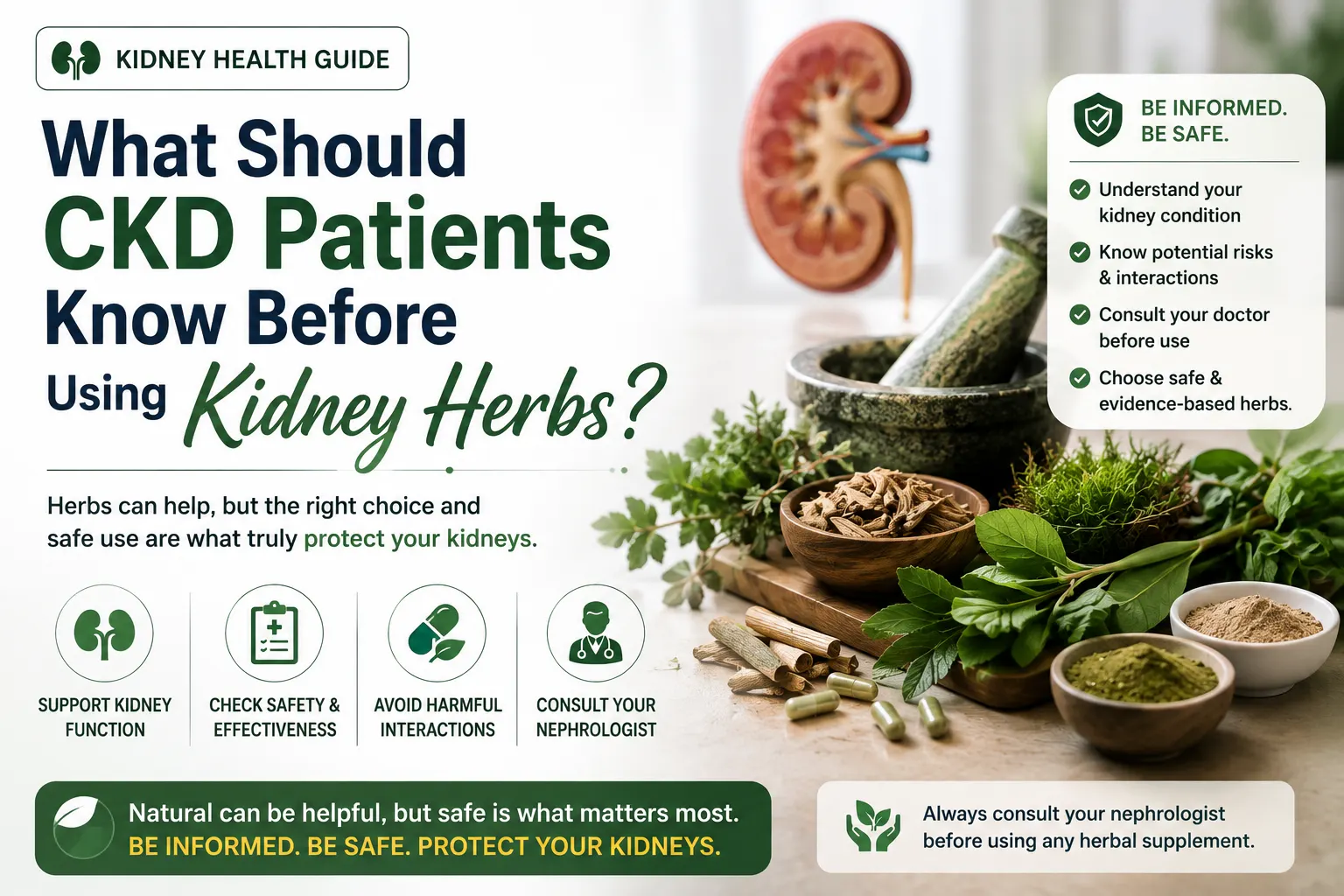

Short answer: just because a herb grew out of the ground doesn't mean your kidneys are going to be cool with it. If you've got chronic kidney disease (CKD), some of those "miracle" herbal jars can quietly cause more trouble than the thing you were trying to fix in the first place.
I get it, though. The minute doctors start throwing around words like "creatinine" and "GFR," most people run straight to Google at midnight looking for something gentler than a pill bottle. Herbs feel warm and grandma-approved. Pills feel cold and clinical. But here's the thing nobody puts on the label: your kidneys are basically your body's coffee filter, and when that filter is already clogged, dumping random plant extracts into it isn't exactly a kindness. Sometimes it's the opposite.
So let's actually talk about it, minus the fear-mongering and minus the "buy my supplement instead" sales pitch.
Why Your Kidneys Get Nervous Around Herbs?
Kidneys filter out waste, extra fluid, and basically anything your body doesn't need, including whatever active compounds are floating around in herbal supplements. When your kidneys aren't working at full strength, that clearing-out process slows down. Stuff builds up. And a buildup of the wrong plant compound doesn't just sit there quietly; it can speed up kidney damage instead of slowing it.
There was a review in Kidney News (from the American Society of Nephrology) that broke this down pretty plainly. It said herbs can hurt the kidneys through a bunch of different routes; some herbs are more toxic than people realize, some get prepared incorrectly, some are contaminated or mixed with other substances, and some just don't play nice with the medications you're already on, since herbal medicine can be a source of kidney injury through mechanisms including known herbs with underestimated toxicity, toxic effects from incorrect preparation, contamination or adulteration, and interactions between drugs and herbs. So, it's never just "is this herb bad or good." It's "how was it made, what's actually in it, and what else are you taking with it."
The poster child for this whole mess is aristolochic acid, which shows up in certain traditional Chinese herbs. This isn't some vague internet scare story; research has actually linked it to CKD and even urinary tract cancers, as aristolochic acid found in certain traditional Chinese herbs has been linked to chronic kidney disease and urinary tract cancers. That's about as real as herbal nephrotoxicity gets, and it's exactly why "natural" and "harmless" are two very different words that keep getting used like they're synonyms.
"But It's Natural"; Yeah, About That
Here's the annoying part. In most places, including the US, herbal supplements don't go through the same regulation as actual medicine. The American Kidney Fund flat-out says these products generally aren't approved by the FDA to treat or prevent disease, which means the safety, potency, and purity can be all over the place from one bottle to the next, since herbal supplements are generally not regulated by the Food and Drug Administration or approved to treat or prevent disease, meaning their safety, effectiveness and purity may vary. So that "pure organic root extract" you bought online might genuinely be pure. Or it might have inconsistent dosing, weird fillers, or trace contaminants nobody bothered to mention.
There's also a population-based study using NHANES data that found a chunk of the herbal supplements people were actually taking turned out to be potentially harmful; and a good number of the herbs the National Kidney Foundation flags as risky for CKD showed up as ingredients in everyday supplements people were buying without a second thought. Not exactly a comforting statistic.
Okay, But Not Every Herb Is the Villain Here
Now before you go clear out your entire spice rack in a panic, some herbal research does show real promise for kidney support. A review on Chinese herbal medicine (CHM) found that certain classical formulas and individual herbs, when paired with standard treatment (not instead of it), showed decent results in improving kidney function and reducing protein in urine, especially in specific conditions like IgA nephropathy. So, it's not a flat "all herbs bad" situation; it's more of a "context and supervision matter a lot" situation.
There's also a systematic review of randomized controlled trials that didn't find strong evidence of kidney damage in CKD patients (not on dialysis) using herbal medicine short-to-medium term, under controlled conditions. But even that review was quick to add that the evidence quality was low and that patients should stick to reputable products and get regular kidney checks. In plain English: some herbs might genuinely be fine, under the right guidance, from a trustworthy source; but "might be fine" is very different from "just go for it."
Kidney-Friendly vs. Kidney-Risky Herbs (A Slightly Sassy Comparison Table)
|
Herb / Supplement |
What It's Sold As |
What It Might Actually Do to CKD Kidneys |
|
Aristolochic acid herbs |
"Ancient healing secret" |
Linked to CKD progression and cancer; just no |
|
Cape Aloe (Aloe capensis) |
"Gentle detox laxative" |
Not so gentle on kidneys already under stress |
|
Astragalus root |
"Immunity superhero" |
Some nephroprotective promise, but only with medical guidance |
|
"Detox" herbal teas, high-potassium blends |
"Flushes toxins out" |
Can spike potassium to dangerous levels in CKD |
|
Random online "kidney cleanse" mixes |
"Heals your kidneys naturally" |
Ironically can overload the exact organ you're protecting |
Moral of the story: your kidneys have never once read a marketing brochure, and they're not about to start.
📞 Get a Kidney Health Consultation – Call Now!
What You Should Actually Do About This?
-
Tell your nephrologist about literally every supplement you take, even the "harmless" tea your aunt swears by
-
Watch out for herbs loaded with potassium or phosphorus; both are usually restricted in CKD
-
Look for kidney-safe supplements made specifically for CKD instead of generic herbal blends
-
Get your kidney function checked regularly if you're using any herbal product, doctor-approved or not
-
Be extra skeptical of anything bought online with no clear ingredient list
-
Repeat after me: "natural" does not automatically mean "safe for my kidneys"
Key Takeaways
-
Herbal supplements aren't regulated the same way medicines are, so quality can swing wildly from brand to brand
-
Aristolochic acid is one of the clearest, most studied examples of herbal nephrotoxicity out there
-
Some herbs genuinely help with kidney support, but almost always alongside standard treatment and medical supervision
-
Always tell your doctor before adding any herb to your routine; no exceptions, not even "just a tea"
-
Regular kidney monitoring matters even more once herbal products enter the picture
Wrapping This Up
Here's the honest takeaway: your kidneys don't care that a herb has been used for centuries or that the packaging has a leaf on it. Before you add anything herbal to your routine, loop your doctor in, ask about interactions, and treat your kidneys the way you'd treat a friend who's already going through a rough patch; with a bit more care, not a random pile of extra stuff to deal with.
📞 Get a Kidney Health Consultation – Call Now!
FAQs
Are all herbal supplements bad for CKD patients?
Not all of them; it really comes down to the specific herb, the dose, and whether your doctor knows you're taking it.
What's the most well-known herb linked to kidney damage?
Herbs containing aristolochic acid are among the most clearly documented for causing serious kidney harm.
Can herbal tea really mess with potassium levels?
Yes, plenty of herbal teas are surprisingly high in potassium, which can be risky if your kidneys can't clear it well.
Should I just stop taking herbs before I even mention it to my doctor?
No, talk to your doctor first, since stopping certain things suddenly can also cause its own problems.
Are kidney-safe supplements actually different from regular herbal ones?
Yes, they're specifically formulated to skip the nutrients and compounds that tend to be risky for CKD patients.
Disclaimer: This blog is written for general informational purposes only and isn't a substitute for professional medical advice. Please talk to a qualified nephrologist or doctor before starting, stopping, or mixing any herbal supplement with your CKD treatment plan.