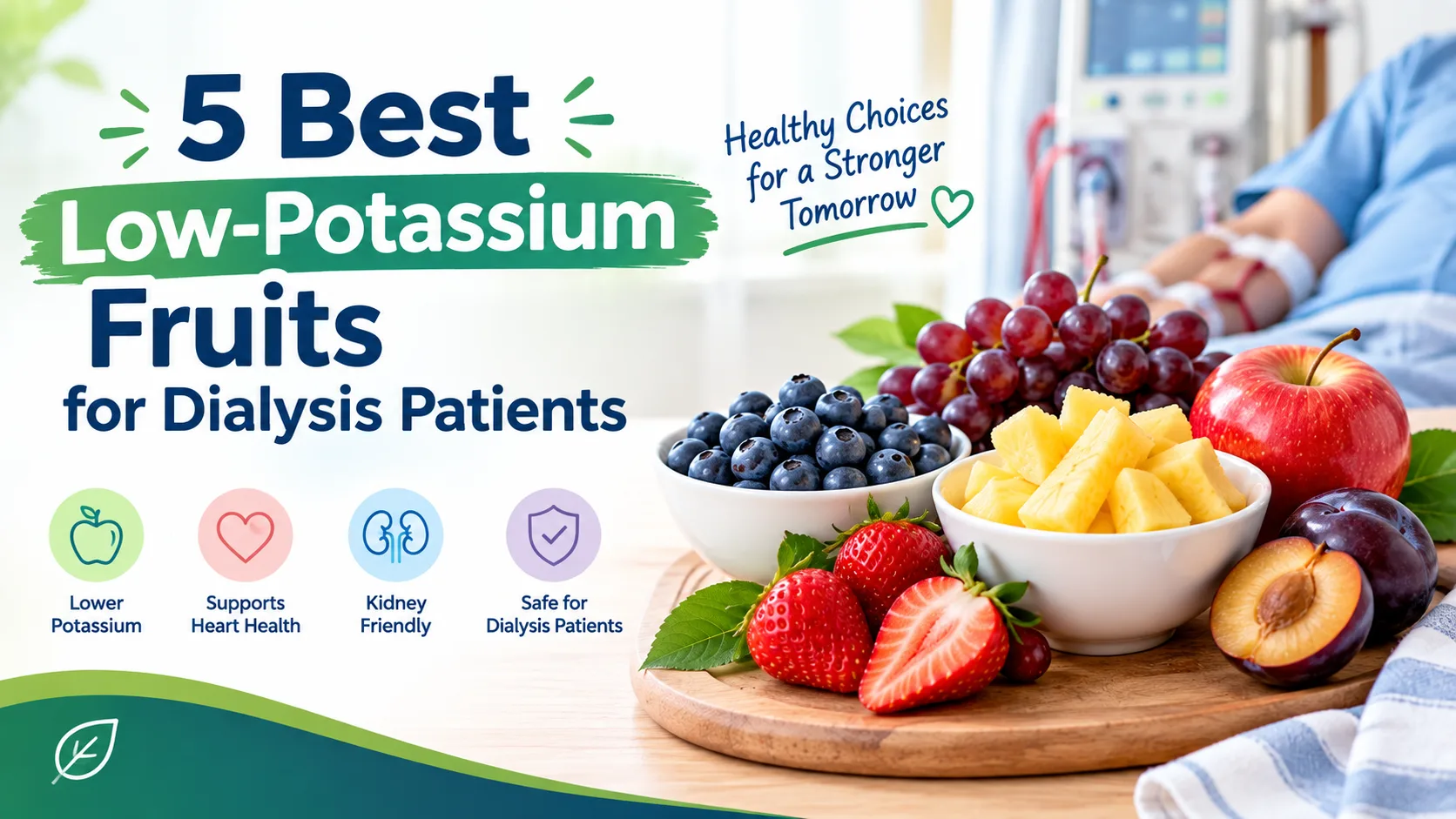

If you're on dialysis and staring longingly at a fruit bowl wondering, "Can I even touch that banana?" here's your answer: yes, you can absolutely enjoy fruit; you just need to pick the right ones. The 5 best low-potassium fruits for dialysis patients are apples, berries, pineapple, grapes, and watermelon. They're sweet, satisfying, and won't send your potassium levels into a panic spiral.
Now, before you close this tab thinking, "great, five fruits, that's it, my life is over"; relax. This isn't a punishment list. It's more like a cheat sheet that lets you keep enjoying snack time without your nephrologist giving you that look at your next appointment.
Let's talk about why potassium becomes such a big deal once dialysis enters the picture, which fruits deserve a permanent spot in your fridge, which ones need to be politely uninvited, and, because we like covering all our bases, how Ayurveda approaches renal wellness too.
Why Does Potassium Even Matter During Dialysis?
Here's the deal. Potassium is a mineral your body actually needs; it helps your muscles work, keeps your heart beating in rhythm, and generally does its job quietly in the background. The problem starts when the organs that filter out extra potassium aren't working at full capacity, which is exactly the situation for someone on dialysis.
When potassium builds up instead of getting flushed out, it doesn't just sit there politely. It can mess with your heart rhythm, cause muscle weakness, and in serious cases, become a medical emergency. This condition even has a name: hyperkalemia, and it's one of the more common reasons dialysis patients end up back in the hospital unexpectedly.
So while a healthy person can eat a banana split without a second thought, someone on dialysis needs to treat high-potassium foods the way you'd treat that one relative who overstays every family gathering; welcome in small, controlled doses, not as a daily habit.
This is exactly why having a solid kidney-friendly diet plan isn't optional; it's basically your survival guide.
📩 Ask a Kidney Expert (Free 10-Min Consultation)
The Worst Foods for Kidney Patients (A Quick Detour)
Before we get to the fun fruity part, let's rip the band-aid off. Some of the absolute worst foods for kidney patients include:
- Bananas (sorry, we know, it hurts)
- Oranges and orange juice
- Potatoes (especially with the skin on)
- Tomatoes and tomato-based sauces
- Avocados (yes, even for the avocado toast crowd)
- Dried fruits like raisins, apricots, and prunes
- Melons like cantaloupe and honeydew
These aren't "bad" foods in the moral sense; they're just potassium-dense, and when your body can't clear that potassium efficiently, it becomes a problem. Think of it less as "these foods are evil" and more as "these foods need a hall pass you don't currently have."
The 5 Best Low-Potassium Fruits for Dialysis Patients
Alright, here's the part you actually came for. These fruits are your new best friends; reliable, low-drama, and won't spike your labs.
1. Apples
The most boringly perfect fruit on this list, and we mean that as a compliment. One medium apple with the peel on clocks in at roughly 160 mg of potassium; low enough that you can eat one daily without a second thought. Slice it, bake it, dip it in a bit of peanut butter (in moderation, because phosphorus is its own conversation); apples are endlessly flexible.
2. Berries
Strawberries, blueberries, raspberries, and cranberries all fall into the low-potassium zone, and they come loaded with antioxidants that are genuinely good for you. A cup of strawberries has less potassium than a small banana, so if you're craving something sweet and a little indulgent, berries are your go-to.
3. Pineapple
Among tropical fruits, pineapple is the surprising winner here; it has noticeably less potassium than mangoes, oranges, or bananas, while still delivering that tropical, vacation-in-your-mouth flavour. Bonus: pineapple contains bromelain, an enzyme known for its anti-inflammatory properties.
4. Grapes
Small, portable, and satisfying to eat by the handful, grapes are low in potassium and make a great replacement for higher-potassium snacks. Just watch your portion size; "a handful" and "the whole bag while watching Netflix" are technically different serving sizes.
5. Watermelon
Yes, watermelon makes the cut, and yes, we know it feels counterintuitive because it's a melon. But watermelon actually has significantly less potassium than its cantaloupe and honeydew cousins. The catch: it's mostly water, so if you're also managing fluid restrictions, keep portions modest.
A Quick, Slightly Funny Comparison Table
Because nobody wants to memorize a spreadsheet, here's the cheat-sheet version:
|
Fruit |
Potassium Level |
Verdict |
|
Apple |
Low (~160 mg) |
The reliable friend who never causes drama |
|
Berries |
Low |
Basically nature's candy, guilt-free |
|
Pineapple |
Low |
Tropical vacation, zero potassium hangover |
|
Grapes |
Low |
Snackable, but don't inhale the whole bunch |
|
Watermelon |
Low (but watery) |
Refreshing, just mind your fluid limit |
|
Banana |
High |
The villain origin story of this whole diet |
|
Orange |
High |
Great vitamin C, terrible potassium math |
|
Avocado |
High |
Delicious, but not your toast topping right now |
What About Ayurveda? Does It Have Anything to Say Here?
If you're someone who likes exploring natural treatment for kidney disease alongside conventional dialysis care, Ayurveda does offer some interesting perspectives worth knowing about; not as a replacement for dialysis, but as a complementary approach many people look into.
Ayurvedic kidney treatment generally focuses on supporting the body's natural detoxification rhythm through herbs, dietary discipline, and lifestyle adjustments. Practitioners of Ayurvedic kidney disease treatment often talk about herbs like Punarnava, Gokshura, and Varun, commonly cited among the best herbs for kidneys in Ayurveda for their traditional use in supporting urinary and renal wellness.
One name that frequently comes up in this space is Dr. Puneet Dhawan, known for his work in Ayurvedic renal care, along with Karma Ayurveda for kidney disease treatment, a clinic often referenced by patients exploring Ayurvedic support alongside their regular medical treatment. If you're curious about this route, the smartest move is always to loop in your nephrologist first; think of it as adding a co-pilot, not swapping out your main doctor.
What Do the Studies Actually Say?
This isn't just folklore; there's real research backing the importance of potassium management in dialysis care. Guidelines published by the National Kidney Foundation (through its KDOQI clinical practice recommendations) have long emphasized individualized potassium restriction based on lab values rather than blanket fruit bans, noting that overly restrictive diets can sometimes do more harm than good by limiting overall nutrition.
Research published in the American Journal of Kidney Diseases has also looked at how dietary potassium intake correlates with serum potassium levels in hemodialysis patients, generally supporting the idea that portion-controlled, low-potassium produce can be safely included in a kidney friendly diet plan rather than eliminating fruit altogether. The takeaway from most of this research is consistent: it's not about fearing fruit, it's about choosing wisely and eating in sensible portions.
Key Takeaways
- The 5 best low-potassium fruits for dialysis patients: apples, berries, pineapple, grapes, and watermelon
- Low potassium foods for kidneys don't have to be boring; flavour and safety can coexist
- The worst foods for kidney patients include bananas, oranges, potatoes, tomatoes, and avocados
- Portion control matters just as much as fruit selection
- A well-planned kidney-friendly diet plan should be built with your dietitian or nephrologist, not guesswork
- Ayurvedic approaches like those from Karma Ayurveda for kidney disease treatment can be explored as a complementary option, always alongside medical supervision
FAQs
Can dialysis patients eat fruit every day?
Yes, as long as you're choosing low-potassium options and sticking to sensible portion sizes.
Is watermelon really safe despite being a melon?
Yes, watermelon has notably less potassium than cantaloupe or honeydew; just watch your fluid intake alongside it.
What is the single worst fruit for someone on dialysis?
Bananas top the list because of their consistently high potassium content per serving.
Can Ayurveda cure kidney disease completely?
No, Ayurveda is generally used as a complementary support approach, not a replacement for dialysis or medical treatment.
How much fruit can a dialysis patient eat in a day?
Most patients can safely have a few servings of low-potassium fruit daily, but your dietitian should confirm the exact amount based on your labs.
Disclaimer
This blog is for general informational purposes only and isn't a substitute for professional medical advice. Always consult your nephrologist or renal dietitian before making dietary changes, especially regarding potassium intake, fluid limits, or exploring Ayurvedic or other complementary treatments alongside dialysis care.