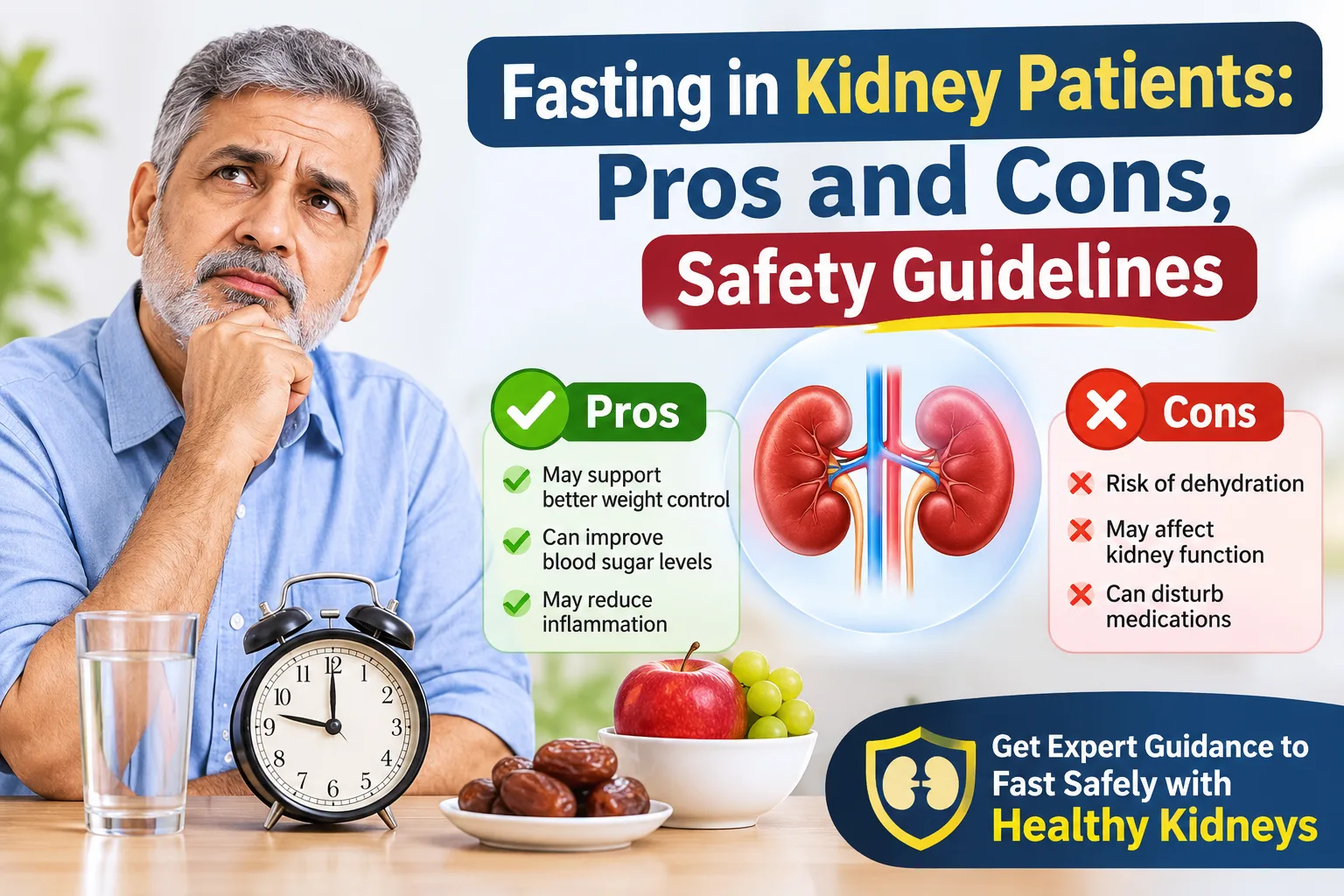

Sometimes, yes, but all of this depends on your stage of CKD, medications, and your current health condition. Can patients fast? Yes, many patients with early stages of the disease can do it, while those who have an advanced stage or are on dialysis need to be very cautious.
Fasting for kidney patients should be treated similarly to a car trip: it is fine with a working machine and map, but it becomes problematic on an empty gas tank.
Why Fasting Needs More Consideration
Fluid balance, balanced minerals, and regular medication taking are very important. Lack of water for many hours leads to dehydration and a fall in your blood pressure. Too long breaks in eating can disrupt blood glucose balance.
And, finally, there is the celebratory meal at the end of the fast. Snacks, fried foods, and dried fruits can be high in sodium, potassium, and phosphorus, which can drastically raise these minerals' levels in the blood. Your kidneys would surely like to discuss it.
What the Research Says
The systematic review by Bragazzi (Journal of Research in Medical Sciences, 2014) of Ramadan fasting in CKD suggested it to be generally tolerated in patients with stable mild disease, although it might lead to complications among those with advanced CKD or transplanted patients.
- Emami-Naini and colleagues (Iranian Journal of Kidney Diseases, 2012) have followed CKD patients through Ramadan and observed no major deterioration of their kidney function in mild-to-moderate CKD. However, it was a small study, so the findings should be regarded as reassuring rather than conclusive.
- IDF-DAR Practical Guidelines (2021) suggest that patients suffering from CKD should be considered at a higher risk for complications during fasting and require a pre-fasting medical review.
Who Should Consider It and Who Should Think Twice?
- Often Manageable
- Early-stage CKD, good lab results
- Personality: I've done my homework
- Needs Serious Caution
- Stage 4 or 5 CKD, dialysis, transplant, poorly controlled diabetes
- Personality: Please call your doctor first
This is a general illustration, not a conclusion. Only your nephrologist will be able to tell you your current situation.
Fasting for Kidney Patients: Do's and Don'ts
To do:
- Talk to your nephrologist several weeks in advance, not the night before the fast.
- Ask if your medicine times need to be changed.
- Make sure to stay hydrated during your eating window and follow the fluid intake limitation set by your doctor.
- Start eating gently with light food like some fruits or soup.
- Monitor your blood pressure, blood sugar levels, and dizziness.
Don't:
- Do not change or stop taking any medication without talking to your doctor.
- Don't overeat fried snacks, pickles, or salt-rich food with added phosphates.
- Avoid too many bananas, oranges, coconut water, or dried fruit in your diet if you have high potassium.
- Don't drink if you have any warning signs, such as severe weakness, confusion, no urine production, or falling.
Breaking the fast is completely permissible in case something feels wrong, and most religious traditions include this exception for health reasons. Your health has nothing to do with some performance review.
Smart Ways to Prepare
The meal that is eaten before the fast should be a light one. It means eating things like white rice, egg whites, and cauliflower instead of salty products. Movement in the form of light exercise, enough sleep, and reasonable practices are all components of the natural treatment of kidney disease that can be followed along with the standard therapy and not instead of it.
Ayurveda's Place in This Process
One of the traditions that many Indians follow is Ekadashi and Navratri fastings, and, naturally, many people are interested in kidney disease Ayurvedic treatment. It is a valid interest. Just keep it as a companion to your treatment and tell your nephrologist about every herb or supplement that you are taking because some of them can change your potassium level or interact with your current medications.
Conclusion
It seems that fasting can be combined with the management of kidney disease. However, it needs careful planning. Before starting the fast, one has to consult with a doctor, maintain proper hydration, watch the meal contents, and pay attention to his/her body. Besides all the standard treatments, it is possible to consider Ayurveda, for example, Karma Ayurveda for renal disease treatment.
Key Takeaways
- Fasting may be suitable for certain people with stable, early-stage CKD, but not all.
- Patients who have advanced CKD, dialysis, or a kidney transplant should take this treatment with extra caution and under the supervision of a doctor.
📩 Ask a Kidney Expert (Free 10-Min Consultation)
FAQs
What should I eat to break a fast?
Something light, low in salt, and low in potassium, like a small bowl of rice or a few berries.
When should I break my fast?
If you feel dizzy, faint, confused, or unusually weak, break it and call your doctor.
Disclaimer
This blog is for general information only and isn’t medical advice. Kidney conditions vary from person to person, so please consult your nephrologist or qualified healthcare provider before fasting, changing your diet or medications, or adding any herbal or Ayurvedic treatments.