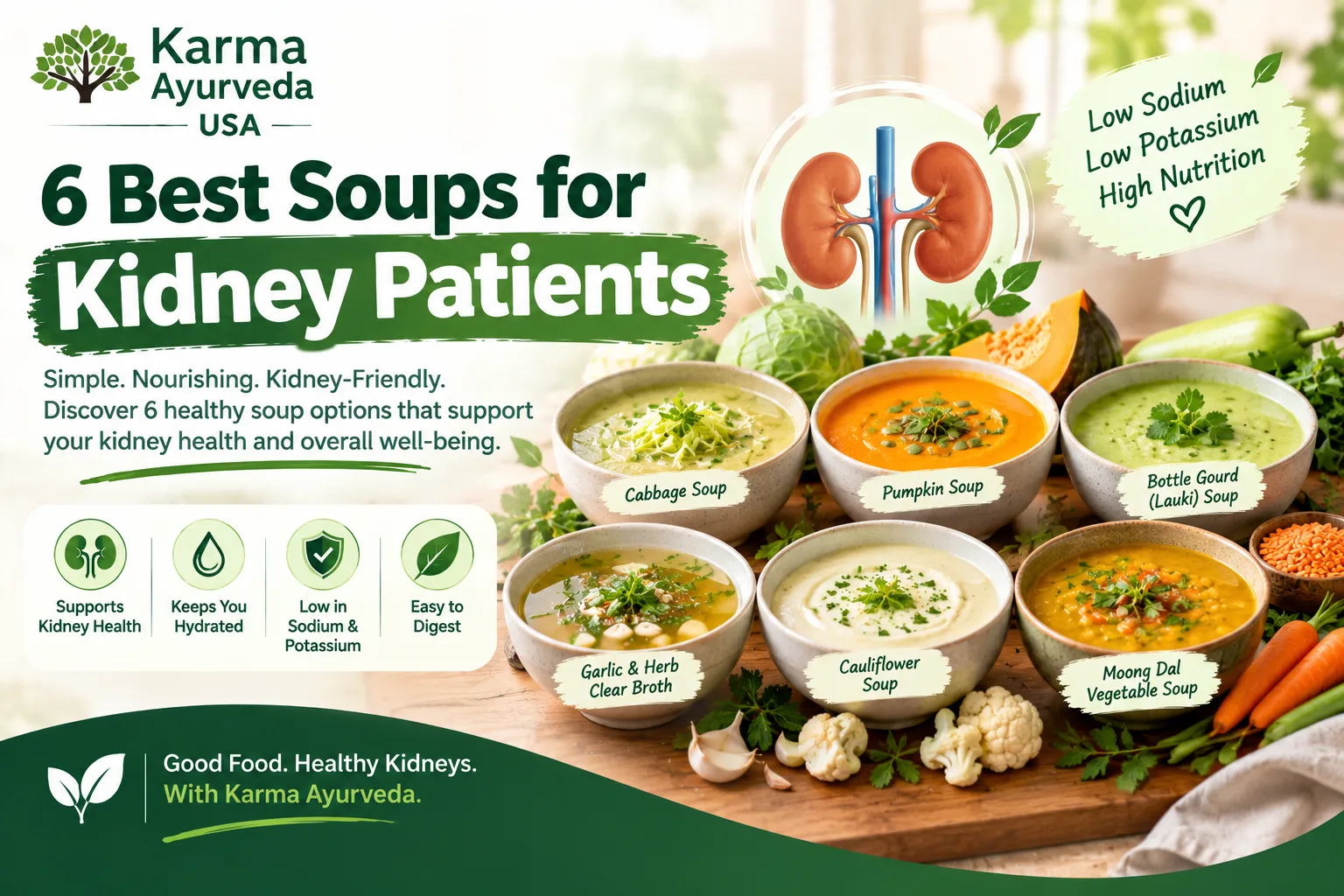

Short on time? Here's your answer: cabbage soup, bottle gourd (lauki) soup, garlic-and-herb clear broth, pumpkin soup, cauliflower "cream" soup, and a moong dal-vegetable soup are widely considered among the best soups for kidney patients because they're naturally low in potassium, sodium, and phosphorus while still being warm, filling, and honestly, pretty delicious. Now let's talk about why.
Why Soup Actually Makes Sense for a Renal-Friendly Diet
Chronic kidney disease (CKD) is a growing global concern, affecting somewhere between 8 and 13 percent of the world's population, and with impaired filtration, the body loses its natural ability to flush out excess potassium efficiently, which can lead to some genuinely uncomfortable- even dangerous; symptoms if left unchecked. So the goal with any renal-friendly meal isn't to make food boring; it's to make it smart.
Soups let you:
- Control exactly what goes in; no mystery preservatives, no hidden potassium chloride additives
- Stay hydrated without chugging plain water all day (which, let's be honest, nobody enjoys)
- Bulk up on volume without bulking up on minerals; perfect for an appetite that's gone a bit shy
- Add flavour through herbs and spices instead of salt, keeping things tasty without the sodium spike
Dietitians who specialise in renal nutrition often point out that homemade soup is one of the easiest ways to add vegetables to a restricted diet, as long as you pick the right ones and cook them the right way. Some studies have even found that boiling certain vegetables in fresh water can meaningfully reduce their potassium content before they ever hit your bowl.
The 6 Best Soups for Kidney Patients
1. Cabbage Soup
Cabbage is the quiet overachiever of the vegetable world; low in potassium, low in phosphorus, and surprisingly good at soaking up whatever flavour you throw at it. A simple cabbage soup with garlic, onion, and a splash of black pepper can be shockingly satisfying for something so humble.
2. Bottle Gourd (Lauki) Soup
A favourite in Indian households and for good reason; lauki is light, hydrating, and traditionally believed to be soothing for the digestive and urinary systems. It's the soup equivalent of a warm blanket.
3. Garlic and Herb Clear Broth
No cream, no cheese, no drama. Just a clean, low-sodium vegetable stock infused with garlic, ginger, and fresh herbs. It won't win any Instagram contests, but your lab reports might thank you.
4. Pumpkin Soup
Pumpkin brings natural sweetness and a velvety texture without needing heavy cream or potato to thicken it; both of which are usually on the "approach with caution" list for renal diets.
5. Cauliflower "Cream" Soup
Here's a fun trick dietitians love: pureed cauliflower mimics the texture of a creamy soup without the potassium load that comes with dairy or potato-based versions. It genuinely tastes indulgent while being anything but risky.
6. Moong Dal and Vegetable Soup
Light on protein, easy to digest, and endlessly adaptable; moong dal soup with low-potassium vegetables like carrots (well-cooked) and bottle gourd is a staple in many Ayurvedic-inspired renal diets.
A quick note on ingredients to go easy on: potatoes, tomatoes, spinach, and beans are naturally higher in potassium, so they need to be used sparingly, peeled, leached in water, or swapped out altogether depending on individual lab values.
The "Which Soup Wins" Comparison Table
Because nothing says "I respect your time" like a table:
|
Soup |
Potassium Level |
Effort to Make |
Comfort Factor |
|
Cabbage Soup |
Low |
Minimal (chop and boil) |
Cozy, no-fuss |
|
Bottle Gourd Soup |
Low |
Easy |
Grandma-approved |
|
Garlic Herb Broth |
Very Low |
Ridiculously easy |
Simple but mighty |
|
Pumpkin Soup |
Low-Moderate |
Medium |
Feels fancy, isn't |
|
Cauliflower Cream |
Low |
Medium |
Sneaky indulgent |
|
Moong Dal Veg Soup |
Low-Moderate |
Medium |
Hearty and filling |
Where Ayurveda Fits Into the Picture
Now, soups are a great piece of the puzzle, but they're not the whole picture. This is where a lot of people start exploring kidney disease Ayurvedic treatment as a complementary approach alongside conventional medical care; not as a replacement for it, but as a way to support overall renal wellness through diet, lifestyle, and herbal formulations.
In Ayurveda, herbs like Punarnava, Varun, Gokshura, and Palaash are traditionally discussed for their role in supporting healthy filtration and fluid balance. This is often what people are referring to when they search for the best herbs for lowering creatinine in Ayurveda; though it's worth saying clearly that "natural" doesn't automatically mean "instant" or "guaranteed," and any herbal approach should ideally be guided by a qualified practitioner rather than trial and error.
This is where names like Dr. Puneet Dhawan and clinics such as Karma Ayurveda for kidney disease treatment tend to come up in conversation, as practitioners working specifically within Ayurvedic kidney disease treatment and personalised dietary planning, including soup-friendly, renal-conscious meal guidance.
Key Takeaways
- Best soups for kidney patients are typically low in potassium, phosphorus, and sodium; think cabbage, bottle gourd, garlic broth, pumpkin, cauliflower, and moong dal
- Homemade soup beats canned soup almost every single time, mainly because of sodium and hidden potassium additives
- Leaching high-potassium vegetables (like potatoes) in water before cooking can reduce their mineral content
- Ayurveda offers a complementary lens through herbs and lifestyle changes as part of a broader Ayurvedic kidney disease treatment approach
- Always personalise your diet with a renal dietitian or Ayurvedic practitioner; labs and needs vary person to person
FAQs
Is soup good for someone with reduced renal function?
Yes, as long as it's homemade with low-sodium, low-potassium ingredients; it's actually one of the easier ways to stay nourished and hydrated.
Can canned soup be part of a renal-friendly diet?
Generally not a great idea, since most canned varieties are loaded with sodium and hidden potassium additives.
Are tomato-based soups off-limits?
Not entirely off-limits, but they should be used in small amounts since tomatoes run high in potassium.
Does Ayurveda actually help with creatinine levels?
Many people use Ayurvedic herbs and diet as a supportive, complementary approach alongside regular medical treatment, though results vary and guidance from a practitioner matters.
How often can these soups be eaten in a week?
Most renal-friendly soups can be enjoyed several times a week, though fluid intake and individual lab values should always be kept in mind.
Disclaimer: This blog is for general informational purposes only and isn't a substitute for professional medical advice. Dietary and herbal choices for renal conditions should always be discussed with a qualified doctor, dietitian, or Ayurvedic practitioner based on individual health reports and needs.