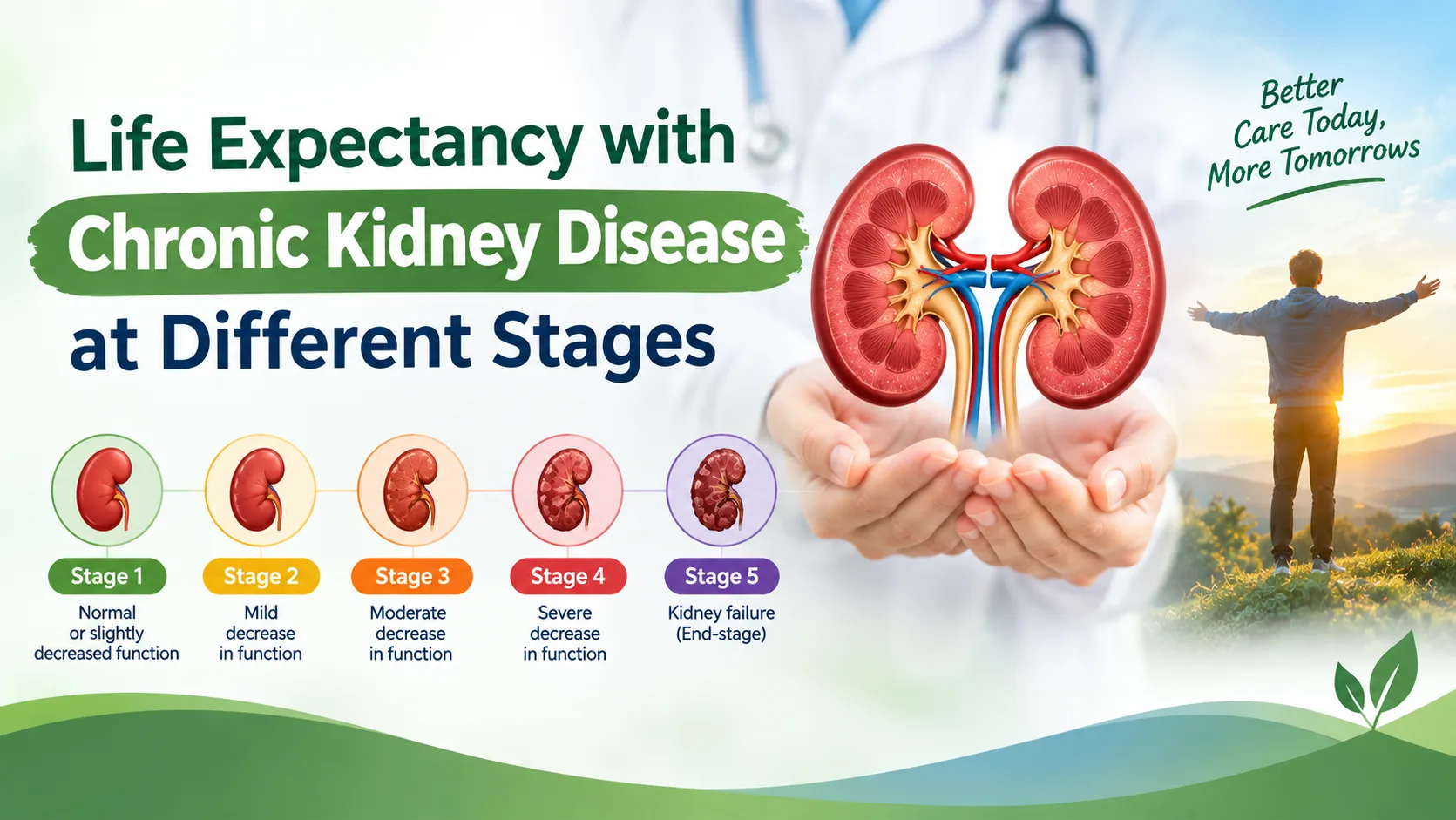

Okay, straight up: CKD life expectancy depends almost entirely on what stage you're catching it at. Stage 1 or 2? You could live a full, boring, normal life and die of something completely unrelated at 90. Stage 4 or 5? That's a different, harder conversation, and I'm not going to sugarcoat it here.
I've had a family member go through this, so I'm not writing this from some detached, "let me Google this for you" place. When you first hear the words "chronic kidney disease," your brain kind of short-circuits. You nod at the doctor, you say "okay, got it," and then you sit in the parking lot and Google it on your phone with shaking hands. If that's you right now, hi. Let's actually talk about this like humans, not like a pamphlet.
Quick Refresher: What's Actually Going On In There
Your kidneys are two fist-sized organs that basically run quality control on your blood. They filter out waste, balance your fluids, keep your electrolytes from going haywire, and generally do a thousand unglamorous jobs you never think about until they stop doing them well. CKD means that filtering job is slowly getting worse over time; not overnight, usually over years.
Doctors measure how well this is going using something called eGFR (a number based on a blood test), and they bucket it into five stages. Higher number, better function. Lower number, well, that's the whole point of this article, so let's get into it.
So... How Long Do People Actually Live With This?
This is the part everyone actually came here for, so no more stalling.
-
Stage 1 and 2 (eGFR 60-90+): Honestly? Most people at this stage are fine long-term. Your filtration rate is only mildly off, and if the underlying cause; usually diabetes or high blood pressure; is being managed, life expectancy stays close to normal. A 60-year-old at Stage 1 is looking at roughly the same outlook as someone without CKD at all.
-
Stage 3 (eGFR 30-59): This is where things get real, and it's usually the stage people get diagnosed at, because Stage 1 and 2 rarely have symptoms you'd notice. Research from the SHARP trial found that people in their 60s at Stage 3B had a projected survival somewhere around 13 to 15 years, depending on whether they were male or female.
-
Stage 4 (eGFR 15-29): This is the stage where things stop being theoretical. But here's a twist that surprises a lot of people: a large chunk of Stage 4 patients never actually make it to full failure, because heart disease gets there first. That's not me being dramatic; that's just how the data shakes out.
-
Stage 5 (eGFR below 15): This is kidney failure, full stop. Without dialysis or a transplant, we're talking months, not years. With dialysis, roughly 35% of people are still alive at the five-year mark. With a successful transplant, that number jumps to around 80%. Big difference.
So when people ask about the life expectancy of CKD patients like it's one fixed number, I get why they want a clean answer; but it just isn't one thing. It moves depending on your stage, your age, your other health stuff, and honestly, how seriously you take the boring daily maintenance part.
A Table, Because I Know You Skimmed Straight Here Anyway
|
Stage |
eGFR |
What It Actually Feels Like |
Rough Life Expectancy Reality |
|
1 |
90+ |
"I found out by accident during a random blood test" |
Basically unaffected |
|
2 |
60-89 |
Mild, quiet, no drama yet |
Near-normal with monitoring |
|
3 |
30-59 |
The wake-up call stage |
~13-15 years post-diagnosis (60s) |
|
4 |
15-29 |
Doctor's number is now saved as a favorite contact |
Heart risk becomes the real threat |
|
5 |
<15 |
Dialysis or transplant conversations begin |
5-10+ yrs on dialysis, decades with transplant |
A weirdly underrated fact from all this research: a lot of people diagnosed at Stage 3 never end up at Stage 5. Not because the kidneys magically healed themselves, but because the heart usually gets into trouble first. Your kidneys and your heart are basically flatmates who both start slacking when one of them stops pulling their weight.
What Actually Helps (Spoiler: It's Not Exciting)?
I wish I had some secret hack for you here. I don't. The stuff that actually extends survival is annoyingly ordinary:
-
Keeping blood pressure under control; this one comes up again and again in the research
-
Managing blood sugar if diabetes is part of the picture
-
Moving your body regularly; a follow-up analysis of the RENEXC trial found that people with Stage 3-5 CKD who kept up better walking distance and leg strength after a year of exercise training had noticeably better survival odds
-
Actually taking your medication (I know, groundbreaking advice)
-
Cutting back on salty, processed food
-
Not skipping your nephrologist appointments out of fear or denial
None of this makes for an inspiring movie montage. Nobody's cheering for "guy remembered to take his ACE inhibitor again," but it's genuinely what buys people years.
What About Ayurveda? People Keep Asking Me This?
Fair, because a lot of people land on this exact question: is Ayurvedic CKD treatment worth looking into alongside regular medical care? My honest take: there's real, published research on it, and it's more promising than a lot of skeptics assume, but it's not a magic replacement for your nephrologist either.
There's a comparative study in the journal Ayu (2010) that looked at a formulation called the Punarnavadi compound in people with chronic renal failure, and it showed improvements in creatinine and urea levels. A follow-up study in the same journal, published in 2011, tracked 100 patients receiving Ayurvedic care and reported measurable shifts in kidney function markers over time. That's nothing. But it's also not "throw out your prescriptions" territory.
The Herbs People Keep Bringing Up
If you're researching best herbs for kidney disease, these are the names that show up over and over in traditional and clinical literature:
-
Punarnava; the big one, traditionally used for its diuretic and anti-inflammatory effects
-
Varun; often paired with Punarnava, studied for antioxidant and renoprotective properties
-
Gokshura; used traditionally to ease urinary discomfort and support fluid balance
-
Guduchi; mostly known for immune support, but included in a lot of kidney-focused formulas
-
Shatavari; more of a general rejuvenator, used to support overall strength during a long illness
Here's the part I actually want you to remember, though: not every herbal product on the market is safe, tested, or even honestly labeled. There's a well-documented history of certain unregulated herbal products containing something called aristolochic acid, which has actually caused kidney damage rather than helping it. So kidney disease Ayurvedic treatment should mean working with an actual, qualified, registered practitioner; not buying random capsules off a sketchy website because a testimonial convinced you.
Is There One "Best" Treatment for CKD?
I'll be honest, I don't think there's a single best treatment for CKD that works the same for everyone. It's usually a mix:
-
Proper medical management: medication, regular monitoring, dialysis or a transplant when it's needed
-
Lifestyle changes that actually stick, not the crash-diet kind
-
Supervised complementary support, including natural kidney treatment approaches if your doctor's on board
-
Somebody to talk to, honestly, because chronic illness messes with your head as much as your body, and pretending it doesn't helps nobody
The people who tend to do best long-term aren't the ones chasing a miracle cure. They're the ones who just... showed up, consistently, for years. Unsexy, but true.
Key Takeaways
-
CKD life expectancy swings wildly depending on stage; near-normal in Stage 1-2, much more serious by Stage 4-5
-
Heart disease, not organ failure, is often what actually gets people in the middle stages
-
Blood pressure control, movement, and sticking to your meds are proven to add years
-
Ayurvedic CKD treatment has genuine supporting research but works best as a supplement, not a substitute
-
Herbal quality and supervision matter a lot; not all products are created equal
-
Dialysis buys years; a transplant can buy decades
Questions People Actually Ask
What's the average life expectancy with Stage 3 CKD?
Somewhere around 13-15 years from diagnosis for someone in their 60s, though it really depends on age and heart health.
Can Ayurveda actually cure kidney disease?
No; it may support function and ease symptoms alongside regular medical care, but it's not a standalone cure.
Does an early CKD diagnosis mean a shorter life?
Not necessarily; Stage 1 and 2 usually stay close to a normal lifespan with good management.
Is a transplant really better than dialysis long-term?
Generally yes, transplant recipients tend to have significantly better long-term survival odds when a match is available.
Which herbs come up most in natural kidney treatment?
Punarnava, Varun, and Gokshura are the ones you'll see mentioned again and again.
Disclaimer
This article is for general information only and isn't medical advice. Life expectancy numbers here are averages from research, not a personal forecast for you or your loved one. Please talk to a qualified nephrologist or registered Ayurvedic practitioner before making any treatment decisions.