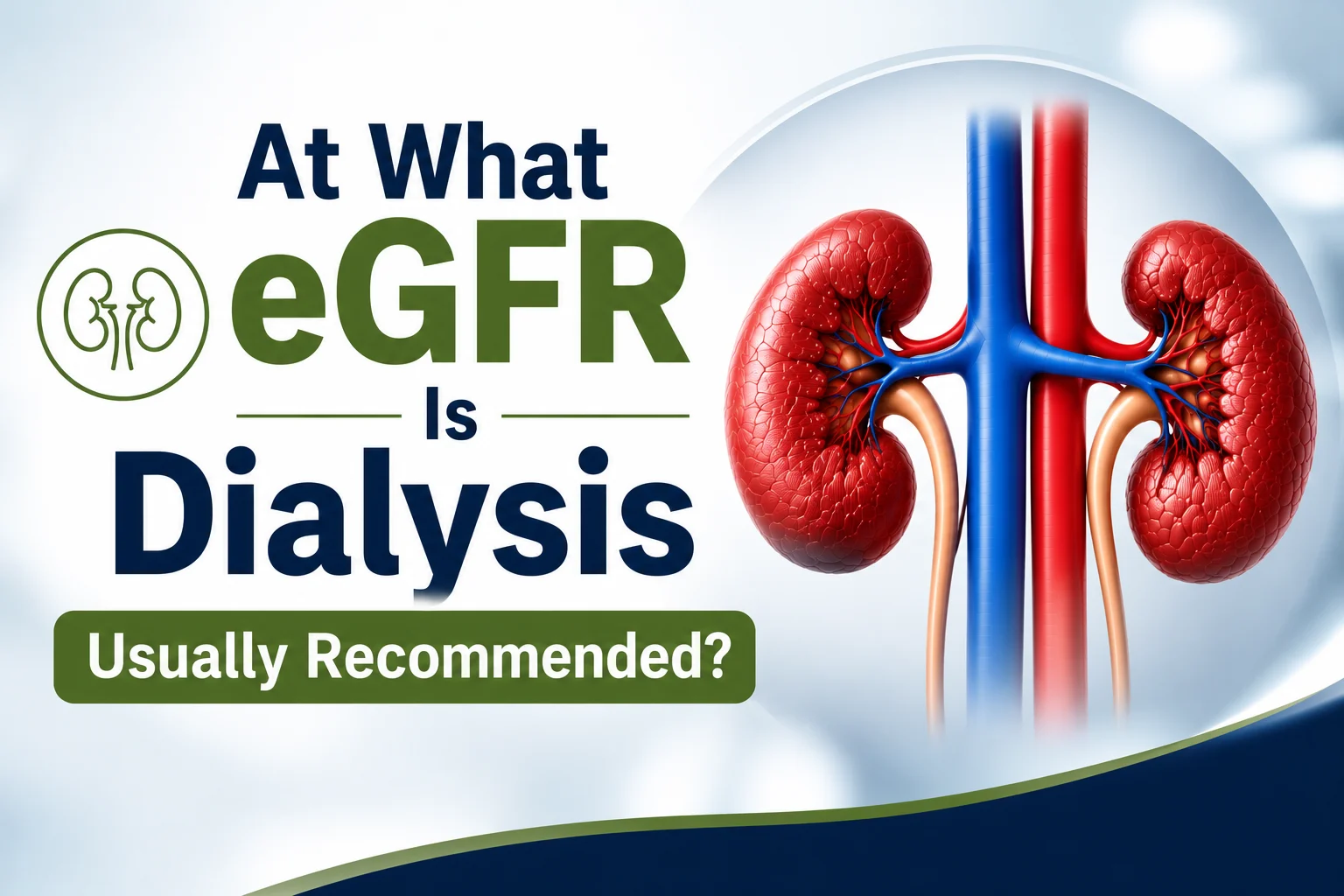

Okay, so here's the short answer before we get into all the nuance: doctors usually start seriously talking about dialysis once your eGFR dips below 15. That's it, that's the number everyone's Googling at 1 AM. But, and this is a big but, it's rarely just about that one number sitting on a lab report.
I remember the first time someone close to me got handed a report with "eGFR" circled in red pen. Nobody in the room knew what it meant, and the doctor said it fast, like she'd said it a thousand times that week (she probably had). So, let's slow it down here, no jargon-dump, just a normal explanation like I'd give a friend over chai.
Wait, What Even Is eGFR?
eGFR stands for estimated Glomerular Filtration Rate, which sounds like something out of a chemistry exam you crammed for and immediately forgot. In plain English, it's just a rough score of how well your kidneys are filtering junk out of your blood.
Think of your kidneys like the bouncers outside a club. Good stuff; water, minerals, nutrients; gets waved back in. Trash; toxins, waste, extra fluid; gets thrown out the back door as urine. When your eGFR number starts falling, it basically means the bouncers are tired, understaffed, or one of them called in sick.
A "normal" eGFR sits around 90 or higher. Below that, doctors sort kidney health into stages:
-
Stage 1 – eGFR 90+, kidneys still doing their job fine
-
Stage 2 – eGFR 60 to 89, a small dip, nothing to lose sleep over yet
-
Stage 3 – eGFR 30 to 59, this is usually where people start actually paying attention
-
Stage 4 – eGFR 15 to 29, things get serious, dialysis conversations start creeping in
-
Stage 5 – eGFR under 15, this is kidney failure, and dialysis or a transplant becomes the real topic
So When Does Dialysis Actually Start?
Here's what surprised me when I first looked into this; there's no red alarm that goes off the second your eGFR touches 15. A lot of nephrologists will tell you the number is more like a smoke detector than a fire. It tells you something's wrong, but it doesn't tell you the whole story on its own.
Most of the time, doctors are watching for a mix of things alongside the eGFR number:
-
Symptoms of uremia; think nausea, zero appetite, that bone-deep tiredness that coffee can't fix
-
Fluid building up in the body that pills just aren't controlling anymore
-
Potassium levels creeping into dangerous territory
-
Vomiting or nausea bad enough that eating properly becomes a struggle
-
Early signs that the heart or nerves are getting affected
There was actually a well-known trial called the IDEAL Study, published years back in the New England Journal of Medicine, that looked into this exact question: does starting dialysis early (right when eGFR crosses a certain line) actually help people live longer compared to waiting until symptoms show up? Turns out, no real difference. Which honestly says a lot. The number alone isn't the deciding factor everyone assumes it is.
Why Your Doctor Isn't Just Staring at a Number
Picture your car's fuel gauge hitting 15%. Some people panic and pull into the first petrol station they see. Others know their car well enough to squeeze out another 40-50 kilometers without breaking a sweat. Kidneys work in a weirdly similar way; some people function reasonably okay at a lower eGFR, and others start feeling terrible way before the "official" cutoff.
That's why the eGFR number is only one part of a bigger picture that includes blood work, how you're actually feeling day to day, whether you're eating normally, and whether fluid is piling up in your legs or lungs.
A Slightly Silly Comparison Table (Because Numbers Are Boring Alone)
|
eGFR Range |
What's Basically Happening |
Should You Panic? |
|
90+ |
Kidneys living their best life |
Nope, go make some chai |
|
60-89 |
A little slower than before |
Get a check-up, not a meltdown |
|
30-59 |
Kidneys are trying, bless them |
Start actually listening to your doctor |
|
15-29 |
Getting serious, dialysis chats begin |
Time to plan, not procrastinate |
|
Below 15 |
Kidney failure zone |
Okay, now we talk dialysis seriously |
Low eGFR Doesn't Mean Your Life Stops
I think this is the part that gets lost in translation the most. A dropping eGFR number feels like a countdown, especially after an unfortunate midnight Google spiral through worst-case-scenario forums. But that's just not how it usually plays out.
There's research, including a piece published in The Lancet on chronic kidney disease progression, showing that things like watching your protein intake, keeping blood pressure in check, and managing blood sugar can genuinely slow down how fast kidney function declines. So a falling eGFR isn't some ticking clock counting down to dialysis. It's more of a nudge to actually take things seriously, not a reason to spiral.
Plenty of people live full, mostly normal lives with reduced kidney function for years before dialysis ever becomes a real conversation. Some never need it at all if things are managed well early enough.
Key Takeaways
-
Dialysis conversations usually start seriously once eGFR falls below 15, but symptoms matter just as much as the number itself
-
Chronic kidney disease is staged in 5 levels, with Stage 5 meaning kidney failure
-
The IDEAL Study found that starting dialysis early based purely on eGFR didn't improve survival outcomes
-
Doctors weigh symptoms, potassium levels, fluid buildup, and appetite alongside eGFR, not the number alone
-
Lifestyle changes can genuinely slow down kidney function decline
FAQs
Q: At what eGFR level do most people start dialysis?
Most doctors start seriously talking about it around eGFR 15 or lower, though it really depends on symptoms too.
Q: Can you live a normal life with a low eGFR?
Yes, a lot of people manage just fine with the right lifestyle changes and medication long before dialysis is ever needed.
Q: Is dialysis automatic once eGFR hits 15?
Not really, some people wait longer if symptoms aren't severe, while others need to start sooner.
Q: Can a low eGFR go back up?
Sometimes it stabilizes or improves a little with good management, but significant kidney damage usually can't be fully reversed.
Q: Does low eGFR always mean kidney failure?
No, low eGFR just means reduced function; kidney failure specifically refers to the more advanced Stage 5 range.
Disclaimer: This blog is meant for general reading and awareness only, not medical advice. Please don't make any decisions about eGFR, dialysis, or kidney health based on this alone; always talk to a qualified nephrologist who actually knows your reports and history.