
Can Ayurveda actually help with kidney disease? Short answer: yes, it can offer real kidney disease support at every stage, but it works alongside your doctor, not instead of them. Think of it less like a magic potion and more like a very patient, very herbal co-pilot.
If you or someone you love just got a CKD diagnosis, you've probably already fallen down the 2 AM Google rabbit hole (we've all been there, no judgment). So, let's talk about Ayurvedic care for CKD in a way that doesn't require a medical degree to understand, and maybe cracks a smile or two along the way, because kidneys are serious business but your reading experience doesn't have to be.
Wait, What Even Are CKD Stages?
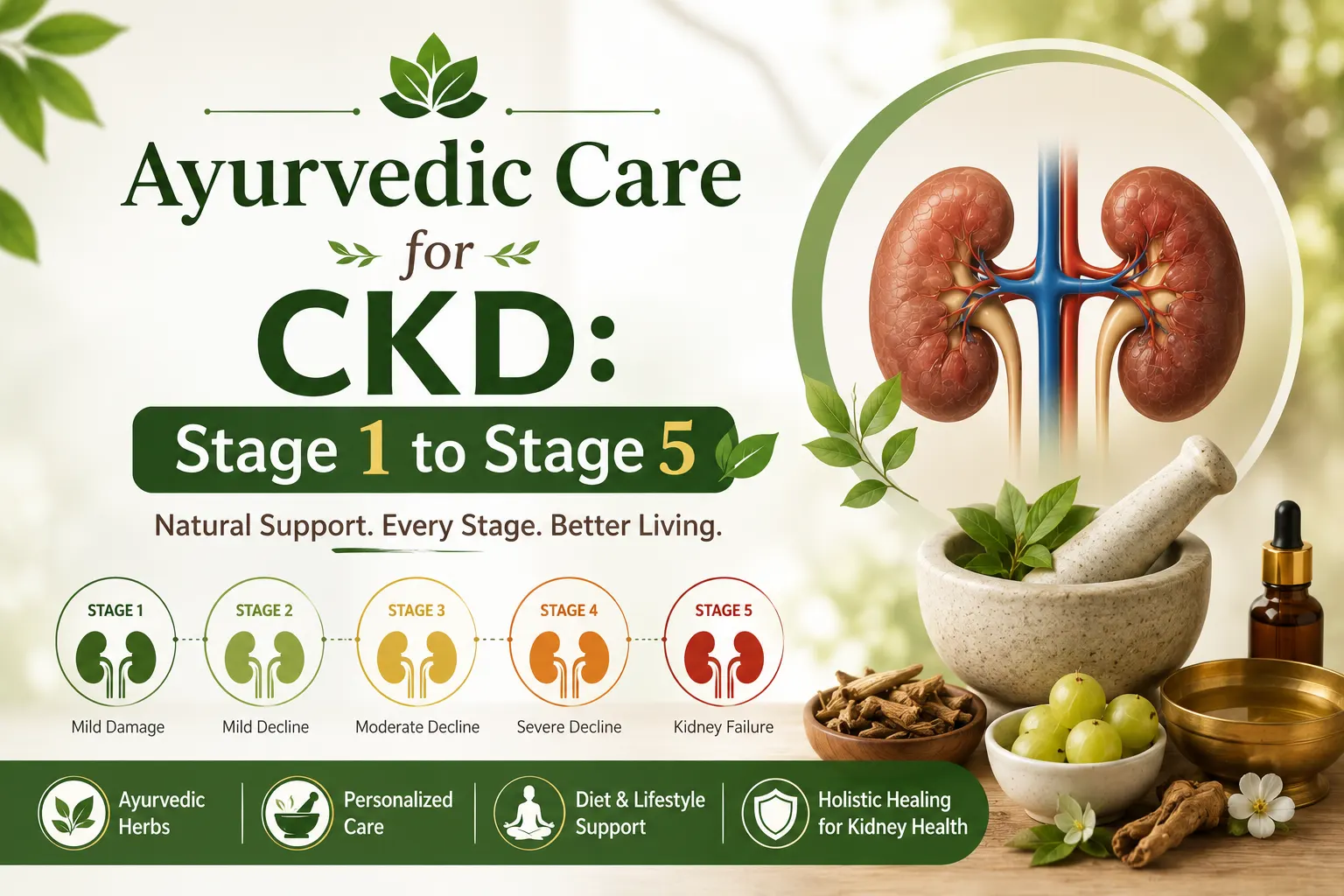
Before we get into herbs and diets, let's get our basics right. CKD stages are basically a report card for your kidneys, ranked from Stage 1 (mild, "kidneys are a little tired") to Stage 5 (severe, "kidneys have clocked out and need serious backup like dialysis"). Doctors figure this out using something called eGFR; a fancy formula that tells you how well your kidneys are filtering waste.
Here's the thing nobody tells you upfront: most people with early-stage chronic kidney disease don't even feel sick. That's the sneaky part. Your kidneys are the strong, silent type; they'll quietly compensate for a long time before symptoms like fatigue, swelling, or frothy urine show up and finally make you say, "okay, something's off."
So Where Does Ayurveda Fit In?
Ayurveda looks at CKD through the lens of "mutravaha srotas"; basically, the body's urinary channels; and focuses on reducing the toxic load (called "ama") while supporting the kidneys' natural filtering rhythm. It's not about chugging a magic tonic and calling it a day. It's a whole lifestyle approach involving herbs, diet, and daily routine (dinacharya, if you want to sound fancy at parties).
A few commonly used formulations in traditional practice include:
-
Punarnava (Boerhavia diffusa) – often used for its mild diuretic and anti-inflammatory properties
-
Gokshura (Tribulus terrestris) – traditionally used to support urinary tract and kidney function
-
Varun (Crataeva nurvala) – used traditionally for urinary health
-
Chandraprabha Vati – a classical combination formulation used in various renal and urinary conditions
Interestingly, this isn't just folklore. A published clinical study on 100 patients with chronic renal failure (Patel MV, Gupta SN, Patel NG, published in the journal Ayu, 2011) found statistically significant reductions in serum creatinine, blood urea, and albuminuria after Ayurvedic treatment, along with improved hemoglobin levels.
Another comparative clinical study by Prashanth GS and colleagues (also in Ayu, 2010) looked specifically at a Punarnavadi compound in chronic renal failure patients and reported measurable improvement in kidney function markers. So no, this isn't just your neighborhood aunty's home remedy talk; there's actual research behind some of it, even if larger trials are still needed to nail down the details.
Ayurvedic Support Through the Stages
This is where Ayurvedic kidney treatment gets genuinely practical, because Stage 1 and Stage 5 are not the same ballgame, and treating them the same would be like giving a marathon runner and someone in the ICU the same workout plan.
Stage 1-2 (Mild): This is the golden window. Focus is on diet correction, gentle herbs for kidney tone, stress management, and, honestly, just building better habits before things escalate. Think of this as damage control done early and calmly.
Stage 3 (Moderate): Diet gets stricter (hello, low-protein and low-sodium meals), herbal support is more targeted, and monitoring becomes non-negotiable. This is the "let's take this seriously" phase.
Stage 4-5 (Severe/End-stage): Here, Ayurvedic care becomes strictly supportive and supplementary, managing symptoms like fatigue, nausea, and swelling, while conventional treatment (dialysis, nephrology care) takes the driver's seat. Nobody sane recommends swapping dialysis for herbs at this point, and Ayurveda, done responsibly, doesn't ask you to either.
A Quick (and Slightly Funny) Comparison Table
|
Aspect |
Modern Medicine Approach |
Ayurvedic Approach |
|
Speed |
Fast-acting, lab-report obsessed |
Slow and steady, diet-and-herbs obsessed |
|
Focus |
Manage numbers (creatinine, eGFR) |
Manage the whole body's balance |
|
Diet talk |
"Reduce sodium and protein" |
"Reduce sodium, protein, AND your existential stress" |
|
Vibe |
Clinical, data-driven |
Grandma-approved, slightly meditative |
|
Best used |
Every stage, especially advanced |
Alongside modern care, at every stage |
Everyday Habits That Actually Matter
For genuine kidney wellness, Ayurveda leans heavily on lifestyle, not just bottles of herbal powder. A few things that consistently show up in traditional guidance:
-
Staying hydrated appropriately (not overdoing it, especially in later stages; your nephrologist's fluid limits still rule)
-
Reducing processed, salty, and preservative-loaded foods
-
Regular, gentle movement like walking or yoga, avoiding intense exertion
-
Prioritizing sleep and stress reduction, since stress hormones don't do kidneys any favors
-
Avoiding random over-the-counter painkillers, which are surprisingly hard on kidneys
The One Rule That Overrides Everything
Never self-medicate CKD with herbs bought off some random website, no matter how convincing the reviews sound. Kidneys process everything you consume, including herbal supplements, and the wrong combination (or wrong dosage) can genuinely backfire. Real Ayurvedic care for CKD always happens under a qualified Ayurvedic physician, ideally in coordination with your nephrologist. It's a team sport, not a solo mission.
Modern research (Chen TK, Knicely DH, Grams ME, published in JAMA, 2019) confirms that CKD management works best with an integrated, monitored approach rather than any single-track treatment; which is basically science nodding along with what Ayurveda has been saying with herbs and lifestyle for centuries.
Key Takeaways
-
Ayurvedic care for CKD works best as a support system alongside conventional treatment, not a replacement for it
-
CKD stages range from mild (1) to severe (5), and treatment intensity should match the stage
-
Herbs like Punarnava, Gokshura, and Varun have documented traditional and some clinical backing for kidney disease support
-
Diet, hydration, sleep, and stress management are just as important as any herbal formulation
-
Advanced-stage chronic kidney disease always needs medical supervision; Ayurveda plays a supportive, not primary, role there
-
Consistency and patience matter more than quick fixes when it comes to kidney wellness
Frequently Asked Questions
Can Ayurveda cure CKD completely?
No, Ayurveda isn't a cure for CKD, but it can genuinely support kidney function and quality of life alongside standard medical treatment.
Is Ayurvedic kidney treatment safe for Stage 5 CKD patients?
Only under strict supervision from both an Ayurvedic doctor and a nephrologist, since Stage 5 needs careful, coordinated medical monitoring.
What foods does Ayurveda recommend for kidney disease support?
Mostly fresh, home-cooked, low-salt, low-processed meals, with specific protein and fluid limits depending on the CKD stage.
Can I take Ayurvedic herbs along with my allopathic kidney medicines?
Only if your nephrologist and Ayurvedic physician both know about it and agree, since some combinations can interact.
How long does Ayurvedic treatment take to show results in CKD?
It varies widely, but most traditional practitioners suggest a few months of consistent treatment before expecting noticeable changes.
Disclaimer: This blog is for general informational purposes only and isn't medical advice. Chronic kidney disease is serious and stage-dependent, so please consult a qualified nephrologist and a registered Ayurvedic physician before making any treatment decisions. Never stop or replace prescribed medical treatment based on this article.