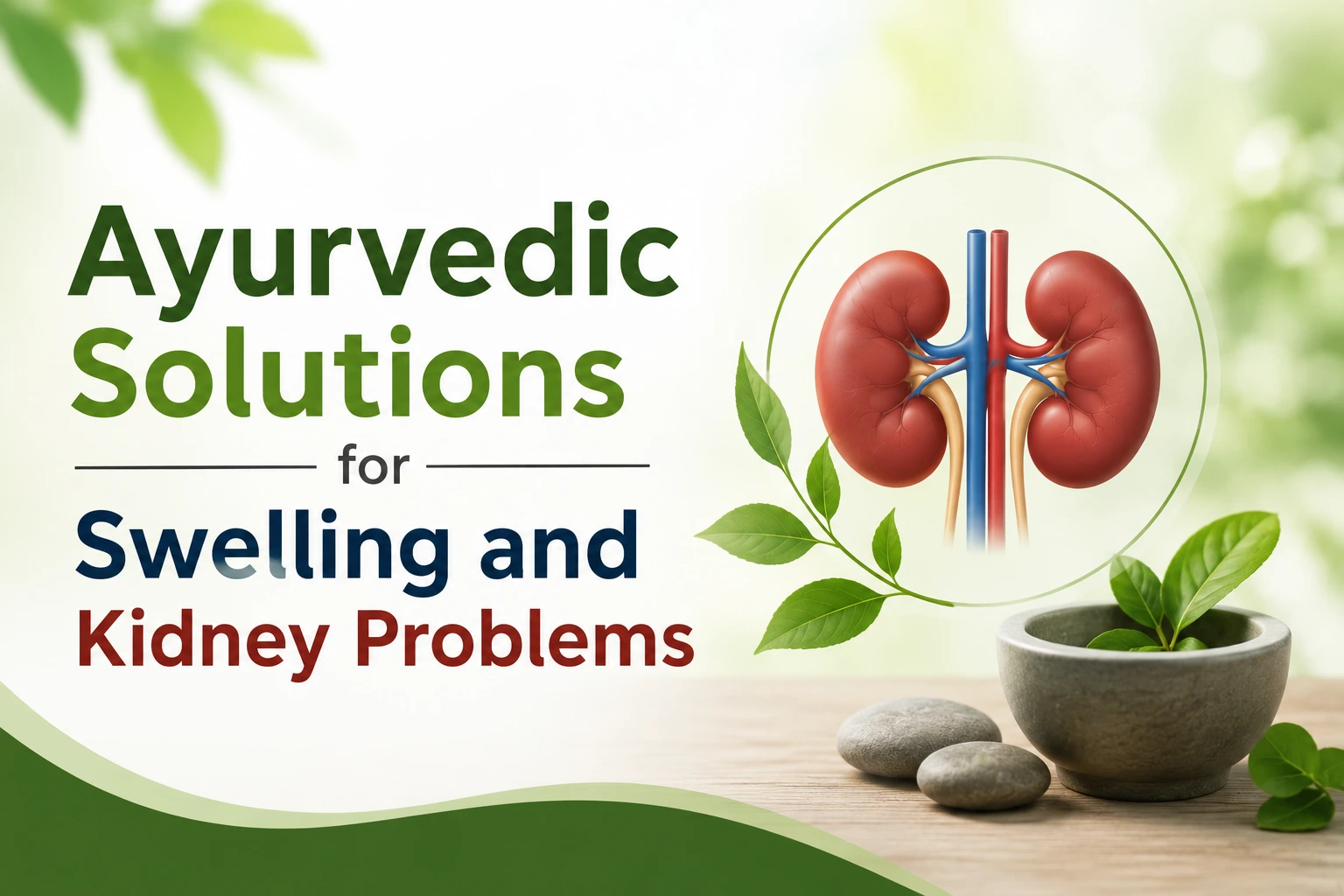

Puffy ankles by evening, rings that suddenly won't slide off your fingers, that "did I gain 5 kilos overnight" feeling; yes, Ayurvedic solutions for swelling can genuinely help, especially when the root cause is sluggish kidney function. But (and this is a big but) they work best as support, not a replacement for a proper diagnosis.
This is exactly where swelling and kidney problems tend to show up hand-in-hand, and where Ayurveda, which has been obsessing over "balance" since before it was cool, has a lot to say.
Why Does the Body Even Retain Water?
In Ayurvedic thinking, swelling (called Shotha) is largely a Kapha-Pitta imbalance, where the body's fluid channels get sluggish and start hoarding water like it's preparing for a drought. Modern medicine agrees on the outcome, if not the vocabulary; poor kidney filtration, low protein levels, or high salt intake all lead to the same soggy result: fluid retention.
Common triggers include:
-
Excess salty or processed food (sorry, chips lovers)
-
Dehydration (yes, ironically, not drinking enough water can cause water retention)
-
Prolonged sitting or standing
-
Underlying kidney or heart stress
-
Hormonal shifts
The Ayurvedic Toolkit for Kidney Support
Ayurveda doesn't throw one magic herb at the problem and call it a day. It builds a whole routine around gentle detox, better digestion, and kidney support.
Punarnava (Boerhavia diffusa) is the herb everyone in Ayurveda seems to have a soft spot for; its Sanskrit name literally means "the renewer." Research published in the Journal of Ethnopharmacology found that Punarnava extract meaningfully reduced inflammatory markers and improved kidney function in animal models of nephritis. It's traditionally valued as a gentle diuretic that has been shown in animal studies to noticeably boost urine output, supporting its long-standing use for edema and water retention; basically, nature's way of telling your kidneys, “Come on, get back to work."
Other regulars in this natural treatment approach include:
-
Gokshura (Tribulus terrestris) – supports healthy urine flow
-
Varuna (Crataeva nurvala) – traditionally used for urinary tract comfort
-
Coriander seed water – a simple, cooling home remedy many grandmothers swear by
-
Punarnavadi Guggulu – a classical formulation combining several kidney-friendly herbs
Lifestyle tweaks matter just as much:
-
Cutting back on salt (the classic villain)
-
Staying gently active; walking beats sitting like a sack of rice all day
-
Warm water sips through the day instead of iced everything
-
Elevating swollen legs in the evening (an underrated life hack, honestly)
Ayurveda vs. Modern Approach; A Quick, Honest Comparison
|
Aspect |
Ayurveda |
Modern Medicine |
|
Approach |
Gentle, root-cause, whole-body |
Fast, targeted, symptom-focused |
|
Speed |
"Give it a few weeks" |
"Take this pill twice daily" |
|
Diuretics |
Herbs like Punarnava |
Furosemide and friends |
|
Vibe |
Grandma's wisdom |
Lab coat efficiency |
|
Best used |
Alongside medical care |
When Ayurveda alone isn't enough |
Basically, one's the marathon runner, the other's the sprinter; ideally, you want both on your team.
When to Not Just "Herb It Out"
If swelling comes on suddenly, is one-sided, or comes with breathlessness, reduced urination, or chest discomfort, that's not a "brew some tea and wait" situation; that needs a doctor, today. Ayurvedic kidney care works best as a supportive, long-term approach for mild, recurring puffiness; not as a stand-in for emergency care.
FAQs
How long does Ayurvedic treatment for swelling usually take to show results?
Most people notice gradual improvement over a few weeks, not overnight.
Is Punarnava safe for daily use?
It's generally considered gentle, but it's best taken under guidance, especially if you're on other medication.
Does drinking less water help reduce swelling?
Actually no; cutting water often backfires; the body holds onto fluid even more when it senses dehydration.
Should I stop my prescribed medicines if I switch to Ayurveda?
No; never stop prescribed treatment without your doctor's go-ahead; Ayurveda works best alongside it, not instead of it.
Disclaimer: This blog is for general informational purposes only and isn't a substitute for professional medical advice, diagnosis, or treatment. Swelling and kidney issues can have serious underlying causes, so please consult a qualified doctor or Ayurvedic practitioner before starting any remedy.