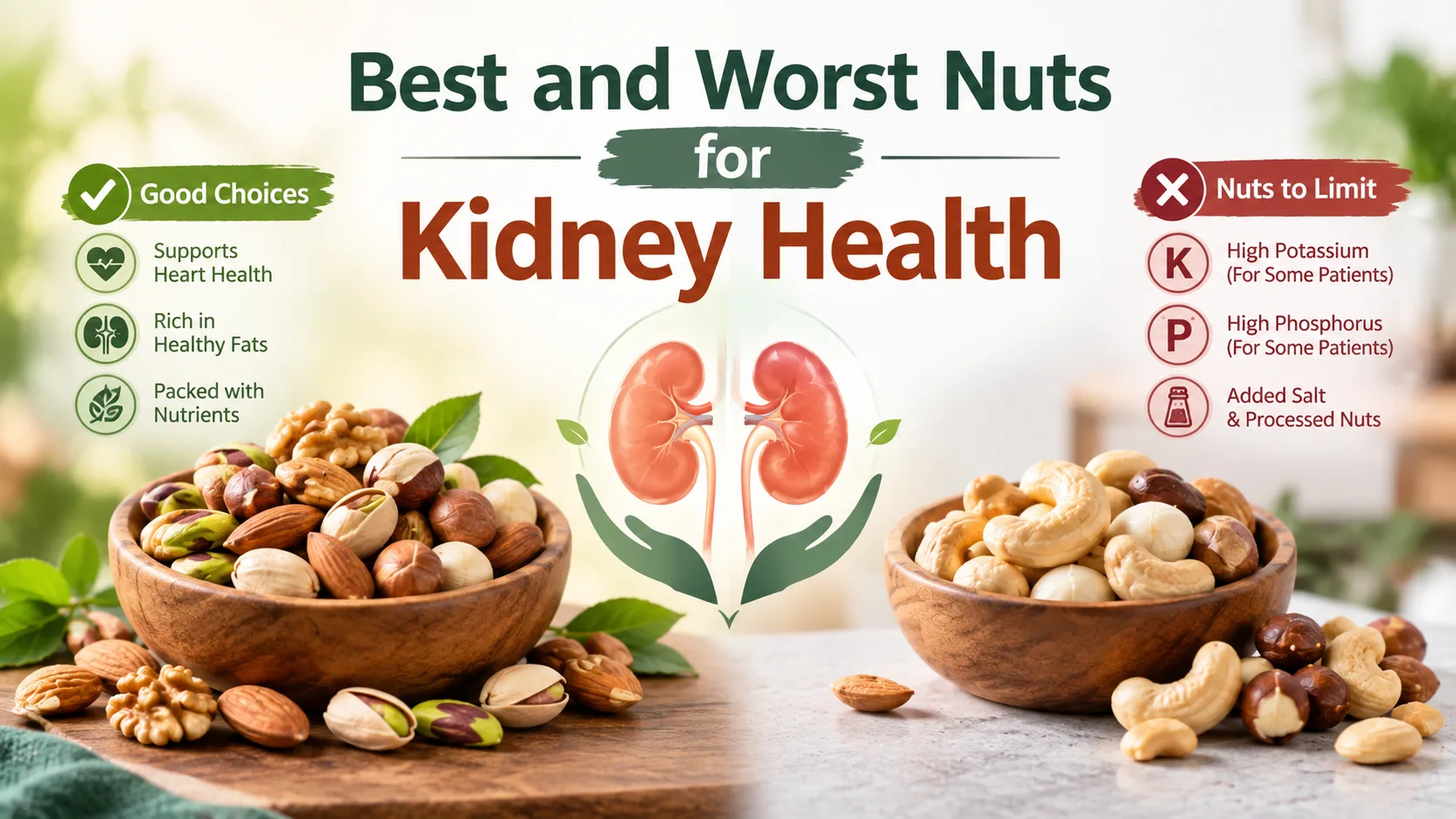

Quick answer before you scroll away: walnuts, pistachios, and macadamias are the good guys here, while almonds, cashews, and Brazil nuts need a leash. That's it. That's the whole plot. But if you've ever stood in the snack aisle wondering why one nut is "fine" and another is apparently plotting against your filtering system, keep reading.
I'll be honest, I never thought I'd spend an evening reading about phosphorus levels in cashews. And yet here I am, and here you are too, probably because someone you love just got a kidney disease diagnosis and suddenly every snack feels like a pop quiz you didn't study for. So let's just talk this through like normal people, not like a pamphlet from a waiting room.
Why Some Nuts Cause More Drama Than Others?
Here's the short version, no jargon. When kidneys are working properly, they filter out extra potassium and phosphorus and send it packing. But once function starts slipping ; which happens in chronic kidney disease, or CKD ; that filtering slows down, and those minerals start hanging around in the blood longer than they should.
Too much potassium can throw off your heart rhythm, which is not the kind of surprise anyone wants. Too much phosphorus, over time, messes with bone strength and can even damage blood vessels. So when people talk about best foods for kidneys, this is really what they mean: foods that don't flood an already tired system with more than it can handle.
This is exactly why the nut aisle feels like a minefield. Nuts aren't junk food, and they're definitely not villains. They're just dense enough, nutrient-wise, that how much you eat actually matters more than usual.
And once you start noticing potassium and phosphorus in nuts, you start seeing them everywhere else too: bananas, dairy, dark colas, deli meats. Welcome to the club. It's a strange kind of adulthood milestone, reading nutrition labels like they're mystery novels with a twist ending.
One more thing worth saying: not everyone with CKD is dealing with the same restrictions. Someone in early-stage kidney disease usually has way more wiggle room than someone in later stages, where potassium and phosphorus limits get a lot tighter. So, if your neighbor with the same diagnosis eats almonds by the handful and seems totally fine, that doesn't mean you get the same pass. Your lab reports know your body better than any blog does, mine included.
The Nuts That Actually Play Nice
These generally behave themselves, especially in sensible portions:
-
Walnuts – Lower phosphorus than most nuts, loaded with omega-3s, and genuinely decent for your heart too.
-
Pistachios – Lower potassium load than almonds or cashews, and shelling them one by one basically forces portion control on you.
-
Macadamia nuts – Naturally low in both potassium and phosphorus. Quietly the overachiever of this list.
-
Pecans – Similar profile to walnuts, works well in small servings.
Even these aren't a free pass, though. "Kidney-friendly" still means one small handful, not the whole tin while you binge a show. Think of them as a reliable coworker, not a superhero; they won't fix everything on their own, but paired with a decent overall diet, low sodium, right amount of fluids, they earn their spot on the best foods for kidneys list.
The Nuts That Need a Little Supervision
Not villains, just demanding. High in potassium, phosphorus, or both, so portions matter a lot here:
-
Almonds – Genuinely great for cholesterol and blood pressure, but on the higher end for phosphorus, so smaller portions make sense.
-
Cashews – Bring both potassium and phosphorus to the table, and not in a small way.
-
Brazil nuts – Rich in selenium, which is great in tiny doses and risky in big ones, plus high potassium and phosphorus.
-
Peanuts – Technically a legume, everyone treats it like a nut anyway, and it does carry a fair amount of potassium and phosphorus.
None of this makes them the enemy. It just means they need supervision, kind of like a toddler standing near a birthday cake. A few cashews tossed into a meal once in a while is a very different habit than snacking straight from the jar every night while scrolling your phone.
A Quick, Slightly Sassy Comparison Table
|
Nut |
Personality |
Potassium/Phosphorus Load |
Verdict |
|
Walnuts |
The reliable friend |
Low-ish |
Snack away, in moderation |
|
Pistachios |
Disciplined, makes you work for it |
Lower |
Great pick |
|
Macadamia |
Quiet overachiever |
Low |
Solid choice |
|
Almonds |
Charming but high-maintenance |
High phosphorus |
Small portions only |
|
Cashews |
Needs boundaries |
High, both |
Occasional treat |
|
Brazil nuts |
All-or-nothing type |
High, both |
Rare, tiny amounts |
Where Ayurveda Fits Into This?
Now, nutrition science is one piece of the puzzle, but a lot of families also look toward older, more natural approaches to support kidney function, and that's really where Ayurveda comes into the picture. In Ayurvedic thinking, food and herbs work together to clear out internal toxin buildup, called ama, and support the body's own ability to filter, rather than only chasing lab numbers.
Some of the best herbs for kidneys in Ayurveda include Punarnava, Gokshura, Varun, and Palash, names that sound like they belong in a fantasy novel but have actually been used for generations to support fluid balance and detox. This connects to the bigger idea behind Ayurvedic kidney treatment, which leans on diet, herbs, and lifestyle changes working together instead of one isolated fix.
This is also where guidance from someone experienced actually matters. Dr. Puneet Dhawan, associated with Karma Ayurveda Hospital for kidney disease treatment, is known for walking patients through kidney disease Ayurvedic treatment plans that pair herbal formulations with dietary advice, including, yes, which nuts deserve a spot on the plate and which ones don't. For anyone curious about natural treatment for kidney disease, this kind of combined food-and-herb approach tends to come up a lot.
The point isn't to drop modern medicine and go full herb-garden overnight. It's more about layering things thoughtfully, using herbs and lifestyle changes to support whatever your nephrologist has already put in place. Ayurveda is a bit like that wise older relative who insists on herbal tea and early mornings, while your doctor is the one with the lab reports and the actual medical training. Used together, and never as a replacement for supervision, both can genuinely help.
📩 Ask a Kidney Expert (Free 10-Min Consultation)
What the Research Actually Says?
Let's back this up with something more solid than opinions and grandma's advice.
-
A pilot randomized crossover trial on CKD patients found that eating 30 grams of walnuts daily lowered blood pressure, LDL cholesterol, and albumin excretion, without disturbing phosphorus, potassium, or parathyroid hormone levels. In plain English, walnuts showed up and behaved themselves.
-
A 2025 systematic review in Frontiers in Nutrition on nut consumption in chronic kidney disease found that two separate studies on walnut intake showed no meaningful change in serum phosphorus or potassium, backing up the idea that walnuts are a reasonably safe bet.
-
The well-known PREDIMED study, led by researcher Ramón Estruch and published in the New England Journal of Medicine, found that a Mediterranean diet with added nuts cut cardiovascular events by roughly 30 percent. Since heart health and kidney health are basically roommates who share everything, this matters a lot for people managing CKD too.
None of this makes nuts magic. It just proves that small, consistent, informed choices actually add up over time, kind of like flossing, or finally reading the terms and conditions before clicking agree.
Key Takeaways
-
Walnuts, pistachios, macadamias, and pecans are generally the best foods for kidneys among nuts, thanks to lower potassium and phosphorus content.
-
Almonds, cashews, Brazil nuts, and peanuts aren't evil, but they need real portion control because of higher mineral loads.
-
Portion size matters more than the nut itself. One small handful, not the whole bag.
-
Ayurvedic approaches, including herbs and guidance from practitioners like Dr. Puneet Dhawan at Karma Ayurveda Hospital, often work alongside dietary strategies to support kidney function naturally.
-
Always personalize your diet with a doctor or renal dietitian, since CKD stages change the rules quite a bit.
FAQs
Are walnuts good for people with kidney disease?
Yes, in small daily portions, walnuts are generally one of the safer, more heart-friendly nut choices for CKD.
Which nut should be avoided the most for kidney problems?
Brazil nuts usually top the "handle with extreme care" list because of their high potassium, phosphorus, and selenium content.
Can Ayurveda actually help with kidney disease?
Many people use Ayurvedic herbs and diet plans, like those guided by Karma Ayurveda Hospital, alongside their regular medical care to support kidney function naturally.
How many nuts can a kidney patient eat in a day?
A small handful, around 4 to 6 walnuts or a similar portion of pistachios, is usually a safer daily amount, but it depends on your stage and labs.
Is peanut butter safe for kidney health?
A little now and then is usually fine, but eating it regularly in large amounts can quietly add up in potassium and phosphorus.
Disclaimer
This blog is for general informational purposes only and does not replace professional medical advice, diagnosis, or treatment. Always consult a qualified doctor, nephrologist, or renal dietitian before making dietary changes, especially if you're managing chronic kidney disease or any other health condition.