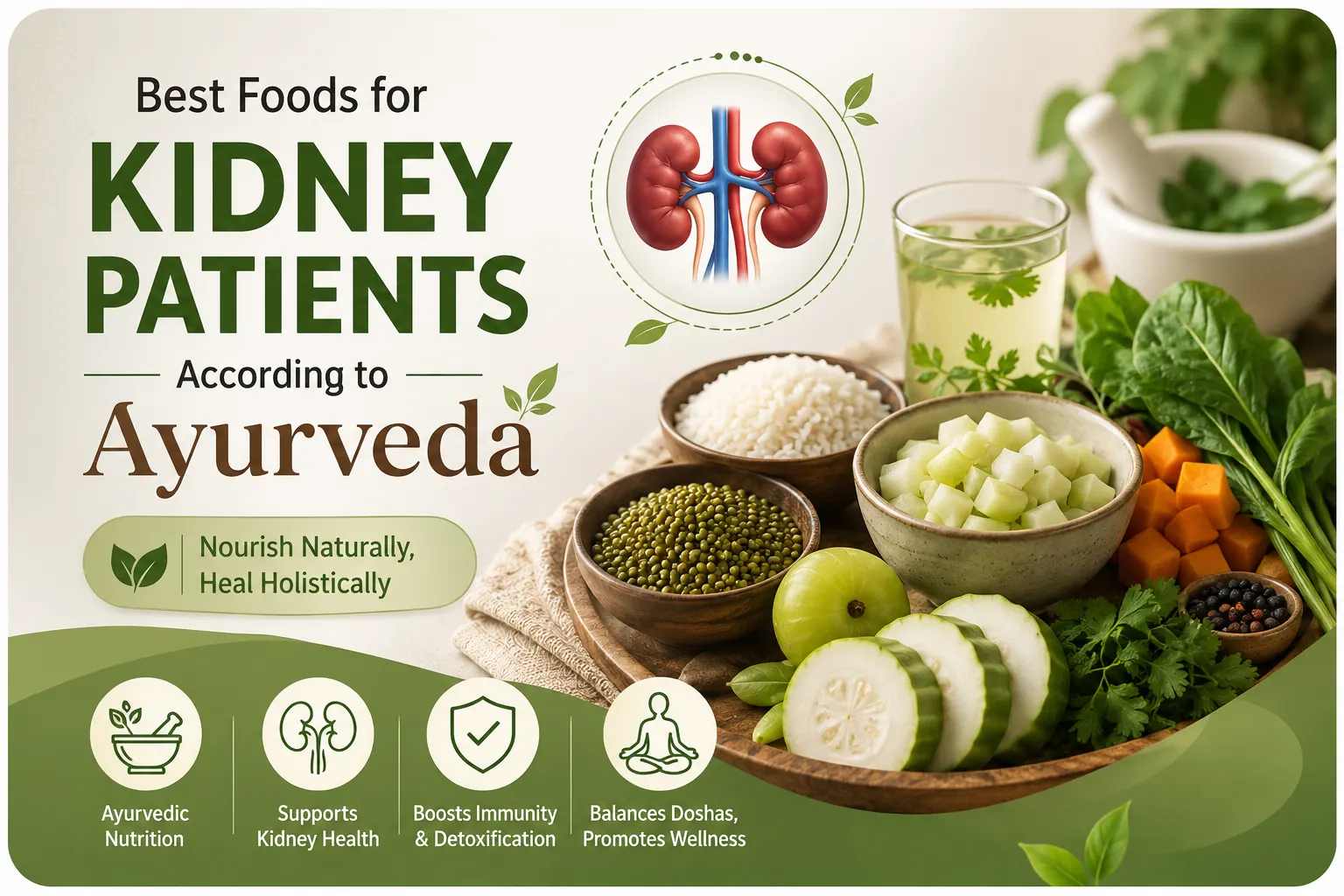

The best foods for kidney patients in Ayurveda are the ones that are light, warm, and easy on digestion; think moong dal, bottle gourd, barley water, and pomegranate. Sounds almost too simple, right? But that's kind of the whole point of Ayurveda; it doesn't believe in complicated fixes when your kidneys are already working overtime.
If you or someone in your family has been handed a "watch your diet" instruction after a kidney diagnosis, you probably know the panic that follows. Suddenly every food feels suspicious. Is dal safe? What about bananas? Can I still enjoy my chai? Ayurveda, which has been quietly obsessing over gut and organ health for a few thousand years, actually has a pretty sensible take on this. It doesn't just look at what you eat; it looks at how your body digests it, how much stress it puts on your system, and whether it's helping or hindering your kidney wellness.
Why Ayurveda Even Cares About Kidneys?
In Ayurvedic thinking, kidneys fall under the Mutravaha Srotas; basically the body's urinary and filtration channel system. When this channel gets clogged up with toxins (called "ama"), the kidneys start struggling. So the entire approach to an Ayurvedic diet for kidney health isn't just "eat this, avoid that"; it's about reducing the toxic load and keeping digestion strong, because weak digestion is often blamed as the root cause of most imbalances in the body.
Modern nutrition science actually agrees with a chunk of this, even if it uses very different language. Research published in the Clinical Journal of the American Society of Nephrology has repeatedly shown that plant-dominant, low-sodium diets slow the progression of chronic kidney disease better than diets loaded with processed and animal proteins. So yes, your grandmother's insistence on simple, home-cooked meals wasn't just nostalgia talking; there was science hiding in there too.
Kidney-Friendly Foods Ayurveda Swears By
Let's get into the good stuff. Here are some kidney-friendly foods that keep showing up across Ayurvedic texts and, conveniently, in modern renal diet charts too:
-
Barley water (Jau ka paani): Gentle diuretic, helps flush out excess fluid without shocking the system.
-
Bottle gourd (Lauki): The blandest vegetable on earth, but also one of the kindest to your kidneys; low potassium, high water content.
-
Moong dal: Easy to digest, low in the phosphorus and potassium that damaged kidneys struggle to filter out.
-
Pomegranate: Loaded with antioxidants; a small study in the Journal of Renal Nutrition found pomegranate juice may help reduce oxidative stress markers in kidney patients.
-
Cucumber: Hydrating, cooling, and about as low-effort a snack as your kidneys will ever get.
-
Coriander and cumin water: Traditional detox drinks believed to support the urinary channels.
None of these are miracle foods (please, nobody go live on lauki juice), but together they form a pattern: light, hydrating, low in the minerals that struggling kidneys can't process well.
What Ayurveda Asks You to Skip?
Just as important as what to eat is what to firmly, politely decline:
-
Excess salt and pickles (sorry, achaar lovers)
-
Red meat and heavy non-veg in large quantities
-
Fried and overly oily food
-
Too much banana, orange, or tomato if potassium is already high
-
Packaged and processed snacks (basically anything that survives longer than you do)
A Quick Comparison Table (Because Everyone Loves a Table)
|
Food |
Kidney's Reaction |
|
Bottle gourd |
"Finally, someone who gets me." |
|
Fried pickle-anything |
"Absolutely not, and also why." |
|
Moong dal khichdi |
"This is basically a spa day for me." |
|
Extra salty chips |
"I did not sign up for this." |
|
Pomegranate |
"Ooh, antioxidants, fancy." |
Renal Nutrition Isn't Just About Restriction
Here's the thing people often miss: renal nutrition isn't a punishment list. It's about giving the kidneys less to fight and more to work with efficiently. Ayurveda pairs this with lifestyle habits too: eating at consistent times, not overeating, staying warm, and avoiding late-night heavy meals. A 2019 review in Nephrology Dialysis Transplantation also pointed out that meal timing and overall dietary pattern matter almost as much as individual nutrients, which lines up surprisingly well with what Ayurveda has been saying for centuries, minus the fancy journal citations.
When people ask about the best foods for kidney patients, they're usually hoping for a magic single ingredient. There isn't one. But a consistent pattern of light, home-cooked, low-sodium, plant-forward meals does seem to genuinely help, both in traditional wisdom and modern studies.
Natural Kidney Support, the Ayurvedic Way
For those looking for natural kidney support beyond just food, Ayurveda also nudges toward adequate hydration (not overhydration; that's a different mess entirely), gentle movement like walking, and stress reduction, since stress hormones can also affect kidney blood flow over time. It's less about a strict diet chart and more about reducing overall burden on the body.
Key Takeaways
-
Ayurveda focuses on light, low-toxin, easily digestible foods for kidney health
-
Bottle gourd, moong dal, barley water, and pomegranate are commonly recommended
-
Avoid excess salt, fried food, processed snacks, and high-potassium fruits if levels are already elevated
-
Meal timing and overall lifestyle matter as much as individual foods
-
Always personalize any diet with a doctor or renal dietitian, since kidney conditions vary a lot
FAQs
Q1. What is the one best food for kidney disease?
No food; however, bottle gourd and moong dal are two foods that are considered to be easy on the stomach.
Q2. Are Ayurvedic diets beneficial to those with kidney problems?
No, no diet is good enough by itself and it can only complement other treatments.
Q3. Is pomegranate useful for kidney patients?
Yes, but in moderate quantities and as long as those who consume them are not restricted in terms of fluid and potassium intake.
Q4. Are all fruits bad for kidney patients?
Not at all; it depends on how much potassium a fruit has.
Q5. How is renal diet different from a normal diet?
A renal diet is one that has restrictions on sodium, potassium, and phosphorus, unlike a normal diet that has no restrictions.
Disclaimer: This blog is for general informational purposes only and is not a substitute for professional medical advice. Kidney conditions vary widely from person to person, so please consult a nephrologist or registered dietitian before making any dietary changes.