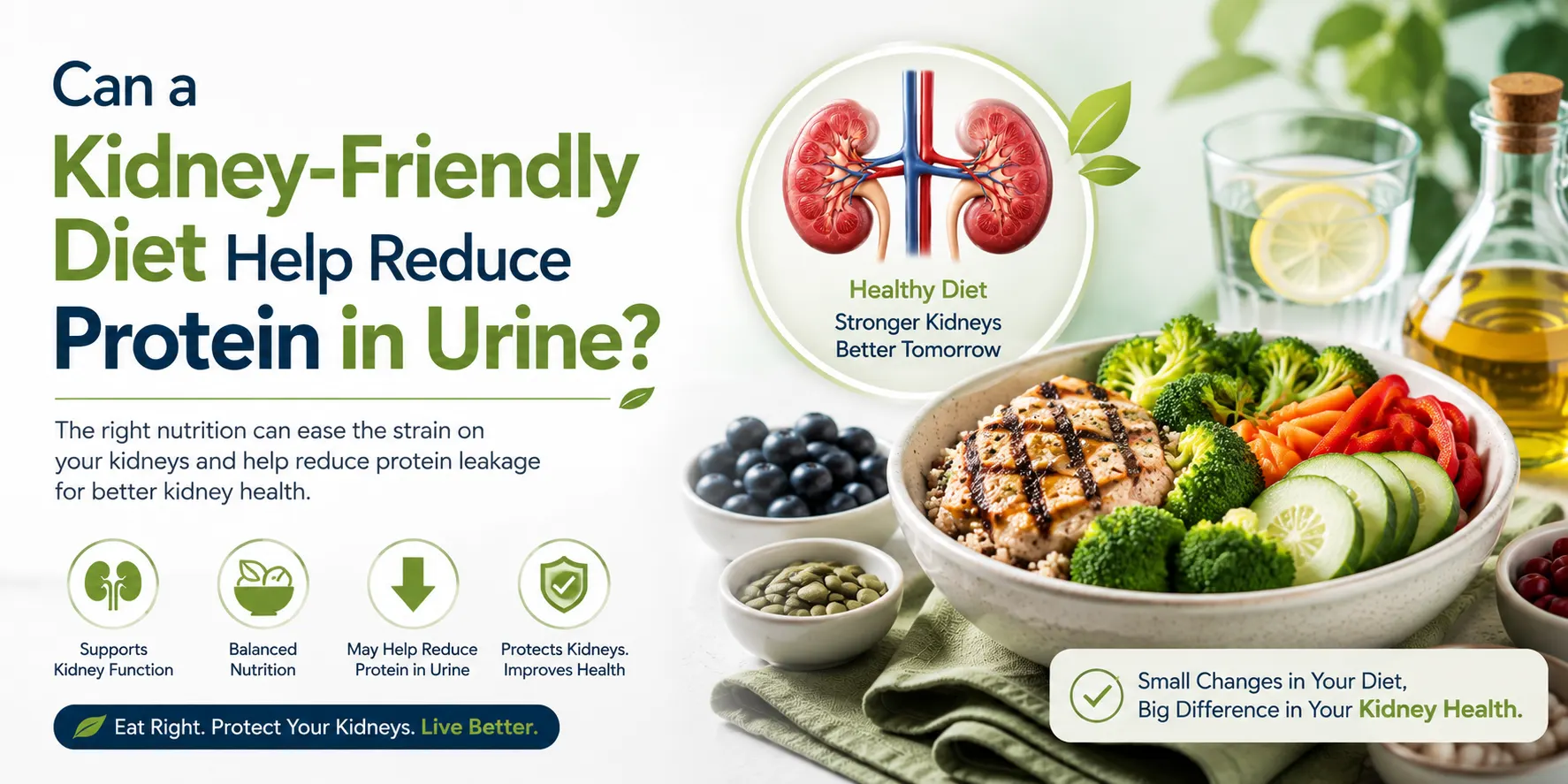

Short answer: yes, it can. A kidney-friendly diet; think low sodium, sensible protein, lots of actual vegetables; can genuinely bring down protein levels in your urine. It won't happen because you ate one salad and felt smug about it, but over weeks and months, food choices really do move that number.
Okay, question answered. Now let's get into the "why," because I promise it's more interesting than it sounds, and also because I want to talk about my grandmother's soup habits at some point in this article and I need an excuse.
Wait, Why Is Protein Even Showing Up in My Urine?
Picture your filtering organs as two very tired bouncers at a club called Bloodstream. Their whole job is: let the waste leave, keep the VIPs (protein, mostly) inside. When those bouncers get worn down; thanks to things like high blood pressure, diabetes, or an existing filtration condition; they start letting VIPs slip out the back exit. That's proteinuria. It's usually one of the first warning signs your doctor points to, long before anything feels "wrong."
Here's the part that actually matters for this article: tired bouncers can be helped. Not instantly, not magically, but genuinely. And what you eat is a big chunk of that help.
Does Food Actually Change the Numbers, or Is This Wishful Thinking?
I get why people are skeptical. "Eat your veggies" sounds like something printed on a motivational poster next to a kitten hanging from a branch. But there's real research behind this, not just vibes.
A 2024 study in the journal Nutrients followed patients with advanced diabetes-related kidney disease who were already leaking a lot of protein. The researchers put them on a low-protein eating plan alongside their regular medication, and protein leakage dropped substantially while the decline in filtration function slowed down too. That's a pretty solid result for something as unglamorous as "eat less protein for a while."
This isn't a brand-new idea either. Older animal research, referenced in a major Cochrane review, showed that rats eating a lower-protein diet ended up with fewer damaged filtering units and less protein loss than rats on a high-protein diet. Rats aren't people, obviously, but this is one of those findings that held up decently well once researchers moved on to human studies too.
And here's the bit I find genuinely interesting: it's not only how much protein you eat, it's where it comes from. A large analysis using data from the ARIC study found that people who ate mostly processed red meat had noticeably faster drops in filtration function, while people following a DASH-style diet; lots of produce, less meat, less processed junk; had a meaningfully lower risk of developing kidney disease in the first place. So, the "eat more plants, less deli meat" advice you've heard a thousand times? Annoyingly, it checks out.
📩 Ask a Kidney Expert (Free 10-Min Consultation)
What Does Eating This Way Actually Look Like Day-to-Day?
Not a bland rice-cake existence, I promise. Here's roughly what a renal diet or proteinuria diet tends to involve, minus the clinical brochure tone:
-
Salt gets dialed way down. It makes your body hold onto fluid and raises pressure inside your already-stressed filters. Not helpful.
-
Protein gets moderated, not deleted. Going too low without medical supervision can cause its own problems, like muscle loss; so, this is a "turn it down," not a "turn it off."
-
Plant protein earns extra points. Beans, lentils, tofu are generally easier on your system than a steady diet of red meat.
-
Potassium and phosphorus might need watching too, but this really depends on your bloodwork, so don't just guess.
-
Water matters, but more isn't automatically better. Balance, not chugging.
-
Packaged and processed food gets side-eyed. It's basically salt wearing a costume.
A Comparison Table, Because Everyone Loves Judging Food
|
Food |
Friend or Frenemy? |
The Honest Reason |
|
Leafy greens, berries |
Friend |
Low sodium, minimal drama, high in things your body actually wants |
|
Deli meats, cured sausages |
Frenemy |
Delicious, but basically a salt lick with extra steps |
|
Beans, lentils |
Friend |
Solid plant protein that doesn't overwork your filters |
|
Canned soup |
Frenemy |
Convenient, yes. Also secretly a sodium bomb in a can |
|
Olive oil |
Friend |
Kind to your heart, doesn't ask much of anything else |
|
Fast food fries |
Frenemy |
We all know. We eat them anyway sometimes. That's fine occasionally |
📩 Ask a Kidney Expert (Free 10-Min Consultation)
One Honest Caveat: Diet Isn't a Miracle Cure
I don't want to oversell this. A kidney-friendly diet is a strong supporting character, not the whole movie. Managing blood pressure and blood sugar, taking prescribed medication, following your doctor's plan; those still carry most of the weight. In that Bucharest hospital study I mentioned earlier, the diet worked alongside standard medical treatment, not instead of it. Nobody in that study just ate lentils and skipped their prescriptions.
So, think of diet as leverage, not a replacement.
A Few Small Habits That Add Up More Than You'd Expect
-
Swap the salt shaker for lemon juice, garlic, or fresh herbs; it genuinely doesn't taste like a sacrifice after a week or two.
-
Read labels like you're suspicious of them, because sodium hides in places you wouldn't expect. Bread. Cereal. Sauces you trusted.
-
Try one lighter-protein meal a day instead of rebuilding your whole diet overnight. Small changes stick better.
-
Cook at home more often; restaurant food tends to be sodium's biggest fan.
-
Keep a rough food log for two or three weeks. Patterns show up faster than you'd think, and it's oddly satisfying.
My grandmother, for what it's worth, has been making low-salt soup for decades because "too much namak is bad for the body," long before any of us had studies to back her up. Turns out she wasn't just being difficult about seasoning.
Key Takeaways
-
A kidney-friendly diet; low sodium, moderate protein, plant-heavy; can meaningfully reduce protein leakage into urine.
-
A 2024 study in Nutrients and older Cochrane-reviewed research both support diet's role in slowing protein loss.
-
Where your protein comes from matters: processed red meat tends to worsen things, DASH-style eating tends to help.
-
Diet works with medical treatment, not as a substitute for it.
-
Small, boring, consistent changes beat one dramatic diet overhaul.
Frequently Asked Questions
Can cutting salt really lower protein in urine?
Yes, less sodium means less pressure inside your filtering system, which often helps reduce protein leakage over time.
Is a low-protein diet safe for everyone with proteinuria?
Not automatically, protein needs differ from person to person, so it's worth doing this with a doctor or dietitian in the loop.
How fast will I actually notice a difference?
Some people see small changes within weeks, but real, lasting improvement usually takes a few months of sticking with it.
Is plant protein really better than meat here?
Generally, yes, plant-based protein tends to be gentler on filtration function than heavy amounts of red meat.
Can diet alone fix proteinuria without medication?
No, diet helps manage it, but it works best paired with proper medical treatment, not as a stand-in for it.
Disclaimer: This article is for general information only and isn't medical advice. Proteinuria has many possible causes, and dietary needs vary a lot from person to person. Please talk to a qualified doctor or registered dietitian before making major changes to your diet or treatment.