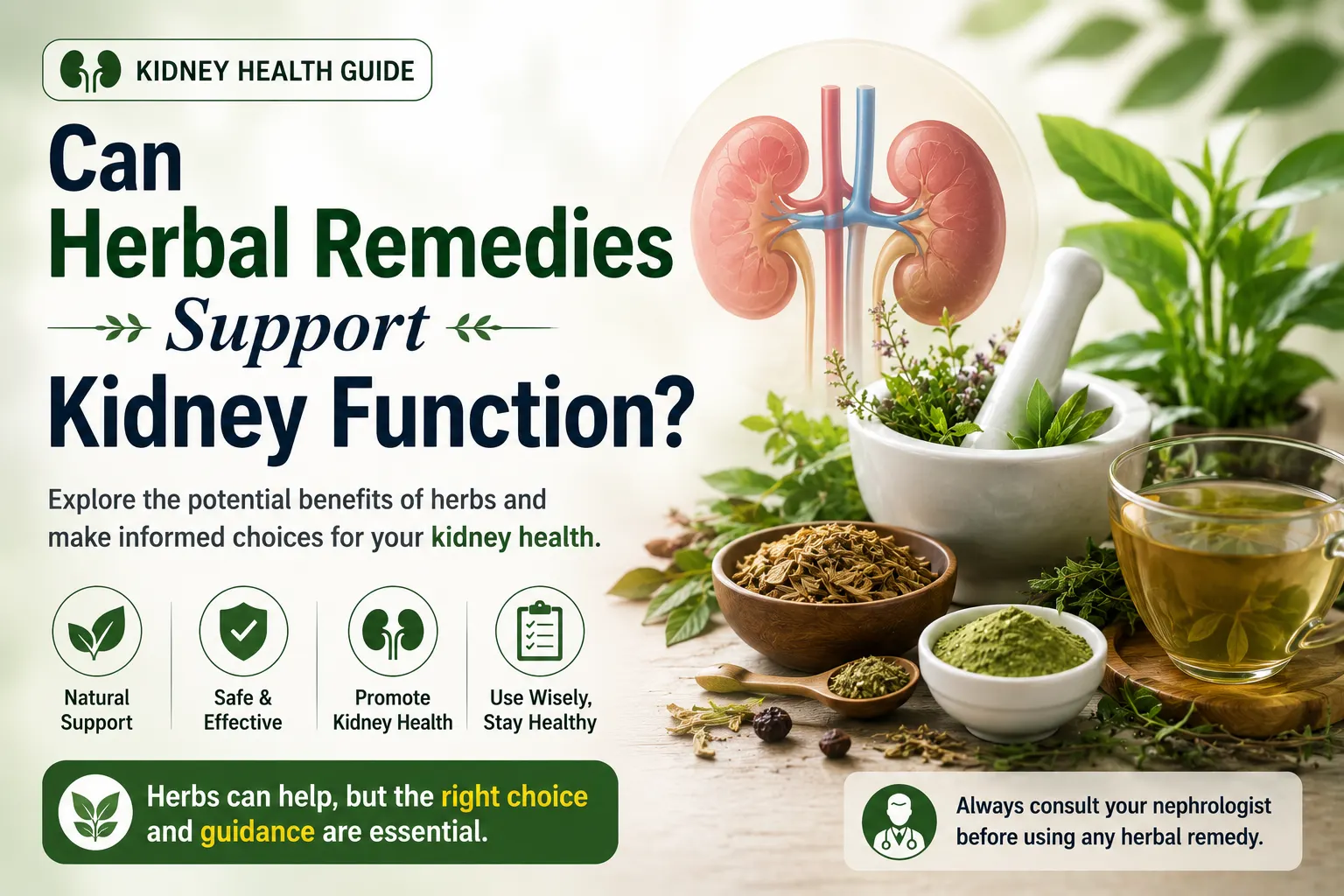

Yes, some herbal remedies for kidney function can genuinely help; but not in the "drink this tea and throw away your medication" way that half the internet wants you to believe. Your kidneys filter something like 50 gallons of blood a day, every single day, without a lunch break. A cup of tea is not taking over that job. At best, it's an intern helping out.
I'll be upfront; I did not know how underrated kidneys were until I started digging into this. Everyone's obsessed with gut health, heart health, glowing skin. Meanwhile, your kidneys are sitting quietly in the back, filtering waste, balancing your fluids, keeping your blood pressure in check, and nobody so much as sends them a thank-you card. So, when someone types "herbs for kidney health" into Google at midnight, it's usually one of two situations: a scary number just showed up on a lab report, or they fell into a wellness rabbit hole, and now they're three tabs deep into "kidney cleanse" products. Neither situation needs more confusion. It needs actual answers.
So that's what this is. What the research actually says, which herbs have real data behind them, which ones you should stay far away from, and how to think about all this without either freaking out or falling for a supplement that promises to fix your kidneys, your skin, and possibly your Wi-Fi signal.
📞 Get a Kidney Health Consultation – Call Now!
Quick Refresher: What Are Your Kidneys Even Doing All Day
Before the herb talk, here's the short version of the job description, because it's genuinely a lot:
-
Filtering waste and extra fluid out of your blood
-
Balancing electrolytes like sodium and potassium
-
Helping regulate blood pressure
-
Supporting red blood cell production
-
Managing vitamin D and calcium so your bones don't fall apart
When that filtering slows down; usually thanks to diabetes, high blood pressure, or chronic kidney disease (CKD); waste starts hanging around longer than it should. That's usually the moment people start Googling herbs.
Okay, But Do Herbs Actually Move the Needle?
Here's where I have to be honest instead of exciting, which is annoying because exciting gets more clicks.
There's a decent amount of research on this, and some of it is legitimately interesting. A systematic review looking at herbal medicine and CKD progression pointed to a ginseng-derived antioxidant called Ginsenoside Rb1, which was tested in 197 people with early-stage (stage 2–3) CKD over six months. The group taking it ended up with better kidney function markers than the placebo group, plus lower oxidative stress and a nicer lipid profile. That's a real randomized trial, not a screenshot of someone's before-and-after on Instagram.
Turmeric shows up a lot too, mostly because of curcumin, its active compound. A few studies have found curcumin can lower oxidative stress and cut down on protein leaking into urine, both of which are things you want less of if you care about your kidneys. Stinging nettle has its own moment too; one clinical study found it meaningfully lowered markers of kidney damage. And Astragalus keeps getting studied for its effect on proteinuria, which is basically protein where protein shouldn't be.
There's also a bibliometric analysis that tracked kidney-related herbal research going back to the early 2000s, and interest, especially around diabetic kidney disease, has been climbing steadily. So this isn't some fringe corner of wellness culture. Actual researchers are paying attention, publishing, and arguing with each other about mechanisms, which is basically science's version of a group chat.
Now, the plot twist. A 2024 study that pulled data from six randomized controlled trials on Korean herbal formulations found something a little deflating: when compared against a placebo, there was no significant difference in kidney function markers like eGFR. Translation: the herbs didn't hurt anyone's kidneys, which is good, but they also didn't work any magic, which is a little less fun to write about. This is basically the theme of herbal kidney research right now: promising in pockets, underwhelming when you zoom out, and desperately in need of bigger studies.
Now the Part Where I Have to Be the Responsible One
This is the section where I stop being fun and start being the friend who won't let you eat gas station sushi at 2 a.m.
Not every herb is harmless just because it's "natural." Poison ivy is natural too. A few things worth actually worrying about:
-
Aristolochic acid, found in certain traditional remedies, is linked to fast, serious kidney damage and is banned in multiple countries for good reason
-
High-potassium herbs can be genuinely dangerous if your kidneys aren't clearing potassium properly
-
Some herbal supplements clash badly with prescribed diuretics or blood pressure meds
-
"Kidney cleanse" blends with vague, unlisted ingredient panels can quietly overwork kidneys that are already struggling
A comprehensive review on herb-induced kidney injury pointed out that drug-induced kidney injury makes up a real chunk of acute kidney injury cases worldwide. So this isn't a "just to be safe" disclaimer; it's a documented, real thing.
A Short, Honest Comparison Table
|
Herb |
What the Research Actually Shows |
Kidney Vibe Check |
|
Ginseng (Ginsenoside Rb1) |
Better kidney markers in a 197-person trial |
Promising, still early days |
|
Turmeric (Curcumin) |
Less oxidative stress, less protein in urine |
Reliable supporting character |
|
Stinging Nettle |
Lowered kidney damage markers in one study |
Good, but needs backup |
|
Astragalus |
Studied for reducing proteinuria |
Interesting, jury's still out |
|
Herbs with Aristolochic Acid |
Linked to rapid kidney failure |
Hard pass, no debate |
How to Actually Approach This Without Wrecking Anything?
-
Talk to a doctor or nephrologist before adding any herb, especially if you already have kidney issues
-
Get real lab monitoring done; eGFR, creatinine, BUN; if you're trying something new
-
Skip "detox" blends with mystery ingredient lists
-
Treat herbs as backup support, not a replacement for whatever your doctor actually prescribed
-
Stay hydrated, keep blood sugar and blood pressure in check; unglamorous, but it does more for your kidneys than any herb will
Key Takeaways
-
Certain herbal remedies for kidney health, like ginseng compounds and turmeric, show real promise in clinical studies
-
Herbs are a support act, not the headliner; they help, they don't cure
-
Some herbs, especially anything with aristolochic acid, can actively damage kidney function
-
Research results are mixed; some trials show benefit, others show no real difference from placebo
-
Always check with a doctor before starting herbal supplements, especially with existing kidney conditions
Frequently Asked Questions
Can herbal remedies cure kidney disease?
No; they might offer support, but they can't cure or reverse kidney disease on their own.
Which herb has the strongest evidence for kidney support?
Ginseng-derived Ginsenoside Rb1 has some of the better clinical trial evidence right now for early-stage kidney support.
Are herbal supplements safe for people with CKD?
Not automatically; some herbs can make things worse, so anyone with CKD should check with a doctor first.
Can turmeric actually help kidney function?
Turmeric's curcumin has shown some promise in lowering oxidative stress and protein loss tied to kidney strain.
What herbs should people with kidney concerns avoid?
Anything containing aristolochic acid should be avoided completely; it's linked to fast, serious kidney damage.
Disclaimer
This blog is for general information only and isn't medical advice. Herbs affect everyone differently, especially anyone with existing kidney conditions. Please talk to a qualified healthcare professional before starting any herbal supplement, particularly if you have kidney disease or take prescription medication.