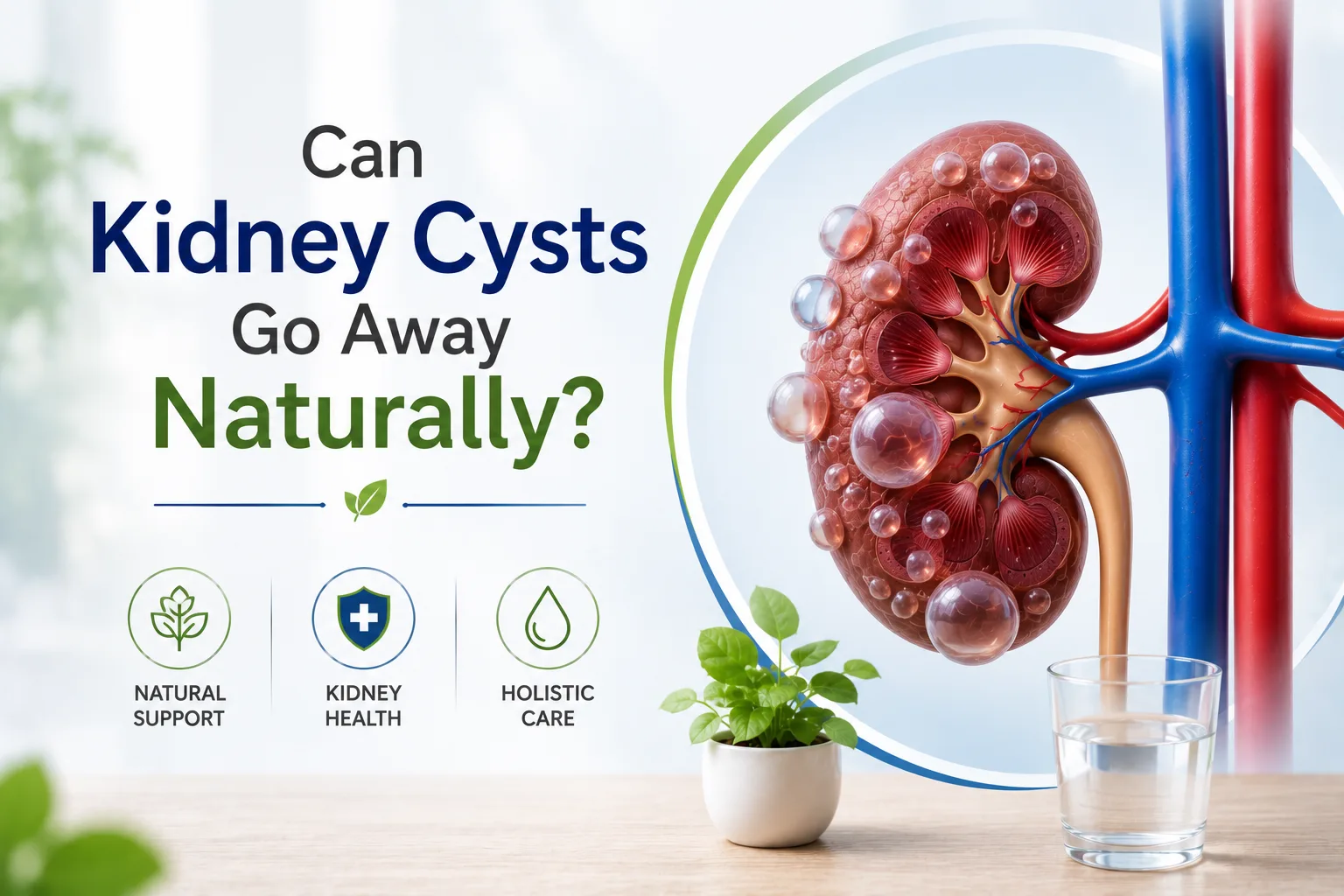

Short answer: usually not, but occasionally, yes; a simple kidney cyst can shrink or vanish on its own, though it's more the exception than the rule. Think of it like winning a small, boring lottery. It happens, just don't build your retirement plan around it.
Now that we've got the headline out of the way, let's actually talk about what's going on inside your kidneys, because "usually not, but sometimes yes" is the kind of answer that raises more questions than it answers. Fair enough. Let's dig in.
Wait, What Even Is a Kidney Cyst?
A kidney cyst is basically a tiny water balloon that shows up on or inside your kidney. Doctors call the harmless, most common version a simple renal cyst: a thin-walled sac filled with fluid that looks a lot like water. Nobody really knows why they form, and they're not something you're born with. They just... show up, uninvited, like that one relative at every family function.
Here's the wild part: these things are shockingly common. Depending on which study you look at, somewhere between 10% and 35% of people over 60 have at least one, and by some estimates, roughly a quarter of people over 40 already have one without ever knowing it. Most cysts are found completely by accident, during a scan for something totally unrelated, like a stubborn backache or a check-up ultrasound.
So... Do They Ever Go Away on Their Own?
Mostly, no. Once a simple cyst has formed, it tends to just sit there, minding its own business. Some research even suggests they can slowly double in size over about a decade, though that growth is usually so slow it's basically the fluid version of watching paint dry.
That said, spontaneous disappearance isn't a myth. There are documented cases, particularly with smaller or "hemorrhagic" cysts (ones that have some blood mixed in), where the cyst simply reabsorbs into the body over time. It's rare enough that doctors don't rely on it as a treatment plan, but common enough that it's not a medical unicorn either.
Interestingly, a well-known pediatric radiology study that tracked kidney cysts in kids over five years found that a good chunk of them stayed the same size, and none caused any lasting kidney damage. So even when a cyst doesn't disappear, it's often not doing much of anything at all; the medical version of a houseguest who never leaves but also never touches your stuff.
What Actually Makes Them Go Away (If They Do)?
-
Small size at diagnosis; tiny cysts have a slightly better shot at resolving than big ones
-
Hemorrhagic origin; cysts with some blood content seem more likely to shrink or reabsorb
-
Younger age; kids' bodies are just generally better at cleaning up after themselves
-
No underlying kidney disease; a healthy kidney is more likely to quietly reabsorb fluid than one already under stress
Simple Cyst vs. Complex Cyst vs. PKD: A Cheat Sheet
Because "kidney cyst" gets thrown around like it's one single thing, when really it's a whole family reunion of possibilities:
|
Type |
Personality |
Should You Worry? |
|
Simple Kidney Cyst |
Chill, thin-walled, minds its own business |
Nope, usually a bystander |
|
Complex Renal Cyst |
Thicker walls, sometimes solid bits, a bit dramatic |
Worth monitoring, doctor will keep an eye on it |
|
Polycystic Kidney Disease (PKD) |
Genetic, multiple cysts, the overachiever of the group |
Yes, needs proper medical management |
Does Anything Speed Up the Process?
There's no magic tea, supplement, or juice cleanse that will dissolve a kidney cyst; and if anyone tells you otherwise, that's your cue to run. What actually helps is boring but effective:
-
Staying well hydrated (your kidneys are basically filtration systems; give them clean water to work with)
-
Managing blood pressure, since research has actually linked simple renal cysts with a higher likelihood of hypertension
-
Getting regular imaging so your doctor can track size changes over time
-
Avoiding excess salt and processed food, which just makes your kidneys work overtime
When Should You Actually See a Doctor?
If a cyst is causing back pain, blood in your urine, a fever, or if imaging shows it's growing fast or looking "complex" rather than simple, that's your green light to book an appointment. Most kidney cysts are silent little passengers, but the ones that start making noise deserve attention.
Key Takeaways
-
Simple kidney cysts rarely disappear on their own, but rare spontaneous resolution does happen, especially with smaller or hemorrhagic cysts
-
They're extremely common with age and usually harmless
-
Complex cysts and polycystic kidney disease are a different story and need proper monitoring
-
Hydration, blood pressure control, and regular check-ups are your best "natural" management tools
-
There's no verified home remedy that shrinks or cures a kidney cyst; be skeptical of anyone claiming otherwise
FAQs
Can a simple kidney cyst disappear without treatment?
Rarely, yes; small or blood-tinged cysts have been known to shrink or vanish on their own over time.
Do kidney cysts turn into cancer?
Simple cysts almost never turn cancerous, but complex cysts need monitoring since their risk is slightly higher.
Does drinking more water shrink kidney cysts?
It won't shrink an existing cyst, but good hydration keeps your kidneys functioning at their best overall.
Is kidney cyst pain normal?
Small simple cysts usually don't hurt at all, so any real pain is worth getting checked out.
Are kidney cysts hereditary?
Simple cysts are not inherited, but multiple cysts from polycystic kidney disease absolutely run in families.
Disclaimer: This article is for general informational purposes only and isn't a substitute for professional medical advice, diagnosis, or treatment. Kidney cysts vary a lot from person to person, so please talk to a qualified doctor before making any health decisions based on this piece.