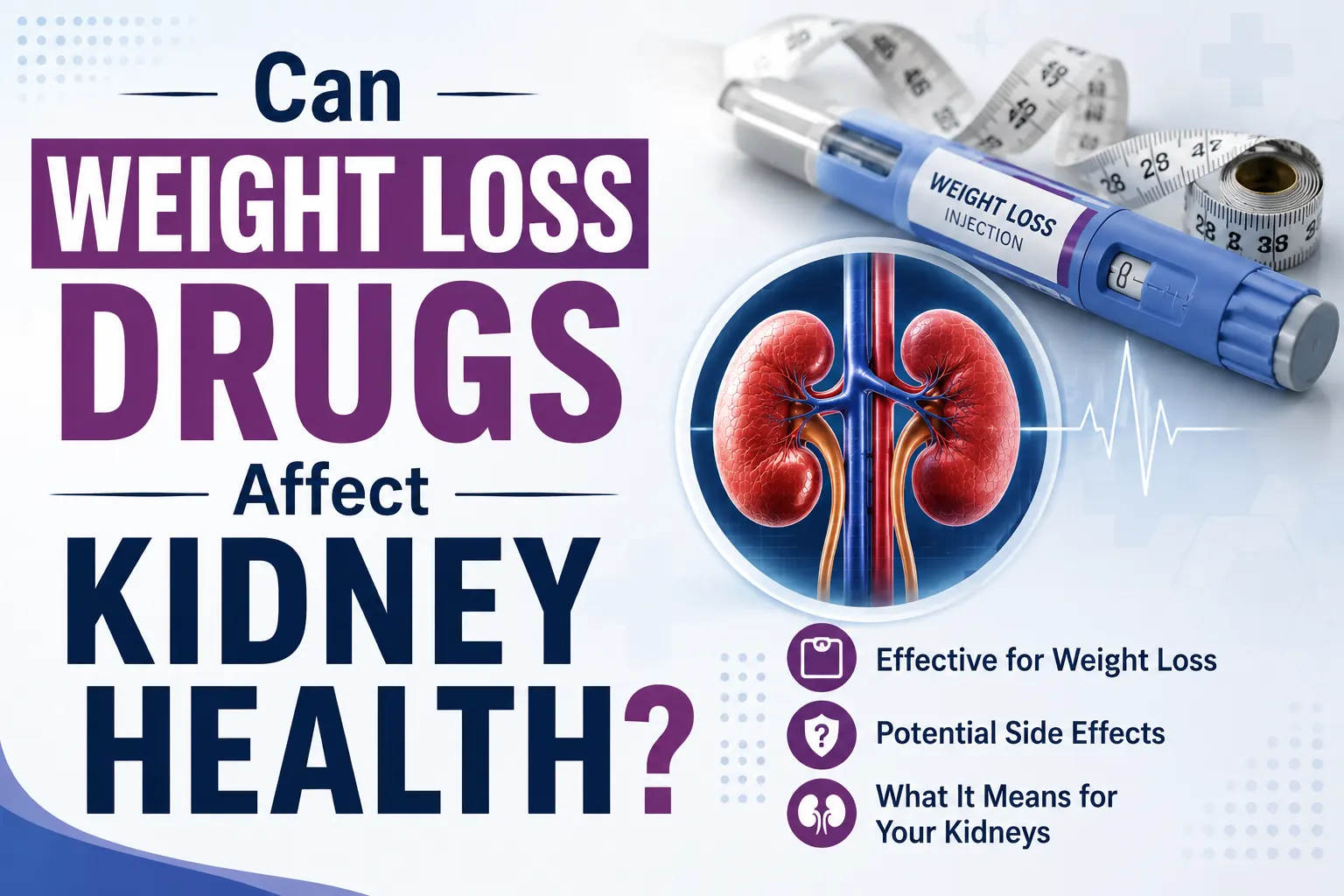

Yes, they can affect your kidneys, and mostly, weirdly, in a good way. If you're picturing your kidneys shriveling up every time you take a semaglutide shot, you can relax a little. Now let's get into why, because the "how" is actually the interesting part.
First, What Are We Even Talking About
Ozempic, Wegovy, Mounjaro, Zepbound; you've heard the names by now, probably more times than you wanted to. These all fall under a class called GLP-1 receptor agonists. Tirzepatide (that's Mounjaro/Zepbound) goes one step further and hits two receptors instead of one: GLP-1 and GIP, which is why some doctors call it a dual agonist and why it tends to produce even more weight loss.
None of these were built as weight loss drugs to begin with. They started life as type 2 diabetes medications. The weight loss was basically a side effect that turned out to be so significant that the FDA eventually approved several of them specifically for weight management. Funny how that works out sometimes.
What most people don't realize is that these drugs don't just quiet down your appetite. They're doing things to your gut, your heart, your pancreas, and yes, your kidneys. So the question really isn't whether kidneys are involved. They are. The question is whether that involvement is something to worry about.
Here's the Surprising Part: They Might Actually Help
I'll admit this surprised me too when I first dug into the research. A handful of large clinical trials have found that GLP-1 drugs seem to genuinely protect kidney function in a lot of people, particularly those with type 2 diabetes or obesity-related kidney stress.
Take the FLOW trial. This was a big randomized study on semaglutide, and the results came out in 2024; semaglutide cut the risk of major kidney disease progression by 24% compared to placebo, in people who already had type 2 diabetes and chronic kidney disease. For context, a 24% reduction in a hard kidney outcome is the kind of number nephrologists get genuinely excited about. That's not a small effect.
Then there's the SELECT trial, which looked at people with obesity and existing heart disease, many of whom didn't even have diabetes. Kidney function, measured by eGFR, basically how well your kidneys filter blood, held up noticeably better in the group taking semaglutide compared to the placebo group, over a two-year stretch.
And a smaller study called SMART tried to figure out the mechanism behind all this. Turns out semaglutide may improve how the kidneys handle sodium and fluid, and it seems to calm down inflammation in kidney tissue too. So there's a plausible biological story here, not just a statistical coincidence.
So Where's the Catch, Because There's Always One
The risk with these drugs isn't usually the medication attacking your kidneys head-on. It's more indirect than that, and it comes down to something almost embarrassingly simple: dehydration.
GLP-1 drugs are notorious for nausea, vomiting, and diarrhea, especially in the first weeks of starting a dose or bumping it up. If that hits hard and you're not replacing fluids, you can end up dehydrated pretty quickly. And dehydration is genuinely rough on kidneys; with less blood volume circulating, your kidneys get less blood flow, and in some cases that tips into acute kidney injury, which is a sudden drop in kidney function. Usually temporary, usually reversible, but not something to shrug off.
This isn't hypothetical. The FDA has collected real post-marketing reports of this happening. A 2025 analysis using the FDA's adverse event database compared tirzepatide and semaglutide directly and found kidney injury reports in roughly 0.47% of tirzepatide cases versus about 1.07% of semaglutide cases. So tirzepatide came out looking a bit safer on this specific point, though both numbers are still fairly small in the grand scheme of things.
A Quick Way to Think About It
|
Your situation |
What tends to happen |
In plain English |
|
Type 2 diabetes with early kidney disease |
Often slows kidney decline (FLOW trial data) |
Your kidneys are doing better than they would've otherwise |
|
Skipping water because the nausea has you off your game |
Higher chance of dehydration and kidney strain |
This is the part people underestimate |
|
Obesity without diabetes, mild kidney concerns |
eGFR tends to hold up well (SELECT trial) |
A nice side benefit nobody advertises |
|
Vomiting for days and just pushing through it |
Real risk of acute kidney injury |
Please just call your doctor |
|
Existing severe kidney disease, dose increased too fast |
Needs close monitoring and a slower approach |
Patience actually pays off here |
What Actually Helps
None of this requires a dramatic lifestyle overhaul. Mostly it's boring, unglamorous stuff that works:
-
Drink water consistently, not just when you remember. This matters most in the first few weeks after starting or increasing a dose.
-
If vomiting or diarrhea gets bad or won't let up, call your doctor instead of waiting it out. It's not weakness, it's just smart.
-
If you already have chronic kidney disease, get your eGFR and creatinine checked at baseline and then periodically, so any shift gets caught early instead of late.
-
Be careful about stacking other kidney stressors on top of each other; daily ibuprofen use is a common one people don't think about.
-
Some people end up on both a GLP-1 drug and an SGLT2 inhibitor for diabetes management, and there's decent 2024 research suggesting the combination may be even better for kidney protection than either alone. Still, that's a conversation for your doctor, not a DIY project.
Bottom Line
For most people, especially those dealing with diabetes or obesity-related kidney stress, these weight loss medications and kidney health tend to get along just fine; often better than fine. The real risk isn't the drug quietly sabotaging your kidneys; it's dehydration sneaking up because of GI side effects nobody warned you would be this intense. Stay ahead of that, keep your doctor in the loop, and you're in good shape.
Key Takeaways
-
GLP-1 drugs like semaglutide and tirzepatide are generally protective for kidney health in people with diabetes or obesity-related kidney risk, based on the FLOW and SELECT trials.
-
The real danger is usually indirect; dehydration from nausea, vomiting, or diarrhea, not the drug itself.
-
Acute kidney injury is a known but uncommon reported side effect, and appears somewhat less frequent with tirzepatide than semaglutide based on recent FDA data.
-
Staying hydrated and reporting severe GI symptoms early prevents most of the trouble.
-
People with existing chronic kidney disease should get regular kidney function checks while on these medications.
FAQs
Do Ozempic or Wegovy damage the kidneys?
Not usually; most research actually points toward these drugs protecting kidney function rather than harming it.
Can GLP-1 drugs cause kidney failure?
It's rare, and when it happens it's almost always tied to severe dehydration from side effects rather than the drug attacking the kidneys directly.
Is tirzepatide easier on the kidneys than semaglutide?
Recent FDA adverse event data suggests tirzepatide had fewer reported kidney injury cases, though both drugs are generally considered kidney-friendly.
Should someone with kidney disease avoid these medications altogether?
Not necessarily; many people with early chronic kidney disease actually benefit, as long as a doctor is monitoring things along the way.
What's the single best thing I can do to protect my kidneys on these drugs?
Drink enough water and never brush off ongoing vomiting or diarrhea as "just a side effect."
Disclaimer: This article is for general information only and isn't medical advice. Everyone's health situation is different, and how these medications affect kidney function can vary from person to person. Talk to your doctor or a nephrologist before starting, stopping, or changing any medication, especially if kidney health is already a concern for you.