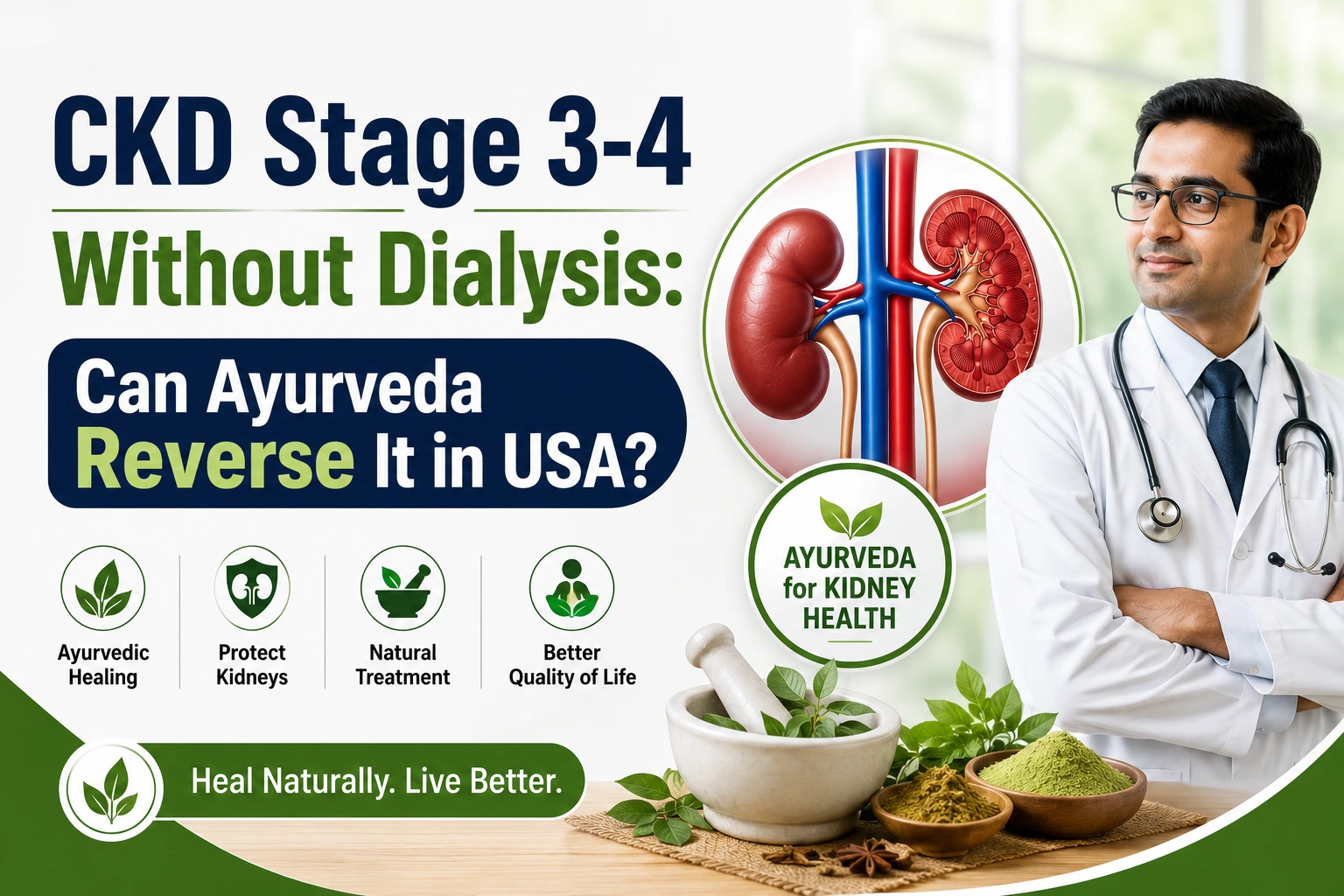

If you’ve been diagnosed with stage 4 kidney disease without dialysis, your Google search history is probably a dark, terrifying rabbit hole of medical jargon and looming dialysis machines. But as you sit there in your comfy American living room, clutching a cup of green tea, a wild thought crosses your mind: What about Ayurveda? Can this ancient Indian science actually hit the "rewind" button on my kidneys right here in the US?
Before you go swapping your American nephrologist for a giant jar of exotic roots, let’s unpack the reality, the science, and the sheer logistics of advanced CKD management with a healthy dose of humor and hard facts.
The Kidney: The Ultimate Unsung Filter of Your Body
Your kidneys are basically two fist-sized, bean-shaped bouncers inside your body. Their entire job is to filter out the metabolic trash, balance your fluids, and make sure your blood pressure doesn’t throw a wild, uninvited party.
When you slide down into Stages 3 and 4 of chronic kidney disease (CKD), it means these bouncers have checked out, put their feet up on the desk, and are taking an aggressively long coffee break. Your eGFR (the speed at which your kidneys filter blood) drops, and waste products like creatinine and blood urea nitrogen start building up.
In conventional US medicine, the standard game plan for slowing kidney disease progression usually involves a cocktail of blood pressure pills, strict diet sheets that ban everything delicious, and a lot of anxious waiting. It’s no wonder people start looking for alternative treatment options before dialysis.
Enter Ayurveda: The 5,000-Year-Old Reset Button?
Ayurveda doesn't look at your kidney as just a broken plumbing pipe. In Ayurvedic terms, kidney issues are viewed as a disturbance in your Mutravaha Srotas (the urinary channels). When your Doshas (internal biological energies, specifically Vata and Kapha) get out of whack, they create a toxic sludge called Ama, which clogs up the microchannels in your kidneys.
So, can Ayurveda completely "reverse" the physical scarring of late-stage kidney tissue? Let’s be real; if your kidney has suffered permanent structural damage, an herb cannot magically grow you a brand-new organ. However, what it can do is focus heavily on protecting remaining kidney function, clearing out the systemic toxic sludge, and making your remaining working kidney filters hustle like they’re trying to get a promotion.
The Heavy-Hitter Herbs: Meet the Kidney Avengers
Ayurveda relies on specific botanicals that sound like magical spells but pack a serious scientific punch. Here are the main players you will encounter on this journey:
-
Punarnava (Boerhavia diffusa): The name literally translates to "that which makes you new again." It acts as a natural, gentle diuretic, helping your body flush out fluid retention (hello, swollen ankles!) without draining your essential electrolytes.
-
Gokshura (Tribulus terrestris): Think of this as a soothing spa treatment for your irritated urinary tract. It reduces inflammation and helps regenerate renal tissue.
-
Varun (Crataeva nurvala): The ultimate blocker of urinary obstructions, helping clear out the metabolic traffic jams.
What Does the Science Say? (No Myths, Just Math)
You might be thinking, "This sounds lovely, but my American doctor only believes in things that come in plastic orange bottles." Fair enough! Let’s look at some real, peer-reviewed clinical research that bridges ancient wisdom with modern metrics.
A massive clinical study published in PubMed Central (PMC3361922) titled "Effects of Ayurvedic treatment on 100 patients of chronic renal failure (other than diabetic nephropathy)" took a hard look at how these herbs perform. The researchers tracked 100 patients with advanced kidney issues who were given an Ayurvedic herbal regimen. The results? The patients experienced a highly significant 20.71% reduction in serum creatinine levels and a staggering 36.15% drop in blood urea levels. On top of that, their urine output increased by over 56%, and symptoms like nausea and leg cramps drastically diminished.
Furthermore, a comprehensive scientific review highlighted in the journal CoLab (10.52711) titled "Nephroprotective Role of Boerhavia diffusa in Renal Disorders: A Review" confirmed that the active compounds in Punarnava possess powerful anti-inflammatory and anti-fibrotic properties. The study demonstrated that these herbs actively work to prevent cellular death in the renal tubules, providing a robust shield for improving kidney health with CKD.
The Reality of Living with Stage 4 CKD in the United States
Navigating living with stage 4 CKD in the US while trying to incorporate Ayurveda can feel a bit like trying to order a traditional Indian curry at a classic Texas steakhouse. American healthcare is built on strict guidelines, FDA regulations, and standard Western protocols.
Here is the twist: Most Ayurvedic herbs are sold in the US as "dietary supplements" rather than regulated medicines. This means quality control can be a wild west. Some poorly manufactured, unregulated supplements can actually contain heavy metals (like lead or arsenic), which will make your poor kidneys cry tears of pure panic.
Therefore, you should never, ever buy random Ayurvedic pills off a sketchy online marketplace. If you want to explore this route in the US, you need a qualified, certified Ayurvedic practitioner who knows how to source clean, third-party-tested herbs, and who will work with your modern nephrologist; not against them.
Ayurveda vs. Western Medicine: The Ultimate Showdown
To keep your options clear, let’s see how these two medical philosophies stack up against each other when you are dealing with a diagnosis of stage 4 kidney disease without dialysis.
|
Feature |
Western Nephrology Protocol |
Traditional Ayurvedic Protocol |
|
Primary Goal |
Symptom management, blood pressure control, and preparing your body for future dialysis. |
Clearing toxic tissue blockages (Ama), balancing bodily Doshas, and revitalizing cell function. |
|
Core Arsenal |
ACE inhibitors, synthetic diuretics, binders, and strict restriction of potassium/phosphorus. |
Custom polyherbal formulations, bio-purification (Panchakarma), and tailored dietary changes. |
|
Scientific Backing |
Backed by massive, multi-million dollar global pharmaceutical trials and standard FDA approvals. |
Supported by classical texts and modern targeted research like the "Effects of Ayurvedic treatment on 100 patients of chronic renal failure" study. |
|
Biggest Risk Factor |
Focuses heavily on managing the decline rather than actively attempting to rejuvenate the tissue. |
Risk of heavy metal contamination if you buy unregulated, unverified supplements online. |
|
The US Vibe |
Fully covered by health insurance, readily available at every local hospital, and highly standardized. |
Mostly out-of-pocket expenses; requires careful sourcing of certified practitioners and clean herbs. |
The Verdict: Can You Skip Dialysis for a Cup of Herbal Tea?
Let’s bring this home. Can Ayurveda completely reverse stage 4 kidney disease without dialysis and give you back the pristine kidneys of a healthy twenty-year-old? No. Let’s keep our expectations firmly grounded in reality.
However, can a strategic, scientifically supported Ayurvedic protocol act as an incredible co-pilot alongside your Western medical treatment to dramatically delay the need for dialysis, lower your toxin levels, and make you feel like a human being again instead of a walking medical chart? Absolutely yes.
Disclaimer: Please consult with an expert or visit Karma Ayurveda USA for a better understanding of your health profile and further course of action. Avoid DIY treatment.
Key Takeaways
-
Integrated Care is King: Ayurveda cannot magically grow new organs, but combining it with modern US nephrology is incredibly powerful for slowing kidney disease progression.
-
Proven Toxin Reduction: Rigorous clinical trials like the "Effects of Ayurvedic treatment on 100 patients of chronic renal failure" study prove that herbs like Punarnava can lower creatinine by over 20%.
-
Safety First in the US: Always opt for third-party-tested herbs and certified practitioners to protect your body from heavy metal contamination while protecting remaining kidney function.
Frequently Asked Questions
-
Can Ayurveda completely reverse stage 4 kidney disease without dialysis?
While it cannot fix permanent scarring, Ayurveda works alongside Western medicine to lower creatinine, manage symptoms, and significantly delay the need for dialysis.
-
Which Ayurvedic herbs are best for advanced CKD management?
Punarnava, Gokshura, and Varun are the top scientifically backed herbs used for flushing out toxins and protecting remaining kidney function.
-
Is it safe to use Ayurvedic medicine for kidneys in the USA?
Yes, but only if you consult a certified practitioner and use third-party lab-tested supplements to completely avoid heavy metal contamination.
-
How does Ayurveda help in slowing kidney disease progression?
It works by clearing cellular blockages, reducing systemic inflammation, and improving blood flow to help your remaining kidney filters work much more efficiently.
-
Can I combine Ayurvedic herbs with my current Western kidney medications?
Absolutely, but you must coordinate with both your US nephrologist and an Ayurvedic expert to ensure your treatment options before dialysis don't conflict.