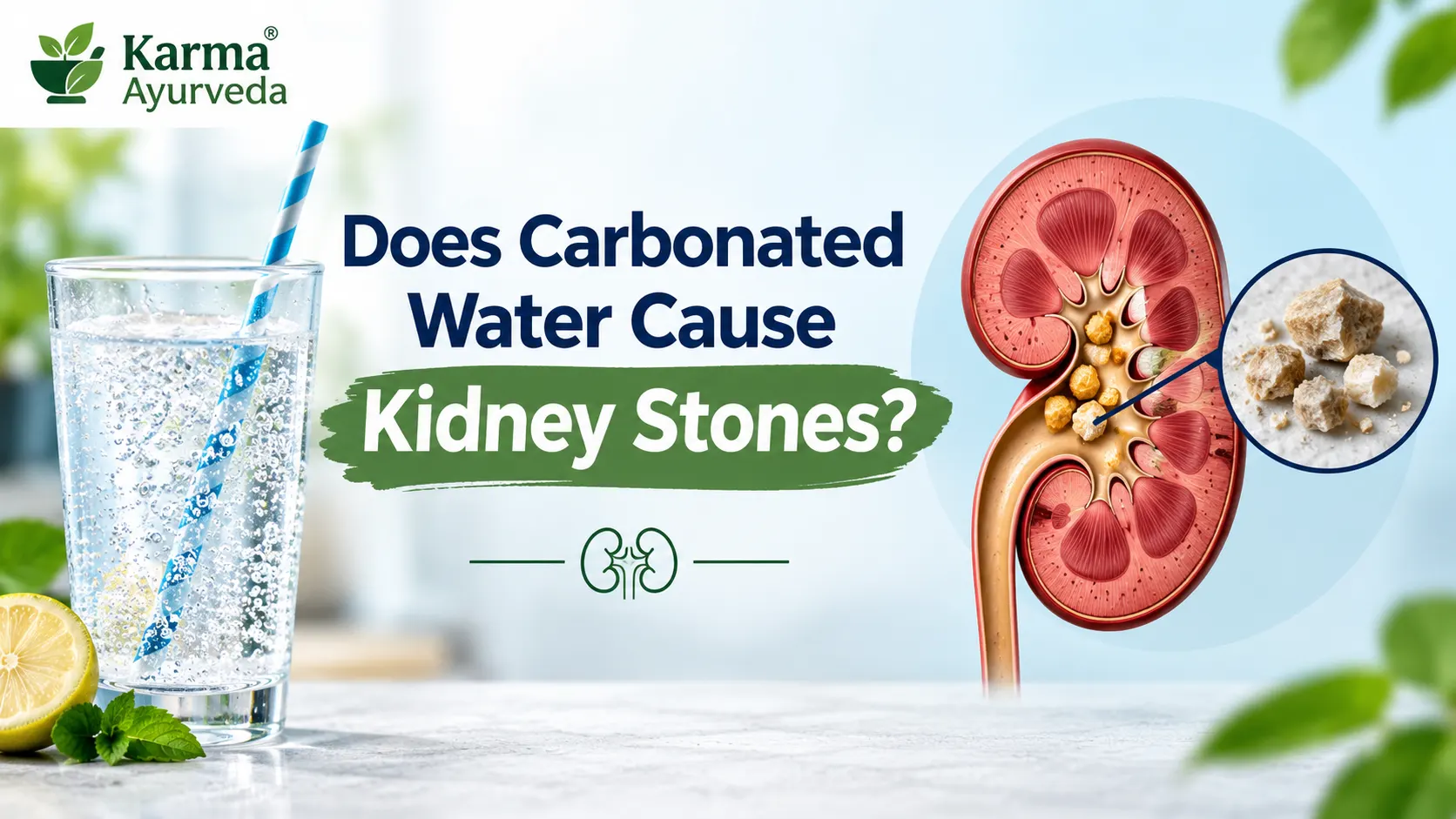

Plain carbonated water will not cause kidney stones and will contribute to your fluid intake, which is recommended by urologists. The risk lies in the ingredients used in sparkling water, such as sugar, phosphoric acid, or extra salt.
So, if you've been having some suspicious feelings about your sparkling water, the time has come to take out the magnifying glass. Let's see what's really there.
The Real Ingredients of Your Fizzy Water
The main element of sparkling water is dissolved carbon dioxide gas, mixed with H2O. Seltzer is the simplest sparkling water; club soda usually has some minerals included, while tonic water brings some amount of sugar. Flavored water may have some additional substances such as citric acid or flavor. Taking into account the variety of forms and compositions, answering the question of whether it is possible to drink carbonated water with kidney stones is not as straightforward as it might seem.
Formation Of Stones
Calculi can occur because of calcium, oxalate, or magnesium phosphate stones in concentrated urine. Some common factors cause their formation, and they are:
Drinking less than required (the main reason).
- Too much sodium, which makes more calcium exit your body through urine.
- Excessive consumption of animal protein.
- Sugar drinks, including those sweetened with fructose.
- History of the illness and certain diseases of the patient.
Have you noticed any of those? I haven't.
What Does the Science Say About the Use of Supplements
Studies published in 2001 by Bihl and Meyers (Journal of Urology) found that carbonated water does not lead to an increase in urinary risk factors related to stone formation. A large study by Ferraro et al. (2013, Clinical Journal of the American Society of Nephrology), including more than 190,000 participants, found a link between sugar-sweetened colas and punch and increased stone risk and a link between coffee, tea, and orange juice and decreased stone risk. The guideline issued by the American College of Physicians (Qaseem et al., 2014, Annals of Internal Medicine) recommends the daily intake of fluids that would produce at least 2 litres of urine per day.
Conclusion: you should drink more fluids, avoid soda, and pay less attention to the bubbles.
Fizzy Drinks, Compared
|
Drink |
Stone risk |
Honest funny note |
|
Plain carbonated water |
Low |
Water, but it's got a personality |
|
Coca-Cola |
High |
It's quite tasty, but dangerous |
|
Club soda |
Low to moderate |
Slightly salty, otherwise chill |
|
Tonic water |
Moderate (sugar) |
Gin's sidekick, not your hydration plan |
Pair Your Bubbles With Better Habits
Squeezing lemon into the sparkling water is a smart practice because of the citrate included in this fruit that prevents the formation of crystals. As for the Ayurvedic herbs recommended for kidney stone sufferers, their effect is much better if combined with sufficient amounts of fluids.
Herbs People Ask
Most people want to know about herbs that can help treat kidney stones. Some herbs you will come across are pashanbhed (Bergenia ligulata), gokshura, horse gram, and chanca piedra. The available human evidence regarding the effectiveness of these herbs for kidney stones is still very limited, and thus, they can serve as a basis for conversation with your doctor only; they are not a substitute for water and medical care. Also, keep in mind that some herbs may interfere with your medicines or affect your weakened filters; therefore, they do not automatically make treatment safe.
Ayurveda and Personalized Plan
The Ayurvedic approach to treating kidney stones consists of diet, hydration, and herbs, which depend on the patient's body and medical history. For example, at Karma Ayurveda, the hospital run by Dr. Puneet Dhawan, this practice is performed following this approach.
Everyday Habits That Are Helpful
A true natural renal stone treatment consists of simple and mundane measures:
- Drink the needed fluids throughout the entire day and not all at night.
- Make sure to examine food labels, especially for sugar content, sodium amount, and added acids.
- Eat foods rich in calcium such as yogurt and milk.
- Tell your doctor about all your supplements.
Summary
- Plain carbonated water is not associated with stones and is a good source of fluids.
- The consumption of sweet drinks, especially cola.
- Carefully read labels, checking for sodium, sugar, and added acids.
- Lemon is a handy flavouring agent.
- Herbs need professional help before you use them.
📩 Ask a Kidney Expert (Free 10-Min Consultation)
FAQs
Is there a link between carbonated water and kidney stones?
Ordinary fizzy water does not seem to negatively affect the human body, while sugary or salty fizzy drinks do.
Does sparkling water hydrate as well as regular water?
Yes, pretty much.
Is club soda worse than seltzer for stones?
Slightly, thanks to a bit of sodium, but it’s rarely a big deal.
What should I drink to prevent kidney stones?
Water, lemon water, coffee, and tea are solid picks in moderation.
Should I avoid cola if I’ve had stones before?
Probably, since sugar and phosphoric acid aren’t doing you any favours.
Disclaimer
This article is for general information only and isn’t medical advice, diagnosis, or treatment. Stone causes vary by person. Please consult a qualified doctor before changing your diet, starting herbs or supplements, or delaying care for severe pain, fever, or blood in urine.