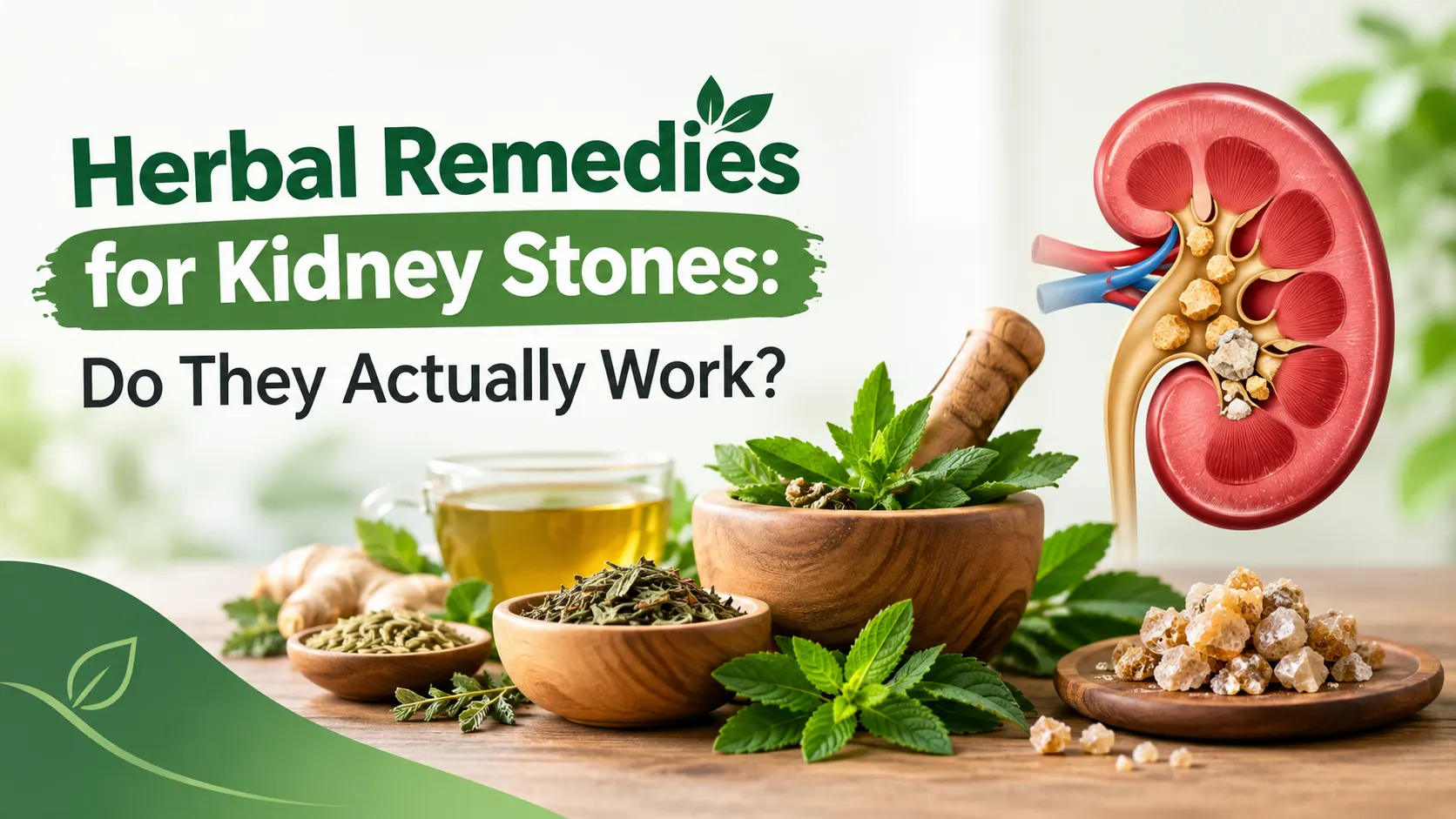

Yes, sometimes herbal remedies for kidney stones do work, but not the way the internet wants you to believe. Some plants really can help a small stone move along and keep new ones from forming, but nothing you brew in a kettle is going to melt a big one overnight, no matter how confidently some blog (not this one, I hope) tells you otherwise.
I say this as someone who spent a truly unpleasant weekend once, curled up on a bathroom floor, googling "will lemon juice dissolve a stone" while my mother-in-law texted me increasingly specific home remedies. So I get the appeal. When you're in that much pain, you'll try almost anything a stranger on the internet swears worked for their cousin. But let's actually separate what's real from what's wishful thinking.
Wait, So Do Any of These Herbs Actually Do Anything?
Here's what I've learned after digging through this way more than any non-doctor should: stones are not all the same beast. A tiny gritty one, maybe 2- 3 mm, can genuinely wash out with enough water, some patience, and a bit of herbal help. A bigger one, the kind that shows up on a scan looking suspiciously like a small asteroid, is not going anywhere because you drank turmeric tea for a week.
Herbal remedies for kidney stones mostly work on that first, smaller category. And when they do help, it's rarely anything dramatic; it's more like giving your plumbing a nudge. What they typically do:
-
Push you to pee more, which just means more fluid moving the stone along
-
Calm down the muscle spasms in the ureter (the tube doing all the screaming during a stone attack)
-
Nudge your urine chemistry slightly, so new crystals have a harder time forming
-
Bring in some antioxidant support, which some researchers think may play a role in stone formation
None of that is wizardry. It's mostly hydration and biochemistry wearing a fancier outfit.
The Ayurvedic Side of Things
Ayurveda has had opinions about this condition; it calls it "Ashmari"; for a very, very long time, long before anyone could pop a stone onto an ultrasound screen and point at it. Kidney stones Ayurvedic treatment usually revolves around a small cast of regulars:
-
Gokshura (Tribulus terrestris), probably the most talked-about herb in this space, used to support urine flow and calm irritation
-
Punarnava (Boerhavia diffusa), a natural diuretic whose name apparently means "that which rejuvenates"; either deeply poetic or an incredibly bold marketing claim from a few thousand years ago
-
Pashanbheda (Bergenia ligulata), which literally translates to "stone breaker." Ayurveda really doesn't believe in subtle branding
-
Varuna (Crataeva nurvala), traditionally used to stop stones from staging a comeback
And this isn't just something passed around WhatsApp forwards. A fairly detailed review in the Journal of Ethnopharmacology went through herbal treatments used across India and China and described Ayurvedic management as a combination of herbal formulas, alkaline fluids, and, when needed, surgery; while Traditional Chinese Medicine leans on its own mix of multi-herb formulas. The same review found that most of the plants studied either helped dissolve stones or got in the way of crystal formation to begin with. So, there's genuine curiosity from researchers here, even if it's not a slam-dunk "cure" story.
If you're actually pursuing Ayurvedic kidney stones treatment, it's worth knowing upfront that it's basically never a one-herb job. Practitioners combine a few herbs at once, along with dietary changes (less salt, easing off the spinach if oxalate is your problem) and lifestyle tweaks, because Ayurveda has never once looked at a health problem and thought, "yep, one ingredient should cover it."
What Does the Actual Research Say?
Let's talk about the herb with the biggest reputation in this whole space: Phyllanthus niruri, known in Brazil as "quebra-pedra," which literally means stone-breaker (see above, re: subtlety).
There's a randomized, prospective study in The Journal of Urology that tested it in 150 people undergoing shockwave treatment for stones as large as 25mm, to see whether the herb affected how well the treatment worked. It's a genuinely solid piece of research, and it puts this particular plant a few steps ahead of "my neighbor swears by it."
Then there's a 2020 systematic review and meta-analysis from the Canadian Journal of Urology, by Dhawan and Olweny, which pooled together the existing clinical evidence and landed on this: there's limited but real evidence of modest efficacy for Phyllanthus niruri in reducing stone burden, though bigger, longer trials are still needed before anyone hands it a trophy.
A few more worth knowing about:
-
A randomized, double-blind, placebo-controlled trial in Phytotherapy Research (2019) tested black seed (Nigella sativa) for stone dissolution and found a measurable improvement over placebo
-
A 2020 study in Nutrients looked at kidney beans (Phaseolus vulgaris) and found favorable shifts in urinary markers tied to stone risk
None of these are "miracle cure discovered" studies. They're "hey, this is worth studying more" studies, which, honestly, is what most real medical research sounds like when you strip away the headlines.
Herbs Worth Knowing for Prevention
If we're not talking about an existing stone but just trying to avoid a repeat performance, the list shifts a little. Some of the best herbs for kidney disease and general urinary support, at least by tradition and some early research, include:
-
Coconut water, which hydrates you without tasting like a punishment
-
Warm water with lemon juice, since the citrate may help stop calcium from clumping together
-
Basil (Tulsi) juice, a long-standing favorite for general urinary health
-
Corn silk tea, used across a few traditional systems as a gentle diuretic
-
Dandelion root, another old-school diuretic with a long folk-medicine track record
Used regularly, these fall more under natural kidney stone treatment as an everyday habit rather than an emergency fix. It's the difference between flossing every night versus showing up at the dentist in a panic.
A Quick, Honest Comparison
|
Approach |
Best For |
Speed |
Reality Check |
|
Hydration + herbs (Gokshura, Punarnava, lemon water) |
Small stones, prevention |
Slow and steady |
Helps your body do its job, but it's not rushing anything out overnight |
|
Phyllanthus niruri |
Supporting passage, post-procedure care |
Moderate |
Decent research behind it, but "modest efficacy" is the honest phrase, not "miracle cure" |
|
Prescription medication |
Medium stones stuck in the ureter |
Faster |
Prescribed for a reason; actually, tested at scale on real patients |
|
Surgical or shockwave procedures |
Large or stuck stones |
Fastest |
Sometimes herbs just can't out-argue physics |
Where Tradition and Modern Medicine Should Actually Meet?
Here's the part people don't like hearing: kidney disease Ayurvedic treatment and modern nephrology shouldn't be pitted against each other like it's some kind of rivalry. If your situation goes beyond a small, uncomplicated stone, herbal support works best alongside proper medical monitoring, not instead of it. Ultrasounds exist for a reason, and so do urologists; however much you'd rather avoid both.
Honestly, the answer to "what's the best treatment for kidney stones" always comes back to specifics: size, location, and what the stone is actually made of, none of which you can figure out by wincing at your own back pain and refreshing WebMD. Herbs can absolutely help. They're just not the whole show.
Composition matters more than people realize, too. A calcium oxalate stone behaves very differently from a uric acid stone, and both behave differently from the rarer struvite or cystine types. A diuretic herb that helps flush one type might barely touch another. This is exactly why anyone serious about natural kidney stone treatment will usually ask about a previous stone analysis before recommending anything specific; it's not guesswork dressed up in tradition, it's tailored based on what's actually going on.
And then there's patience, which nobody wants to hear about mid-pain-attack. A lot of people try an herb for four days, feel nothing dramatic, and write the whole thing off. But most of the studies mentioned above ran for weeks or months, not days. Herbal support tends to work on slow-drip logic, not instant-relief logic. If you're expecting the same speed as a painkiller, you'll be let down regardless of which root you're chewing on.
None of this is meant to talk you out of trying it. It's just meant to set expectations honestly, because a lot of the disappointment around natural remedies comes from expecting them to act like pharmaceuticals when they were never built to work that fast.
Key Takeaways
-
Herbal support genuinely helps with small stones and long-term prevention, not large or stuck ones
-
Gokshura, Punarnava, Pashanbheda, and Varuna are the regulars in Ayurvedic practice for this
-
Phyllanthus niruri has the strongest research behind it, with modest but real effects
-
Plain old hydration is still the most powerful and cheapest tool available
-
Herbs work best alongside proper diagnosis and monitoring, not as a replacement for it
-
Get imaging done before assuming a home remedy is quietly "working" in the background
📩 Ask a Kidney Expert (Free 10-Min Consultation)
FAQs
Can herbal remedies dissolve kidney stones completely?
Rarely, and usually only the small ones; bigger stones typically need actual medical treatment, not just tea.
Is Ayurvedic treatment safe to use alongside regular medication?
Usually yes, but always tell your doctor what you're taking so nothing interacts badly.
How long before natural treatment actually shows results?
Anywhere from a few weeks to a few months, depending on the stone and how consistent you are.
Which herb has the most scientific backing right now?
Phyllanthus niruri currently has the strongest clinical research support of the bunch.
Can I just use herbs and skip seeing a doctor?
No; get scanned first; herbs are a support act, not a replacement for a real diagnosis.
Disclaimer: This piece is for general information only and isn't medical advice. Stone size, location, and composition vary a lot from person to person, and herbal remedies affect everyone differently. Please talk to a qualified doctor or Ayurvedic practitioner before starting anything new, especially if you're already on medication.