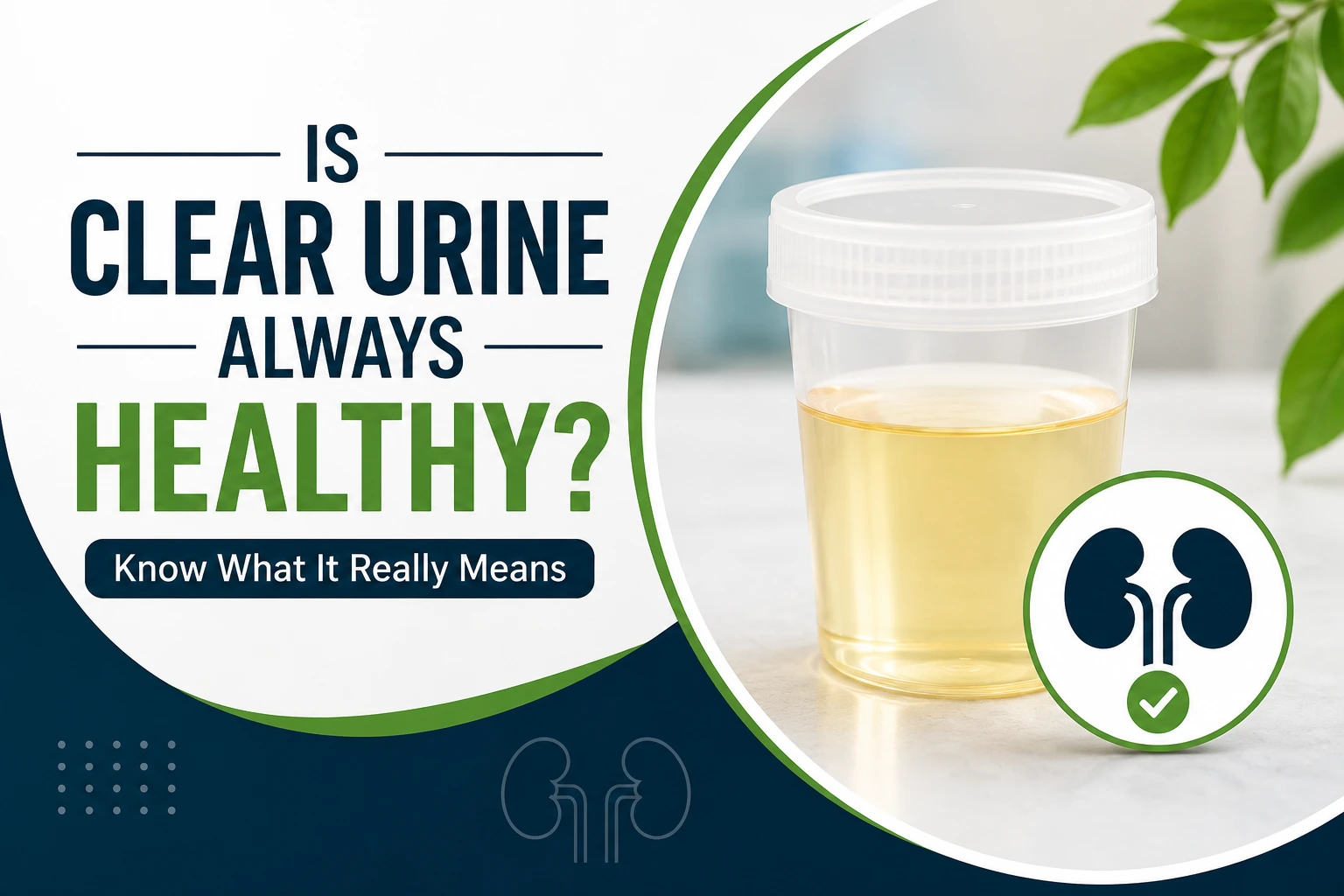

No, clear urine is not always healthy is actually a myth. Clear urine usually means you're well-hydrated, but it can also mean you're drinking so much water that your body is washing out important electrolytes, or in rare cases, it can be linked to an underlying health condition. So no, crystal-clear pee isn't always the gold star you think it is. Let's break this down without the medical jargon, shall we?
If you've ever peeked into the toilet bowl and felt proud of how "clean" your urine looked, you're not alone. Somewhere along the way, we all got the memo that pale or clear urine equals peak hydration and peak health. But like most things your body does, it's a little more complicated than a single color chart taped to a bathroom wall.
Clear Urine Meaning: What's Actually Going On
Clear urine, meaning, in simple terms, is just this: your kidneys are filtering out waste, but there's so much water in your system that the urochrome (the pigment that gives urine its yellow color) gets heavily diluted. Less pigment per drop of water means less color. That's it. It's chemistry, not a medal ceremony.
Your kidneys are basically working 24/7 like an unpaid janitor, filtering blood and removing waste products, excess salts, and toxins. Urine color is one of the easiest free clues your body gives you about how that filtering process is going.
So, Why Is My Urine Completely Clear?
Why is my urine completely clear? is a question a lot of people Google after a workout, a hot day, or after chugging four bottles of water in an hour because someone told them "drink more water." Some common, totally normal reasons include:
-
You drank a large amount of water in a short window
-
You're exercising heavily and rehydrating aggressively
-
You just woke up and haven't had caffeine or food yet (less common, but it happens)
-
Hot weather has you compensating with extra fluids
But there are also a few reasons that aren't about hydration at all, and that's where things get interesting.
Clear Urine Causes: The Hydration Story Isn't the Whole Story
Clear urine causes can be split into two buckets: the boring, totally fine ones, and the ones worth paying attention to.
The boring, fine ones:
-
Overhydration (yes, you can drink too much water)
-
Diuretic medications or drinks like coffee and alcohol
-
Naturally, high water intake as part of your routine
The ones worth a second look:
-
Diabetes insipidus, a rare condition where the body can't regulate fluid properly, leading to excessive thirst and very dilute, clear urine
-
Kidney conditions that affect the body's ability to concentrate urine
-
Liver issues, in some cases, that affect fluid balance
A study published in the American Journal of Physiology-Renal Physiology (Bankir et al., 2010) looked at how urine concentration is regulated by the kidneys and found that the body's ability to dilute or concentrate urine is a tightly controlled process tied to hormone levels, particularly antidiuretic hormone (ADH). When that regulation goes off track, urine color can shift in ways that aren't just about how much water you drank.
Can Drinking Too Much Water Make Urine Clear?
Yes, can drinking too much water make urine clear is one of those questions where the answer is almost embarrassingly simple: yes, it absolutely can. But "can" doesn't mean "should."
Drinking excessive amounts of water in a short time can lead to a condition called hyponatremia, where sodium levels in the blood become dangerously diluted. A widely cited case review in the Clinical Journal of the American Society of Nephrology (Rosner & Kirven, 2007) examined cases of exercise-associated hyponatremia, noting that endurance athletes who over-hydrated without replacing electrolytes experienced symptoms ranging from mild confusion to serious complications. So while clear urine might look like a hydration win, it can also be a quiet warning sign if it's paired with excessive water intake and no electrolyte balance.
Healthy Urine Color: What Should You Actually Be Looking For
If clear isn't necessarily the goal, what is? Healthy urine color typically falls somewhere between pale yellow and light amber. Think "light lemonade," not "fully transparent water" and not "apple juice."
|
Urine Color |
What It Likely Means |
Should You Worry? |
|---|---|---|
|
Clear |
Possibly overhydrated or diluted urine |
Usually no, but watch for excessive thirst/water intake |
|
Pale yellow |
Well hydrated, normal |
This is the sweet spot |
|
Dark yellow |
Mildly dehydrated |
Drink some water |
|
Amber/honey |
Dehydrated |
Drink more water soon |
|
Orange |
Could be dehydration, medication, or liver-related |
Worth monitoring |
|
Pink/red |
Could be food (beets), or blood |
See a doctor if no obvious cause |
|
Brown/cola-colored |
Possible liver or muscle issue |
See a doctor |
This isn't a diagnostic tool, just a friendly reference point. Your body isn't a vending machine that gives the same output every time, so context always matters.
Should Urine Always Be Clear?
Should urine always be clear? No, and honestly, aiming for permanently clear urine isn't even a great goal. Pale yellow is considered the healthier baseline by most hydration researchers, because it suggests your body has enough water without flushing out essential minerals too aggressively.
A frequently referenced hydration study from the Journal of the American College of Nutrition (Armstrong et al., 1998) evaluated urine color as a practical, low-cost marker of hydration status in healthy adults, and found that urine color correlated reasonably well with hydration markers, but the researchers noted that color alone isn't a perfect or complete measure of overall health.
Is Clear Urine a Sign of Kidney Disease?
This is the question that tends to cause the most unnecessary panic, so let's be cautious and clear here (pun fully intended): is clear urine is a sign of kidney disease is not something you should assume just because your urine looks clear on a random Tuesday.
In most cases, clear urine has nothing to do with kidney disease and everything to do with how much water you drank. However, in certain kidney conditions, particularly those affecting the kidneys' concentrating ability, urine can appear unusually dilute consistently, not just occasionally. The keyword here is "consistently." A single clear bathroom trip after a big water bottle is not a red flag. Clear urine, every single time, regardless of how much you drink or don't drink, paired with symptoms like excessive thirst, frequent urination, or fatigue, is something to mention to a doctor.
This is also where it's worth repeating: whether clear urine is always healthy is not something science answers with a flat yes. It's healthy in the sense that it usually isn't dangerous, but it's not automatically the gold standard of hydration or kidney function either.
The Bottom Line (Without Sounding Like a Lecture)
Your urine color is a useful, free, low-effort clue your body gives you multiple times a day. It's not a diagnosis, and it's definitely not something to obsess over. If your urine is clear occasionally because you had a big glass of water, that's perfectly normal. If it's clear constantly, paired with other symptoms, or you're chugging water out of habit rather than thirst, it might be worth a conversation with a healthcare provider rather than a Google search at 2 AM.
Hydration is important, but balance matters more than extremes. Pale yellow, not clear, tends to be the sweet spot most researchers point to. And as always, if something about your body feels off and persistent, a real doctor will always beat a blog post, even a genuinely well-researched one like this.
FAQ
Are you healthy if your urine is clear?
Not always, clear urine often means you're well-hydrated, but it doesn't guarantee overall health.
Is clear urine always a good thing?
No, very clear urine all the time may simply mean you're drinking more water than your body needs.
Does clear pee mean a healthy liver?
No, urine color alone cannot tell you whether your liver is healthy.
Is it better to have clear or dark urine?
Pale yellow urine is generally considered ideal, while very dark urine may suggest dehydration.