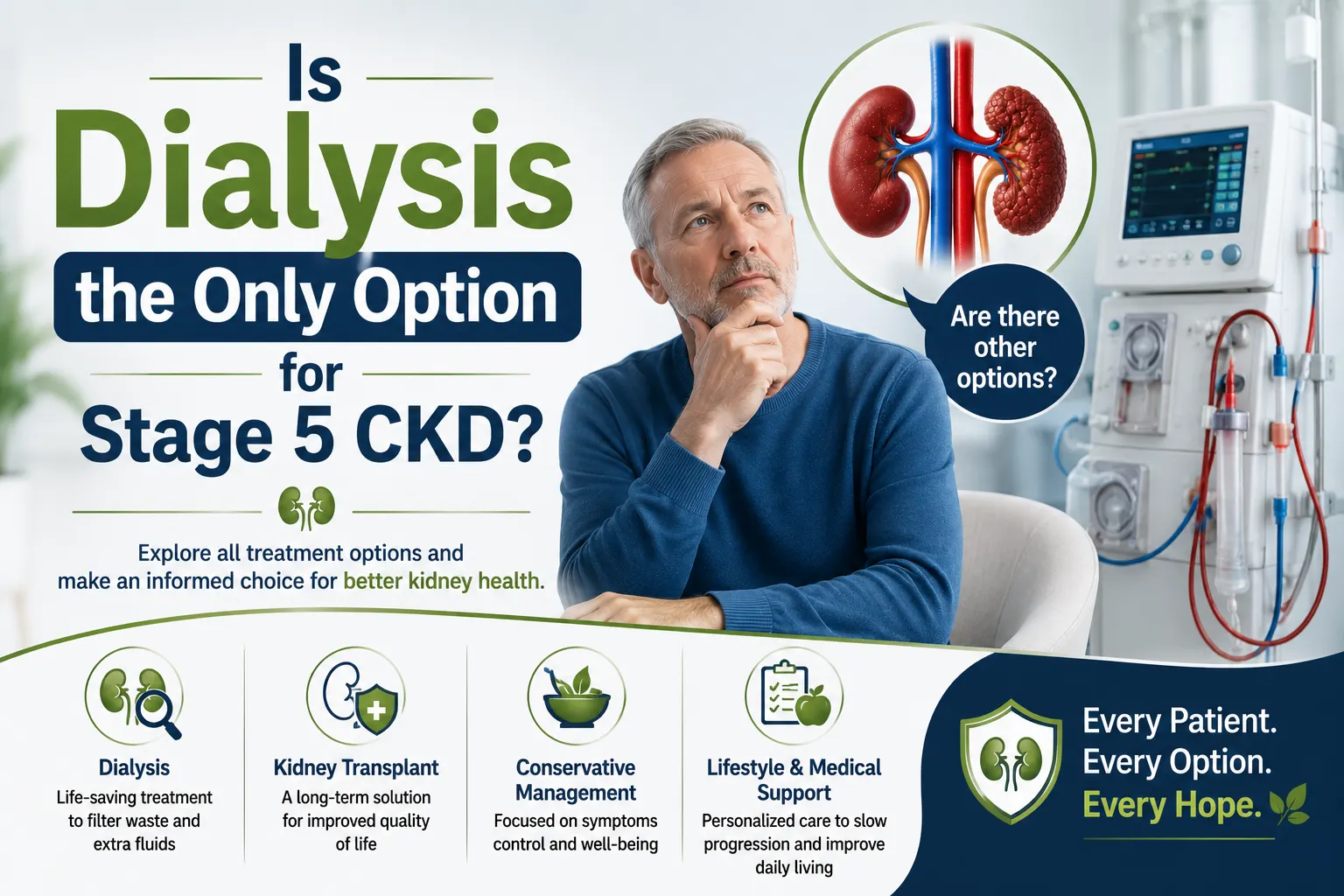

Short answer: nope. Dialysis is the most famous option for Stage 5 CKD, but it's not the only one; kidney transplant and something called conservative management are both on the table too. I know, nobody tells you this in the ten-minute appointment where you're still trying to process the words "kidney failure."
I've had a few family friends go through this, and every single time, the first assumption is "okay so I guess it's dialysis now, forever." And every single time, the actual conversation turned out to be a lot bigger than that. So let's slow down and actually go through it, like two people talking over chai, not like a hospital brochure.
Quick Refresher: What Stage 5 CKD Actually Means
Chronic Kidney Disease (CKD) gets staged 1 to 5 based on eGFR; basically a number that tells you how well your kidneys are filtering your blood. By the time you hit Stage 5, also called End-Stage Renal Disease (ESRD), your eGFR has dropped below 15. Your kidneys are still technically "on," but barely; like a phone at 2% battery that you're carrying around hoping it survives the day.
At this point, doing nothing isn't really an option. But "doing something" has more than one shape.
Option 1: Dialysis; The One Everyone's Heard Of
Dialysis basically steps in and does your kidneys' job for them; filtering out waste and extra fluid. There are two main types:
-
Hemodialysis – your blood runs through a machine, usually three times a week, either at a clinic or at home if you've got the setup and patience for it
-
Peritoneal dialysis – uses the lining of your own belly as a filter, done daily, at home
And yes, dialysis does help people live longer, in a lot of cases. A study in Nephrology Dialysis Transplantation by Chandna and colleagues followed over 800 Stage 5 CKD patients and found the ones on dialysis generally outlived those managed without it. A separate Austrian registry study, published in PLOS ONE, found something similar; dialysis patients had a noticeably lower risk of death.
But here's the part that often gets glossed over: dialysis is a lot. It eats into your week, it's physically tiring, and for older folks juggling other conditions like heart disease, the survival benefit isn't nearly as clear-cut. In fact, a follow-up study on patients over 75 (again by Chandna, published back in 2007) found that once serious heart problems entered the picture, dialysis stopped giving much of an edge at all.
Option 2: Kidney Transplant; If the Stars (and Donor List) Align
A kidney transplant isn't really "treatment" in the same sense; it's more like getting handed a working part to replace the broken one. One healthy kidney, from a living donor or a deceased one, can usually do the job that two failing kidneys couldn't. People who get transplants tend to report a better quality of life, and often live longer than people on dialysis for years on end.
The catch, and it's a real one, is that waitlists can stretch on for years, surgery isn't right for everyone, and you're signing up for immunosuppressant medication for the rest of your life. It's a big decision. Not a shortcut, just a different road.
Option 3: Conservative Management; The One Nobody Talks About Enough
This is the quiet option, and honestly, I think it deserves way more conversation than it gets. Conservative kidney management means skipping both dialysis and transplant, and instead focusing entirely on keeping the person comfortable; managing blood pressure, correcting anemia, watching what they eat, keeping fluids balanced.
It's often the path chosen by older patients, or people already dealing with serious health issues, who'd rather protect their day-to-day comfort than chase every extra month through a machine. And no, it's not "giving up," even though it can sound that way at first. Research out of the Netherlands (Verberne and team), discussed in an editorial in the Clinical Journal of the American Society of Nephrology, found that for older patients with a heavy load of other health problems, conservative management can offer a similar quality of life; sometimes with far fewer hospital visits; even if overall survival numbers still lean toward dialysis on paper.
A Very Unscientific Comparison Table
|
Option |
Who It Usually Suits |
The Honest Downside |
|
Dialysis |
Most people wanting to maximize time and are okay with the routine |
Feels like an unpaid part-time job, forever |
|
Kidney Transplant |
People who find a donor match and are fit for surgery |
Long waitlists, lifelong medication, real surgical risk |
|
Conservative Management |
Older patients or those with serious comorbidities, prioritizing comfort |
Survival numbers are usually a bit lower in studies |
So Who Actually Makes This Call?
You do. Along with your nephrologist, and probably one very worried family member asking "but what does that mean for how long" more times than they'd like to admit. This is genuinely not a one-size-fits-all decision. Age, heart health, how you feel day to day, and what actually matters to you- all of it belongs in the conversation. There's no prize for picking the "toughest" option if it doesn't match what you actually want out of your remaining years.
Key Takeaways
-
Dialysis isn't compulsory for Stage 5 CKD; it's one path among three
-
Kidney transplant tends to offer the best long-term outlook, for those who qualify
-
Conservative management is a legitimate, respected choice, especially for older or high-comorbidity patients
-
Studies do show dialysis extends survival on average, but that edge shrinks with age and existing heart conditions
-
The "right" answer depends on the person, not just the lab report
FAQs
Is dialysis the only treatment for Stage 5 CKD?
No, kidney transplant and conservative (non-dialysis) management are both real alternatives depending on age and health.
Can someone live a while without dialysis in Stage 5 CKD?
Yes, some people do, especially with careful conservative management, though most studies still show dialysis extends life further on average.
Is a kidney transplant better than dialysis?
For people who qualify, a transplant usually means a better quality of life and longer survival than years of dialysis, but not everyone is eligible.
What exactly is conservative kidney management?
It means skipping dialysis and transplant and instead focusing on symptom control and comfort, like managing blood pressure and fluid levels.
Who might consider skipping dialysis altogether?
Older patients with serious heart disease or heavy comorbidities sometimes get a similar quality of life from conservative management, per published research.
Disclaimer: This blog is meant for general information, not medical advice. Every kidney journey looks different, so please talk to a qualified nephrologist about your own situation before making any decisions around dialysis, transplant, or conservative care.