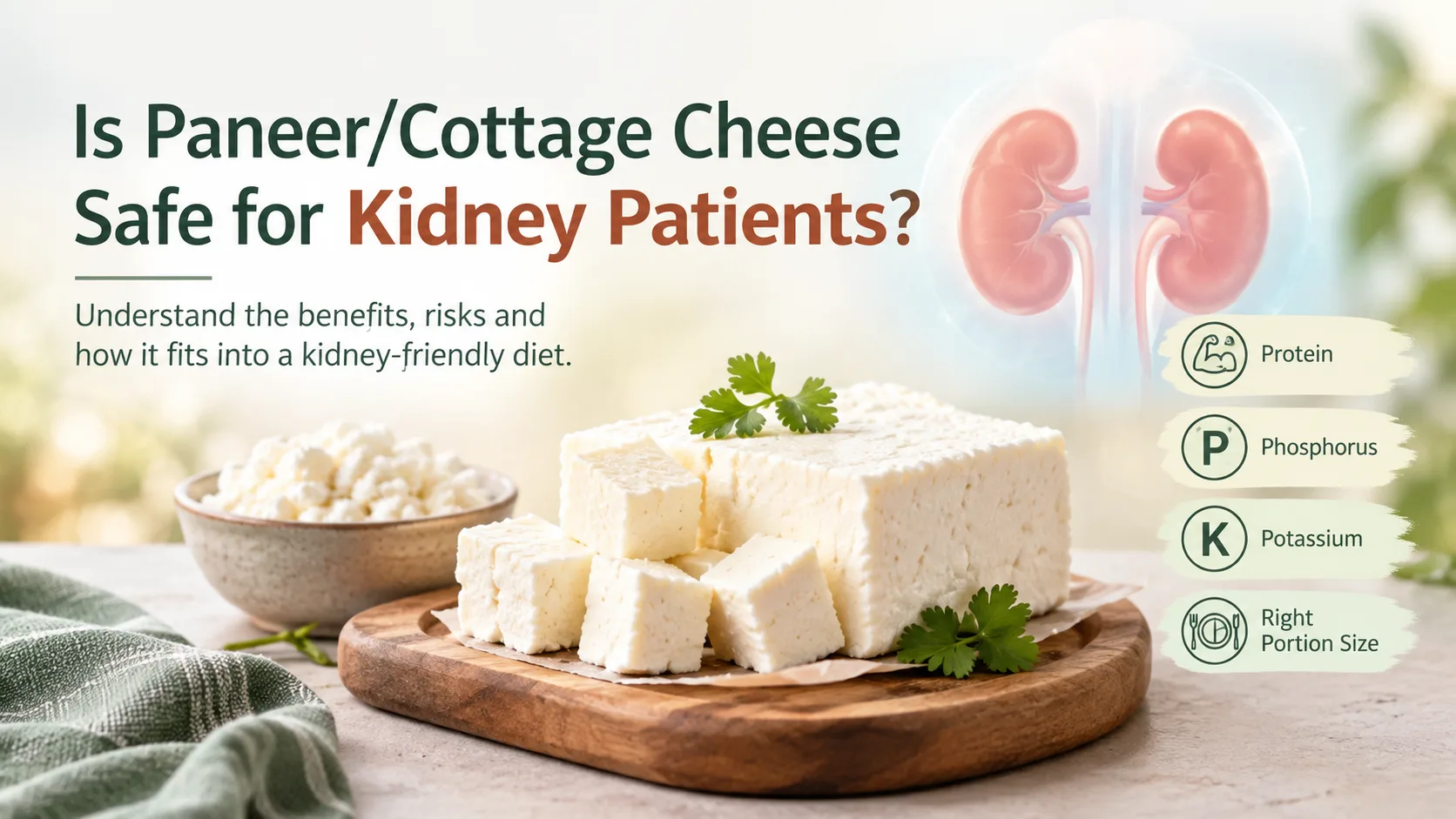

Yes, you can still eat paneer; just not the way you used to, and definitely not the way your mama makes it on Sundays. Small portions, sensible frequency, and you're mostly fine. Okay, now that the panic attack is over, let's actually talk about why this question about paneer safe for kidney patients or not keeps popping up in every second WhatsApp forward your uncle sends.
Why Does Everyone Suddenly Hate Paneer After a Diagnosis?
I've noticed this pattern so many times it's almost funny. Someone gets told their filtering organs aren't doing great, and within a week their entire kitchen turns into a crime scene. Tomatoes get side-eyed. Bananas are treated like contraband. And paneer- poor, innocent, delicious paneer; suddenly becomes public enemy number one.
Is there a reason behind the panic? Sort of. Paneer does carry a fair bit of protein and phosphorus, and when your renal system is already struggling, it has a harder time clearing out the extra load. So the worry isn't made up out of thin air. But somewhere between "be mindful" and "never touch it again," a lot of people jump straight to full-blown avoidance, and honestly, that's not necessary for most cases.
Okay, but seriously, is it safe or Not?
Depends. (I know, I know, everyone hates that answer, but it's the honest one.)
Cottage cheese for kidneys isn't a black-and-white situation; it really comes down to how far along your condition is and how much you're eating in one sitting.
Here's roughly how it plays out:
-
If you're in the early stages, a moderate amount of paneer now and then usually isn't a big deal.
-
If things have progressed a bit, you'll want to be more careful; smaller portions, and definitely don't combine it with other phosphorus-heavy foods in the same meal.
-
If you're further along, especially if dialysis is part of your routine, this really needs to go through your doctor or dietitian first. Don't wing it based on a blog (even this one).
So no, paneer isn't secretly evil. Eating a giant plateful of paneer butter masala without thinking twice, though? That's where the trouble starts.
What's Actually Inside That Little White Cube?
Let's just look at paneer honestly for a second, no drama:
-
It's got a good chunk of protein; great for your muscles, a bit more work for a tired renal system.
-
It carries a decent amount of phosphorus, which is fine when your body can clear it out efficiently, less fine when it can't.
-
There's calcium in there too, which isn't the enemy at all.
-
It's low in carbs, so if sugar's also a concern for you, that's a small win.
-
Fat content swings depending on whether it's made from full-fat or toned milk.
The National Kidney Foundation generally advises people with reduced renal function to keep a close eye on protein and phosphorus, not because these nutrients are villains, but because a compromised system just can't process them the way a healthy one can. That doesn't mean cutting paneer out of your life forever; it means treating it a bit like dessert. Enjoyed, appreciated, not inhaled by the plateful.
A Comparison Table, Because I Promised One and I Deliver
|
Food |
Protein |
Phosphorus |
Should You Panic? |
|
Paneer (small serving) |
Moderate |
Moderate-ish |
Nah, you're fine |
|
Paneer (the restaurant-sized portion you always order) |
High |
High |
Maybe slow down a little |
|
Tofu |
Moderate |
Lower |
Pretty chill option |
|
Plain milk |
Moderate |
Moderate |
Depends how much you're chugging |
|
Processed cheese slices |
High |
Sky-high |
This is the actual troublemaker, not paneer |
Funny enough, paneer comes out looking better than half the stuff sitting in your fridge right now.
What Ayurveda Thinks About All This?
Now here's where it gets interesting, because a lot of people dealing with renal issues eventually go looking into more traditional, whole-body approaches too. And that's where Ayurvedic kidney treatment comes into the conversation. Ayurveda doesn't really do the "ban this food forever" thing; it's more concerned with your digestion strength, your body type, and how well you're processing what you eat, rather than putting foods on a permanent blacklist.
People exploring kidney disease Ayurvedic treatment often find that it's less about strict food rules and more about the full picture; how you're sleeping, how much water you're drinking, your stress levels, all of it tied together.
If you go down this road, you'll probably hear about certain herbs too. Some of the best herbs for kidneys in Ayurveda that come up again and again include Punarnava, Gokshura, and Varun; traditionally used to support fluid balance and overall renal comfort. They're often part of a broader natural treatment for kidney disease conversation, though; and I really can't stress this enough; please don't just self-prescribe herbs because a random Instagram reel told you to. Get proper guidance.
Dr. Puneet Dhawan is someone whose name comes up a lot in this space, known for blending traditional Ayurvedic wisdom with a more modern understanding of diet and lifestyle for people managing renal concerns. Clinics like Karma Ayurveda for kidney disease treatment tend to take this combined approach, looking at food (yes, including your paneer habit), herbs, and daily routine together instead of handing you a single restrictive list and calling it a day.
But; and this is important: none of this replaces your regular checkups. Ayurveda works best sitting alongside your nephrologist's advice, not instead of it. This isn't a "pick a side" situation.
If You're Not Ready to Give Up Paneer Completely (Same, Honestly)
-
Keep portions small. A few cubes, not half a block.
-
Don't stack it with other phosphorus-loaded foods in the same meal.
-
Homemade paneer beats store-bought; you actually know what went into it.
-
Balance your plate out with vegetables that are lower in potassium.
-
Talk to your nephrologist or a renal dietitian before making it a regular thing.
-
Keep up with whatever fluid intake guidance your doctor's already given you.
Why "Just Avoid Everything" Isn't Actually Good Advice?
Here's something people don't talk about enough; going full extreme and cutting out entire food groups often does more harm than good. You end up nutritionally short in other areas, and that's not exactly helpful for recovery either. A lot of dietary guidance that follows the KDOQI (Kidney Disease Outcomes Quality Initiative) framework leans toward moderation and personalized planning rather than blanket bans.
So maybe stop treating paneer like it robbed a bank. Treat it more like that one cousin who's a bit much in large doses but perfectly fine in small ones.
Key Takeaways
-
Paneer isn't automatically off-limits for people managing renal health; it really depends on stage and portion size.
-
It brings a fair bit of protein and phosphorus, both worth watching, not fearing.
-
Compared to processed cheese, paneer honestly looks like the better-behaved option.
-
Ayurvedic kidney treatment tends to focus on the bigger lifestyle picture instead of strict food bans.
-
Any herbal route, including the best herbs for kidneys in Ayurveda, should be guided by an actual practitioner, not guesswork.
-
Regular medical care should always stay front and center, no matter what dietary or herbal path you're exploring.
📩 Ask a Kidney Expert (Free 10-Min Consultation)
FAQs
Can someone with weak renal function eat paneer sometimes?
Yes, usually in small, occasional amounts, but it's always worth checking with your own doctor first.
Is homemade paneer better than the store-bought kind?
Pretty much always; you control the salt, the quality, and the portion size yourself.
Does Ayurveda say no dairy at all for renal patients?
Not really; it's more about balance and digestion than a strict all-or-nothing rule.
Can herbal remedies replace my regular treatment?
No, they're meant to work alongside your medical care, never instead of it.
How much paneer counts as a safe amount?
A small handful or a few cubes per meal is generally considered reasonable, though it varies from person to person.
Disclaimer
This blog is written for general awareness and isn't a substitute for professional medical advice. Everyone's health situation is different, so please talk to a qualified nephrologist, dietitian, or Ayurvedic practitioner before changing your diet or starting any new treatment plan.