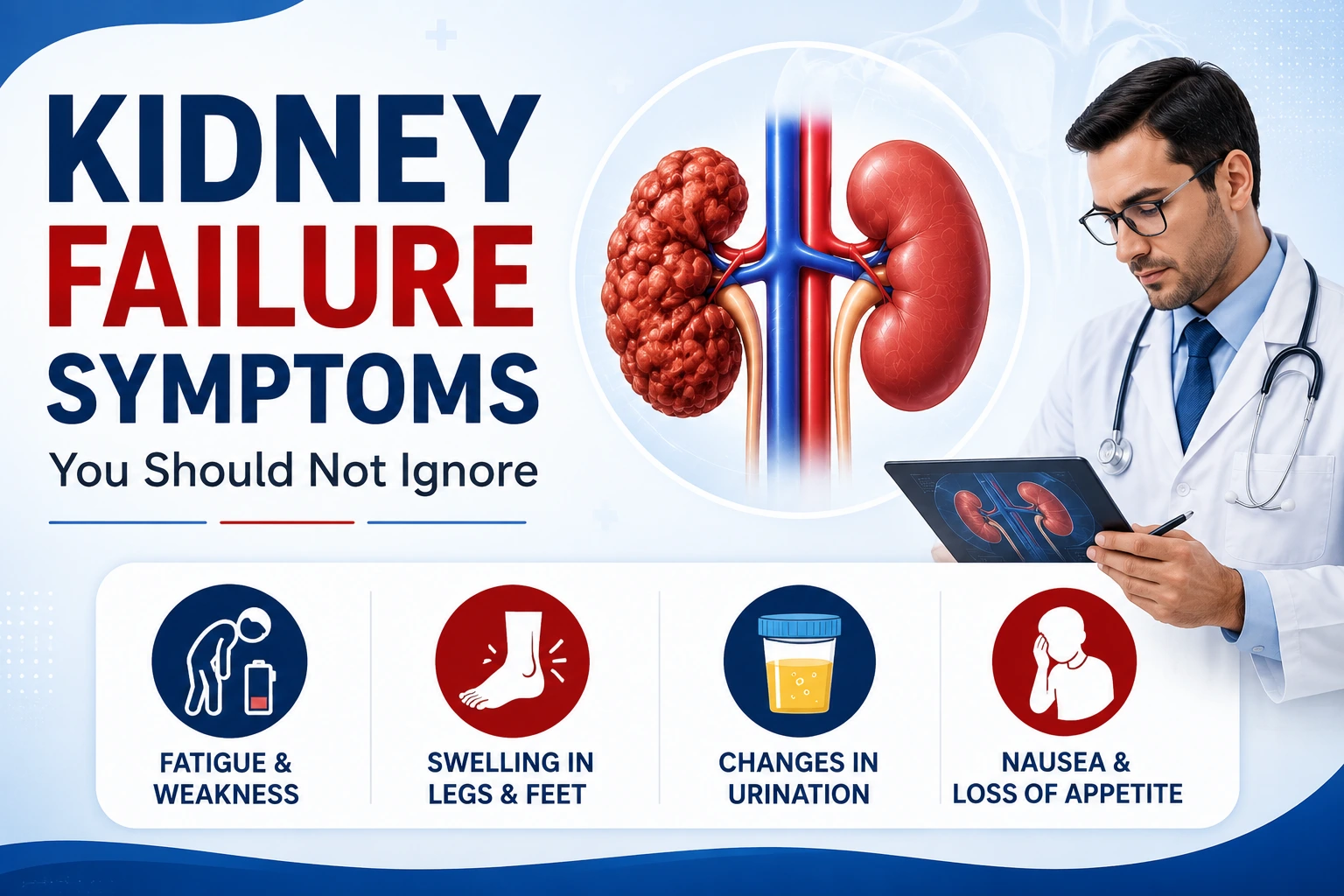

Kidney Failure Symptoms You Should Not Ignore: 10 Warning Signs USA 2026
According to the Centers for Disease Control and Prevention (CDC) Chronic Kidney Disease Surveillance System, an astonishing 9 in 10 American adults who have chronic kidney disease do not even know they have it. In the United States, kidney issues are incredibly stealthy. They do not send a loud text warning you of their departure. Instead, they drop subtle hints that most people completely mistake for a bad night's sleep or eating too much salty takeout.
If you want to keep your body running smoothly and avoid a medical emergency, you need to know exactly what to look for. Let’s dive into the top 10 warning signs that your internal bouncers are struggling, using terms your everyday doctor and your common sense can agree on.
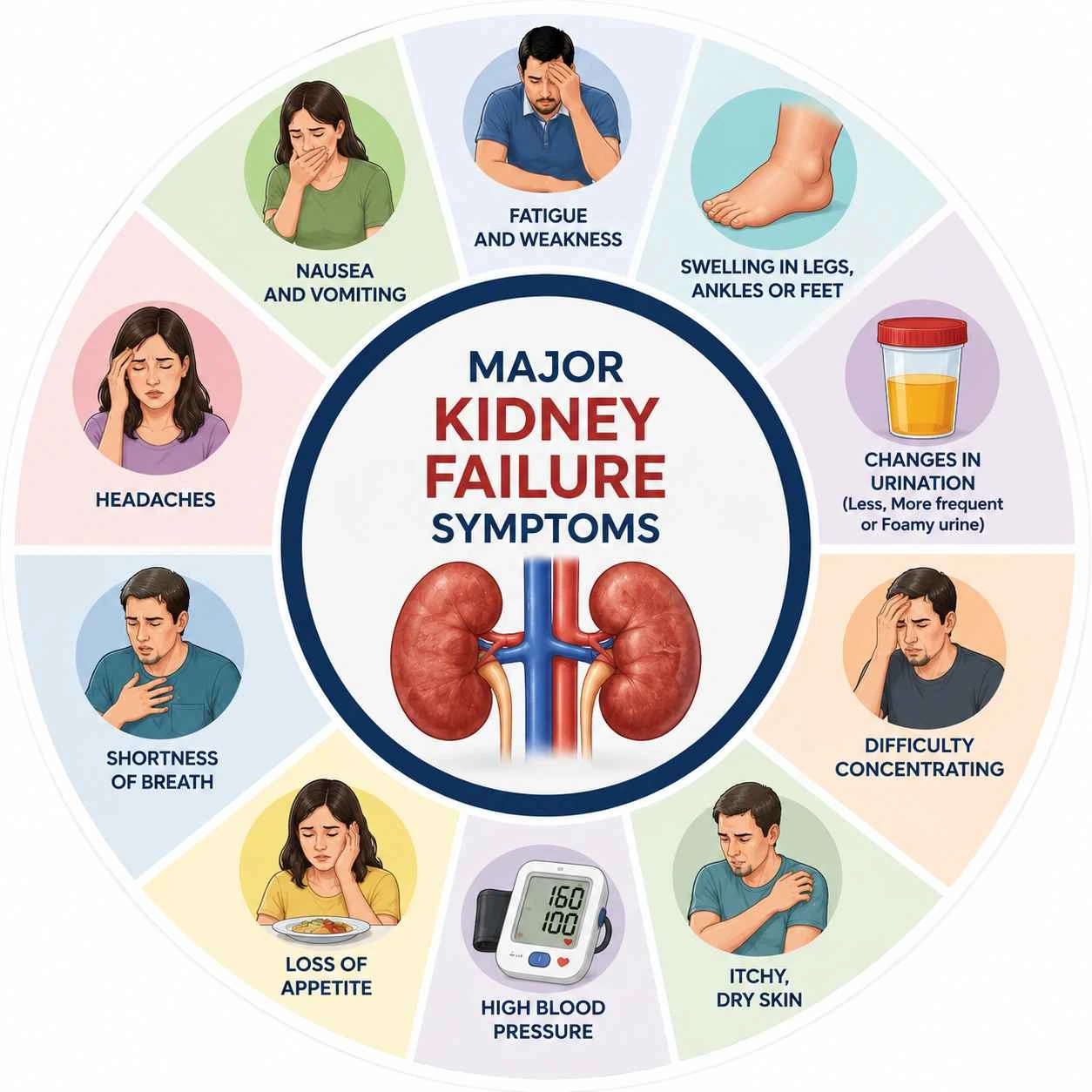
Major Kidney Failure Symptoms
Here are the 10 most common symptoms that are usually associated with renal insufficiency:
1. The Sudden Appearance of "Canker Ankles" (Edema)
If you look down at the end of the day and realize your ankles look less like human joints and more like giant, swollen logs, your kidneys might be calling for backup. When your filtering system slows down, your body struggles to eliminate excess fluid. This fluid gets pulled down by gravity, pooling directly into your feet, ankles, and hands.
A prominent study titled Chronic Kidney Disease: Common, Serious, and Costly highlights that fluid retention is one of the classic, unmistakable kidney failure symptoms that people mistakenly blame on standing too long at work or wearing tight socks. If your shoes suddenly do not fit, it is time to check in with a doctor.
2. Exhaustion That Five Cups of Coffee Cannot Fix
We all experience the classic afternoon slump, but kidney-related fatigue is a whole different beast. Healthy kidneys produce a brilliant hormone called erythropoietin (let's just call it EPO). This hormone tells your bone marrow to create red blood cells, which carry energy-giving oxygen throughout your body.
When your filtration system crashes, your EPO levels plummet, causing your red blood cell count to drop. The result? Anemia. You will feel an overwhelming, bone-deep exhaustion that makes climbing a single flight of stairs feel like ascending Mount Everest. A landmark publication from the National Institutes of Health (NIH) notes that profound lethargy and anemia are primary symptoms of kidney failure in adults.
3. Your Skin Itches As You Walk Through Poison Ivy
If you find yourself constantly scratching your arms, legs, and back to the point of distraction, do not immediately blame your laundry detergent. When your internal filters stop functioning, waste products like phosphorus begin to back up into your bloodstream.
This buildup creates an intense, deep-tissue itch that lotion cannot soothe. The National Kidney Foundation (NKF) Clinical Practice Guidelines consistently emphasize that severe, intractable dry and itchy skin serves as one of the major kidney disease warning signs that patients frequently overlook until the later stages of the illness.
4. Bubbles in the Toilet Bowl That Look Like Draft Beer
Take a second to look before you flush. If your urine looks less like normal fluid and more like a heavily poured head of craft beer or a bowl of whipped egg whites, you have a problem.
Those persistent bubbles indicate that you are losing albumin, a vital protein that should stay inside your blood. Think of your kidney filters like a fine mesh strainer; when the strainer gets damaged, large particles like protein slip right through into the toilet. The Journal of the American Society of Nephrology (JASN) published a definitive paper confirming that protein in the urine, known medically as proteinuria, is one of the most reliable early signs of kidney failure available to clinicians.
5. A Persistent Metallic Taste (The "Pennies" Phenomenon)
Have you ever chewed on a piece of aluminum foil or a copper penny? Hopefully not, but if you wake up with a distinct, bitter, metallic taste in your mouth, your body is trying to warn you.
When waste products build up in the blood, a condition known as uremia, it changes the way your taste buds function and can make your breath smell faintly of ammonia. This toxic buildup can also ruin your appetite completely, making your favorite foods taste entirely unappealing.
6. Puffy Eyes That Defy Premium Concealer
We often blame morning eye puffiness on a late-night binge-watching session or crying during a sad movie. However, if you wake up every single morning looking like you went three rounds in a boxing ring, your kidneys might be leaking massive amounts of protein.
When your body loses too much protein through your urine, it disrupts your fluid balance, causing liquid to accumulate in areas with delicate tissue, like right around your eyes. Medical experts tracking public health via the United States Renal Data System (USRDS) Annual Data Report frequently point to persistent periorbital edema (the fancy medical term for puffy eyes) when patients ask what the first signs of kidney failure.
7. Shortness of Breath While Just Sitting on the Couch
Feeling winded after a heavy workout is normal. Feeling winded while casually sitting on your living room sofa watching television is definitely not. Kidney dysfunction can cause shortness of breath in two distinct ways:
-
Fluid Buildup: Extra fluid that your kidneys fail to remove can back up directly into your lungs, a scary condition called pulmonary edema.
-
Oxygen Deprivation: The severe anemia we mentioned earlier leaves your body starved of the oxygen-carrying red blood cells it desperately needs to breathe easily.
8. Brain Fog That Makes You Forget Your Own Zip Code
If you find yourself staring blankly at your computer screen, losing your train of thought mid-sentence, or feeling unusually confused, it might not be simple burnout. A heavy accumulation of uremic toxins in the bloodstream is actively toxic to your central nervous system. This can lead to decreased mental sharpness, memory lapses, and a general sense of cognitive decline that clears up only once kidney function is addressed.
9. Severe Muscle Cramping Out of Absolutely Nowhere
There is nothing quite like waking up at 3:00 AM to an agonizing Charlie horse in your calf muscle. While dehydration or a lack of bananas can cause occasional muscle spasms, chronic, painful cramping can point directly to kidney issues. Your kidneys regulate the precise balance of calcium, phosphorus, and potassium in your blood. When that delicate balance gets thrown out of whack, your muscles become hyper-irritable and snap into painful cramps without warning.
10. A Dramatic Change in How Often You Have to Go
Your bathroom habits are an excellent window into your overall health. You need to watch out for two distinct extremes:
-
The Drought: You suddenly notice you are peeing significantly less than usual, or not at all, despite drinking plenty of fluids.
-
The Flood: You find yourself waking up four or five times a night to run to the bathroom, often passing only a tiny amount of fluid each time.
Any sudden shift in your baseline urinary habits is one of the major signs of kidney failure that requires an immediate call to your primary care physician.
Quick Reference: Kidney Health Warning Guide
To make things easy to remember, let's look at how these symptoms compare to normal quirks, so you know exactly when to worry.
|
The Everyday Symptom |
The Kidney Warning Sign |
Why It Happens |
|---|---|---|
|
Tired after a long, stressful workday |
Deep exhaustion that leaves you winded from basic walking |
Lack of red blood cells (Anemia) |
|
Swollen feet after sitting on an airplane |
Persistent swollen ankles that leave a dimple when pressed |
Sodium and fluid retention |
|
Dry skin from cold winter weather |
Deep, intense itching that feels like it is under your skin |
Buildup of phosphorus in the blood |
|
Occasional bubbles from a fast stream |
Thick, foamy urine that resembles soapy dishwater |
Vital protein leaking into the toilet |
|
Forgetting where you parked your car |
Severe confusion and an inability to focus on daily tasks |
Toxic waste buildup affecting the brain |
📩 Ask a Kidney Expert (Free 10-Min Consultation)
What You Should Do Next
If you read through this list and checked off a few of these symptoms, please do not panic. Many of these issues can be caused by completely benign, easily treatable conditions like a simple urinary tract infection or a minor blood pressure fluctuation.
However, ignoring potential kidney failure symptoms is a gamble you do not want to take. The only definitive way to know what is going on inside your body is to visit your doctor for two incredibly simple, inexpensive tests: a basic blood test to check your eGFR (estimated glomerular filtration rate) and a quick urine test to look for hidden protein.
Take care of your internal bouncers, and they will take care of you for years to come.
Key Takeaways
-
Silent Threat: 9 in 10 American adults with chronic kidney disease don't know they have it because symptoms start incredibly subtly.
-
Fluid Accumulation: Damaged kidneys fail to remove excess water, leading to visibly swollen ankles, feet, and persistent puffiness around your eyes.
-
Bone-Deep Fatigue: A drop in kidney-produced hormones leads to fewer red blood cells, causing severe, anemia-driven exhaustion and sudden shortness of breath.
-
Textural Signals: Watch out for intensely itchy skin caused by phosphorus buildup, and thick, foamy urine that indicates vital protein is leaking into your toilet.
-
Systemic Toxins: High levels of unfiltered waste in your blood can cause a distinct metallic taste in your mouth, severe brain fog, and painful midnight muscle cramps.
-
Urination Shifts: Any sudden change in your baseline routine, whether you are going significantly less or waking up constantly throughout the night, warrants a doctor's visit.
The Golden Rule: Don't guess. A simple, inexpensive blood and urine test at your doctor's office or at a reputed hospital like Karma Ayurveda USA is the only definitive way to know exactly how well your kidneys are working.
FAQ – Kidney Health (Very Short Answers)
Q1. What is the first sign of kidney problems?
Early signs are usually tiredness, mild swelling in the feet, or changes in urination.
Q2. What are the signs of dying from kidney failure?
Severe weakness, confusion, very low urine, breathlessness, and loss of appetite can appear in late stages.
Q3. Kidney disease symptoms in females?
Common signs include fatigue, swelling, frequent UTIs, and foamy or reduced urine.
Q4. Kidney failure symptoms in elderly woman?
Confusion, swelling, poor appetite, fatigue, and reduced urine output are common.
Q5. What are the 3 early warning signs of kidney disease?
Foamy urine, swelling in legs/face, and constant tiredness.
Q6. What can cause damage to your kidneys?
Diabetes, high blood pressure, infections, painkillers, and dehydration can harm kidneys.
Q7. How to prevent kidney failure?
Control sugar and BP, drink enough water, avoid unnecessary medicines, and eat healthy.
Q8. Can you reverse kidney disease?
Early kidney disease can be slowed or sometimes improved, but advanced damage is usually not fully reversible.