
Yes, that bag of chips you're currently side-eyeing is doing your kidneys zero favors. Long answer? Keep reading, because there's a lot more nuance here than just "packaged food bad."
I'll be honest, I used to roll my eyes a little whenever someone told me processed food was "silently damaging my organs." It felt like one of those vague health warnings that exist to make you feel guilty about snacking, without any real substance behind it. Turns out, I was wrong. There's actual, published research behind this, and once you see it, you can't really unsee it. So let's talk about processed foods and kidney patients, why this pairing is such a mess, and what you can actually do about it without turning your kitchen into a boring salad factory.
Okay, But What's Actually Happening Inside Your Body?
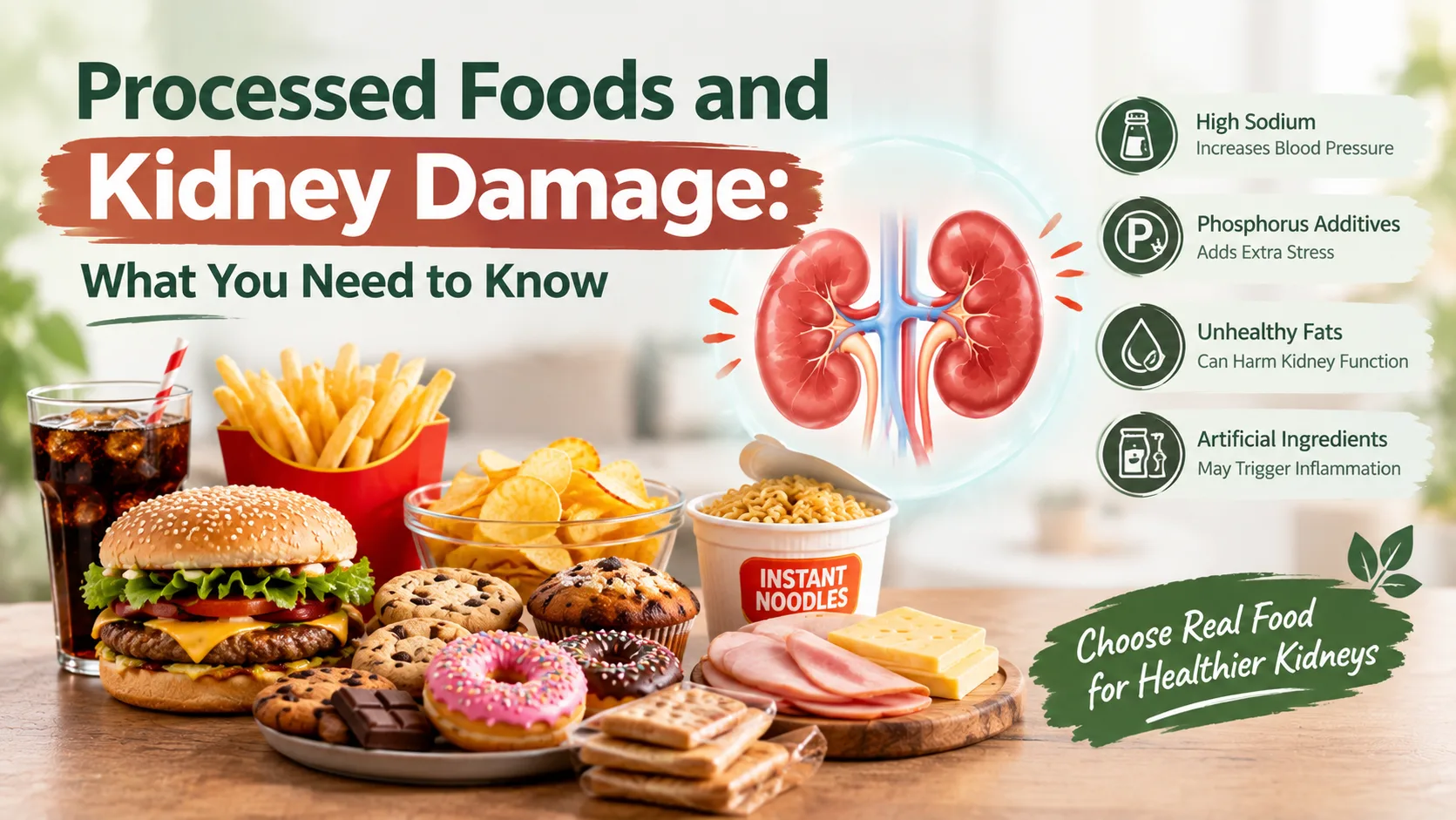
Here's the part nobody explains well. Your kidneys are basically your body's cleanup crew. They filter waste, balance minerals, control fluid levels, the whole unglamorous job that nobody appreciates until something goes wrong. Now imagine handing that cleanup crew a pile of extra junk every single day, sodium here, chemical preservatives there, phosphorus additives sprinkled in for good measure. That's essentially what happens every time you reach for something out of a packet instead of off a plate.
A study in the Clinical Journal of the American Society of Nephrology tracked adults over time and found that people eating more ultra-processed food showed a noticeably faster decline in kidney function. Not a wild coincidence, not a fluke, an actual measurable pattern. Another one, published in the American Journal of Kidney Diseases, pointed the finger specifically at sodium and phosphate additives, the kind hiding in almost every packaged snack, and linked them to higher chronic kidney disease risk.
So, when someone asks, is processed food bad for kidney patients, I don't really dance around it anymore. The research is fairly blunt about it.
The "Worst Offenders" List (Prepare to Feel Personally Attacked)
I'm not going to pretend I don't eat some of this stuff too. But knowing what's actually going on inside these packets helps, even if you don't cut them out completely. Here's a quick, only slightly judgmental table of the worst foods for kidney patients, and what you could swap them for instead.
|
The Sneaky Culprit |
What It's Really Doing |
Swap It For |
|
Instant noodles |
Sodium levels that don't quit |
A quick homemade veggie noodle bowl |
|
Canned soup |
Salt and preservatives, bundled together |
Soup you actually made yourself |
|
Deli meats |
Phosphorus additives your body absorbs way too easily |
Grilled chicken or paneer |
|
Salty snacks |
The "just one handful" lie |
Roasted makhana, plain popcorn |
|
Soda |
Phosphoric acid with zero nutritional upside |
Coconut water, lemon water |
|
Frozen ready meals |
A sodium and preservative combo deal |
Good old dal-rice, homemade |
Look at that list and you'll notice something. It's basically everything marketed as "convenient." Which, annoyingly, is most of modern eating.
Where Ayurveda Actually Fits into This?
This is usually where people expect me to say "and that's why you should throw out modern medicine and drink herbal tea instead." That's not what I'm saying, so relax. But Ayurvedic kidney treatment does have a real, supportive role here, and it's worth talking about honestly instead of dismissing it or oversimplifying it.
Kidney disease Ayurvedic treatment isn't a miracle cure, and anyone promising that is probably trying to sell you something sketchy. What it actually offers is a system of herbs and lifestyle corrections that, over time, can support your body's natural filtering process alongside whatever your doctor's already got you doing.
A few of the best herbs for kidneys in Ayurveda that come up again and again, both in classical texts and in more recent herbal research:
-
Punarnava, traditionally used for its mild diuretic and anti-inflammatory effect
-
Gokshura, often associated with supporting urinary and renal function
-
Varun, commonly used to help with fluid retention
-
Palash, which shows up in a lot of traditional detox formulations
A review in the Journal of Ethnopharmacology actually looked into several of these herbs and found measurable antioxidant and anti-inflammatory activity in preclinical studies. So, it's not just folklore; there's science catching up to what Ayurveda has been saying for a long time.
People like Dr. Puneet Dhawan, who's fairly well known in the Ayurvedic renal-care space, tend to push back against the idea of choosing "either modern medicine or Ayurveda." His usual take is that the two work better as a team: diet correction and herbal support running alongside regular check-ups, not competing with them.
"Natural Treatment" Doesn't Mean "Skip the Doctor"
I need to say this clearly, because it gets misunderstood constantly. Natural treatment for kidney disease is not a replacement for your prescribed medication or your nephrologist's advice. It's a support system, not a shortcut. If anyone tells you otherwise, that's your cue to walk away.
A genuinely sensible natural approach usually looks something like this:
-
Cutting way back on packaged and processed food (not necessarily to zero, just... a lot less)
-
Drinking actual water, not sugary drinks pretending to hydrate you
-
Adding kidney-supportive herbs, but under someone qualified, not based on a random forum post
-
Keeping blood pressure and blood sugar in check, since both are tightly linked to renal health
-
Going for regular check-ups instead of waiting for symptoms to show up
Places like Karma Ayurveda for kidney disease treatment have built their whole approach around this combination, pairing traditional herbal protocols with strict dietary discipline, rather than treating them as two separate things.
The Boring Daily Habits Nobody Warns You About
Beyond food, there's a handful of everyday things that quietly add pressure over time, and honestly, most of us are guilty of at least two of these.
-
Not drinking enough plain water through the day (coffee doesn't count, sorry)
-
Popping painkillers for every little ache without checking with a doctor
-
Putting off health check-ups until something actually feels wrong
-
Adding extra salt "for taste" on top of food that's already salty
-
Brushing off early signs like fatigue or swelling as "just being tired"
None of this feels dramatic day to day. That's exactly the problem. Renal damage rarely announces itself with a big warning sign; it tends to sneak up slowly, the way a messy room gets messier one ignored sock at a time.
Key Takeaways
-
Processed foods and kidney patients genuinely don't mix well, thanks to sodium overload and absorbable phosphorus additives
-
Multiple studies link regular ultra-processed food intake to faster decline in renal function
-
Small swaps, home-cooked instead of packaged, actually add up over time
-
Ayurvedic kidney treatment and herbs like Punarnava and Gokshura can offer real supportive benefit alongside standard medical care
-
Natural treatment for kidney disease works best as a teammate to your doctor's plan, not a replacement for it
-
Everyday habits, hydration, salt intake, and regular screening matter just as much as the big dietary changes
📩 Ask a Kidney Expert (Free 10-Min Consultation)
Frequently Asked Questions
Is processed food bad for kidney patients?
Pretty much, yes, the sodium and phosphorus additives make your kidneys work harder than they should have to.
What are the worst foods for kidney patients?
Instant noodles, canned soup, deli meats, salty snacks, and soda are the usual repeat offenders.
Does Ayurvedic kidney treatment actually work?
It can genuinely help as a supportive approach, but it works best alongside your regular medical care, not in place of it.
Which herbs are considered best for kidneys in Ayurveda?
Punarnava, Gokshura, Varun, and Palash keep showing up as the go-to names in both traditional and modern herbal research.
Can natural treatment for kidney disease replace medication?
No, and anyone who tells you that is not someone you should be listening to.
Disclaimer: This blog is meant for general reading and awareness, not medical advice. Please talk to a qualified doctor or Ayurvedic practitioner before changing your diet, herbs, or treatment plan, especially if you already have a diagnosed health condition.