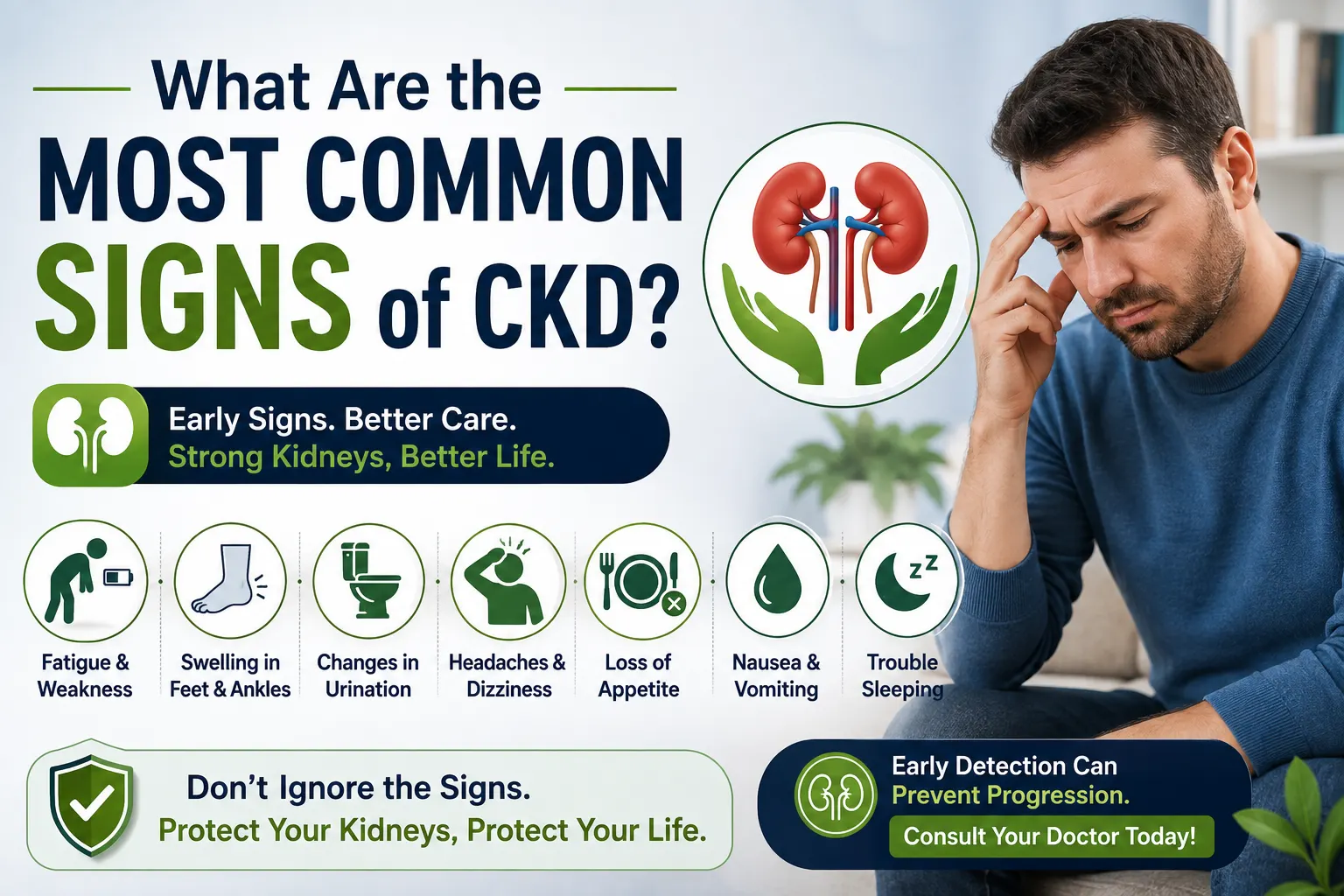

So what are the most common signs of chronic kidney disease? Here's the annoying truth: for a long time, there are none. Your kidneys just quietly deal with it and say nothing, like a friend who's mad at you but insists, "I'm fine."
I find this deeply unfair, personally. If my knee hurts, it tells me immediately, loudly, and with zero chill. But kidneys? They'll absorb years of abuse; bad sugar levels, high blood pressure, too much salt, whatever; and never say a word until things are genuinely serious. Rude, honestly.
Anyway, that's exactly why it's worth knowing what the early whispers sound like, even if your kidneys are being dramatic about staying silent.
Why Are Kidneys So Weirdly Quiet About This?
Your kidneys filter something like 50 gallons of blood a day. That's a lot of unpaid labor. They've also got serious backup capacity built in, so even when part of the system is struggling, the rest just picks up the slack without telling you. According to a widely cited overview in The Lancet, plenty of people with early kidney damage feel completely fine and only get diagnosed because of a routine blood or urine test, not because anything "felt off."
So a sign of kidney disease almost never shows up as some dramatic movie moment. It shows up disguised as things you'd normally blame on stress, bad sleep, getting older, or "probably just dehydrated."
The Common CKD Symptoms Actually Worth Noticing
Here's the stuff that tends to show up, even if it's easy to wave away:
-
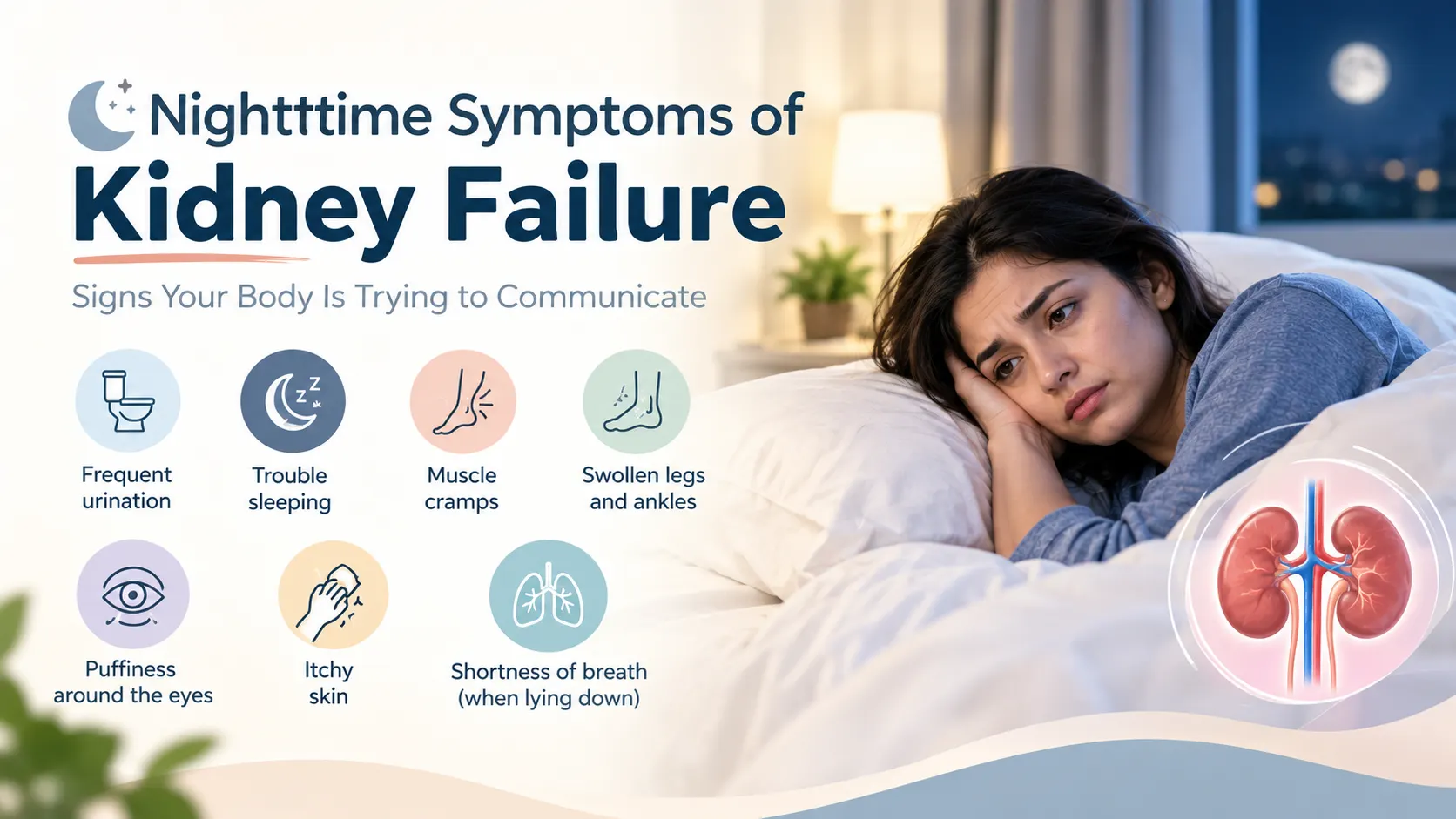
Fatigue that sleep doesn't fix; not "I stayed up too late" tired, more like "I slept nine hours and I'm still running on 2% battery" tired
-
Swelling in the ankles, feet, hands, or around the eyes, because your kidneys aren't clearing extra fluid the way they should
-
Foamy or bubbly pee, which can mean protein is escaping where it isn't supposed to
-
Peeing more at night, less overall, or just... different somehow
-
Itching that won't quit, usually blamed on dry skin or a new soap
-
Losing your appetite, feeling nauseous, or food suddenly tasting like nothing (or metal, weirdly)
-
Muscle cramps that show up at night for no reason
-
Brain fog, where focusing feels like wading through soup
A big review of patient experiences with CKD found that fatigue and general aches were, by far, the most commonly reported complaints across dozens of studies. So no, you're not imagining the exhaustion; it's basically the disease's calling card.
A Slightly Dramatic Comparison Table
|
Symptom |
The Excuse You'll Give |
What It Might Actually Be |
|
Constant tiredness |
"I just need more coffee" |
Reduced renal function messing with waste removal |
|
Swollen ankles |
"New shoes, that's all" |
Fluid your kidneys aren't clearing |
|
Itchy skin |
"It's just winter, dry air" |
Toxins building up in the blood |
|
Foamy pee |
"That's... normal, right?" |
Protein leaking into urine |
|
Bad sleep |
"Too much screen time, probably" |
Toxin and fluid imbalance messing with rest |
To be clear, one itchy elbow does not mean impending doom. But if a few of these are hanging around together, that's a "call the doctor" situation, not a "diagnose yourself via three Reddit threads at 1 am" situation.
📩 Ask a Kidney Expert (Free 10-Min Consultation)
Who Tends to Notice This Stuff First?
People with diabetes, high blood pressure, a family history of kidney trouble, or anyone over 60 are generally in the higher-risk group, per the National Institute of Diabetes and Digestive and Kidney Diseases. If that's you, regular blood and urine screening is worth way more than waiting around hoping symptoms will politely introduce themselves.
For someone already living as a kidney disease patient, the list tends to grow: nausea, vomiting, appetite loss, and more noticeable swelling, because the kidneys are handling a much bigger job with a lot less capacity left to work with.
Okay, But What About CKD Treatment?
Here's the actual good news buried in all this: catching things early changes a lot. CKD treatment, in most cases, starts small: managing blood sugar, blood pressure, and diet, long before anything like dialysis is even a conversation. Cutting back on excess salt, drinking enough water without overdoing it, and keeping up with checkups can genuinely slow things down.
For people exploring supportive options, Ayurvedic kidney disease treatment is sometimes considered alongside appropriate medical care. Ayurveda for kidney disease generally focuses on a broader approach involving diet, lifestyle, herbs, and individualized care rather than looking at a single symptom in isolation.
Similarly, people searching for a natural treatment for kidney disease should be careful about assuming that "natural" automatically means safe or suitable for every stage of CKD. Some herbs and supplements can affect kidney function or interact with medicines, so it's important to discuss them with a qualified healthcare professional before using them.
When it comes to herbs, searches for the best herbs for kidney disease are common, but there isn't one herb that works for everyone. The right approach depends on the person's kidney function, medications, underlying condition, and overall health.
Chronic kidney disease isn't some dramatic countdown clock. It's slow-moving, and it responds well to boring, unglamorous, consistent habits; the kind of stuff that will never go viral but quietly works anyway.
Key Takeaways
-
Early CKD is usually silent, so don't wait around for symptoms before getting screened
-
Fatigue, swelling, foamy urine, and itching are among the earliest and most common clues
-
Diabetes, high blood pressure, and family history push your risk up noticeably
-
Catching it early makes CKD treatment simpler and far less invasive
-
Blood and urine tests catch things way earlier than your own gut feeling will
-
If considering Ayurvedic kidney disease treatment or a natural treatment for kidney disease, discuss it with a qualified healthcare professional first
📞 Get a Kidney Health Consultation – Call Now!
FAQs
What's the earliest sign of kidney disease?
Usually fatigue and mild swelling around the feet or ankles, though plenty of people feel nothing at all early on.
Can chronic kidney disease be reversed?
Not fully, in most cases, but its progression can often be slowed a lot with early treatment and some lifestyle changes.
Is foamy urine always a red flag?
Not always; occasional foam is usually nothing, but if it keeps happening, mention it to your doctor.
How do doctors actually diagnose CKD?
Mostly through simple blood tests checking creatinine and eGFR, plus a urine test to check for protein.
Does everyone with CKD eventually end up on dialysis?
No; a lot of people manage it for years, sometimes a lifetime, with medication and lifestyle changes alone.
Disclaimer: This blog is meant for general information, not medical advice. It's not a substitute for an actual diagnosis or treatment plan from a real doctor. If something here sounds like you, please go talk to a healthcare professional instead of self-diagnosing off a blog post (even a good one).