

If you are looking for a quick answer to what the signs of protein in urine are, the most immediate giveaway is persistently foamy, bubble-wrapped pee that refuses to flush away. This is often accompanied by swelling in your ankles, feet, or around your eyes, as well as unexpected fatigue.
That foam is the first visual clue that you might have protein in your pee; a condition doctors call proteinuria. But how do you know if it is just a high-powered stream or something that warrants a trip to the doctor? Let’s dive into the bubbly world of kidney health and uncover the protein in urine signs, why it happens, and when you should actually start to worry.
The Great Kidney Filter: How Protein Gets There in the First Place
To understand why protein ends up in your urine, we have to look at your kidneys. Think of your kidneys as your body’s ultimate VIP bouncers. Their primary job is to filter out waste and excess water from your blood while keeping the good stuff, like red blood cells and proteins, inside the club (your bloodstream).
The main protein we are talking about here is albumin. In a healthy body, albumin is a big deal. It acts like a sponge, keeping fluid from leaking out of your blood vessels into your surrounding tissues. Because albumin molecules are relatively large, healthy kidney filters (called glomeruli) easily block them from passing into your bladder.
However, if the bouncers fall asleep on the job or the filters get damaged, those large protein molecules start slipping through the cracks. When protein hits your urine, it changes the surface tension of the liquid. The result? Bubbles. Lots of them.
Can You See Protein in Urine? (Spoiler: Not Exactly)
A very common question people ask is, can you see protein in urine with the naked eye? The short answer is no. You cannot actually see the microscopic protein molecules floating around like pulp in orange juice.
What you can see is the physical reaction that protein causes. As we mentioned, protein alters the surface tension of water. When it hits the toilet water, it traps air and creates a layer of foam that refuses to pop.
The Quick Flush Test: If you have a few bubbles that disappear after a few seconds, you are likely just well-hydrated and peeing with some serious velocity. If the foam looks like soap suds and stays there even after you flush, that is a classic visual indicator.
The Clues: Spotting the Protein in Urine Signs
In the early stages, having a little bit of protein leaking into your pee won't cause any obvious symptoms. You could walk around for months feeling completely fine. But as the leakage increases, your body will start dropping some pretty obvious hints.
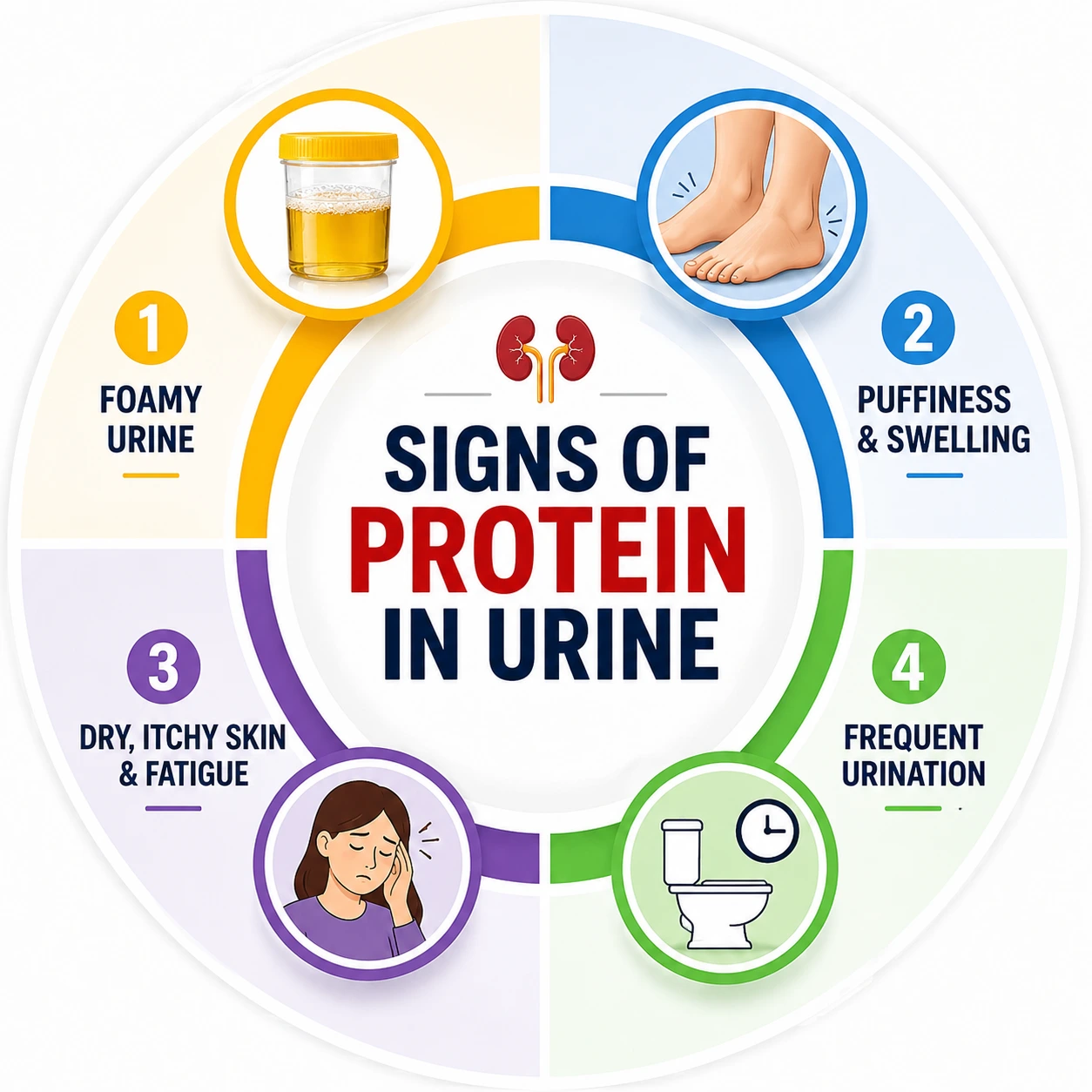
Here are the primary protein in urine signs you should keep on your radar:
1. The Infamous Foamy Urine
This is the MVP of symptoms. While there are a few different foamy urine causes, such as rapid urination or mild dehydration, consistently thick, layered foam is the trademark sign of protein leakage. According to a study published in the Clinical Journal of the American Society of Nephrology, persistent frothy urine is highly correlated with significant albuminuria (protein loss).
2. Puffiness and Swelling (Edema)
Remember how we said albumin acts like a sponge to keep fluid inside your blood vessels? When you lose too much protein in your pee, that fluid escapes into your body’s tissues. This leads to swelling from protein in urine, most notably around your ankles, feet, legs, and even a distinct puffiness around your eyes in the morning. If your socks are suddenly leaving deep, painful indents in your ankles, your kidneys might be crying for help.
3. Dry, Itchy Skin and Fatigue
When your kidneys are struggling to filter properly, waste products start building up in your blood instead of leaving through your urine. This toxic buildup can leave you feeling incredibly exhausted, foggy, and dealing with mysteriously itchy, dry skin that no amount of lotion seems to fix.
4. Frequent Urination
If you suddenly find yourself waking up multiple times during the night to use the restroom, your kidneys might be working overtime to process fluid, even if they aren't filtering out the waste effectively.
Summary of Symptoms: Normal vs. Proteinuria
To help you figure out where you stand, let’s break down the differences between an everyday bathroom trip and a potential kidney issue.
|
What You Experience |
Might Be Perfectly Normal If... |
Could Signify Proteinuria If... |
|---|---|---|
|
Bubbles in the Bowl |
They pop quickly and only happen when you haven't drunk enough water. |
The foam is thick, resembles soap suds, and stays after flushing. |
|
Swollen Ankles |
You just spent 10 hours on a cross-country flight to Los Angeles. |
The swelling is persistent, happens daily, and leaves a finger indent. |
|
Fatigue |
You stayed up until 2:00 AM binge-watching your favorite show. |
You sleep 8 hours but still feel like you got hit by a truck every day. |
|
Puffy Eyes |
You had a good cry or ate a massive bowl of salty ramen last night. |
You wake up looking swollen every single morning regardless of diet. |
📩 Ask a Kidney Expert (Free 10-Min Consultation)
Why Is This Happening? The Root Causes
If you do have protein leaking into your urine, it is rarely a standalone issue. Instead, it is usually a warning sign that an underlying condition is putting immense pressure on your kidney filters.
The Big Two: Diabetes and High Blood Pressure
In the United States, diabetes and high blood pressure are responsible for the vast majority of chronic kidney issues.
-
Diabetes: High blood sugar acts like sandpaper on the delicate filters of your kidneys over time, wearing them down until protein can slip through.
-
High Blood Pressure: Imagine hooking up a high-pressure fire hose to a delicate garden misting system. That is what chronic hypertension does to your kidney blood vessels.
Temporary Triggers
Sometimes, a positive protein test is just a temporary glitch. If you have a high fever, just ran a grueling marathon, or are dealing with severe emotional stress, your body can temporarily leak protein. This is harmless and goes away once your body calms down.
Kidney Diseases
Conditions that directly attack the kidney filters, such as glomerulonephritis or lupus, can cause massive amounts of protein to dump into the urine. A landmark study published in The New England Journal of Medicine highlighted that early detection of protein in the urine is the single most effective way to slow down the progression of chronic kidney disease (CKD).
The Million-Dollar Question: How Do I Know If I Have Protein in Urine?
You cannot self-diagnose this based on bubbles alone. If you are sitting on your couch wondering, "How do I know if I have protein in urine?" the answer is simple: you need a quick, painless medical test from a reputed hospital like Karma Ayurveda USA.
Your doctor will typically start with a urinalysis dipstick test. They dip a specially treated plastic strip into a sample of your pee. If the strip changes color, it means protein is present. If that test comes back positive, they will likely order a Urine Protein-to-Creatinine Ratio (UPCR) test to get an exact measurement of how many milligrams of protein you are losing per day.
When to Worry About Protein in Urine
Let’s be real: nobody wants to stress over every single bathroom visit. So, when to worry about protein in urine?
If you notice frothy urine once on a Tuesday morning after a workout, don't panic. You are likely just dehydrated. However, you should schedule an appointment with a healthcare professional if:
-
The foamy appearance is consistent and happens every time you go to the bathroom for more than a few days.
-
You notice unexplained swelling in your face, hands, or feet.
-
You have a family history of kidney failure, diabetes, or high blood pressure.
Ignoring the connection between bubbly urine and kidney disease is like ignoring the check engine light in your car. Catching protein leaks early allows your doctor to prescribe medications (like ACE inhibitors or ARBs) that relax the blood vessels in your kidneys, protecting them from further damage.
Steps to Take Next
If you suspect your kidneys are letting protein slide, your first step is to stay hydrated and call your primary care doctor for a routine urine check. Cut back on excessive sodium intake, keep an eye on your blood pressure, and leave the diagnosis to the medical experts. Your kidneys do a massive amount of heavy lifting for you every day; paying attention to the signs they send you is the best way to return the favor!
📩 Ask a Kidney Expert (Free 10-Min Consultation)
TL; DR: The Quick Breakdown
-
The Main Signs: The most common indicator is consistently frothy or foamy urine, alongside swelling from protein in urine (puffiness in your ankles, feet, or around your eyes), and unexpected fatigue.
-
Can You See It? You cannot physically see the molecules, so if you are wondering Can you see protein in urine, the answer is no; you only see the soap-suds-like bubbles it leaves behind.
-
The Root Causes: It usually happens when the filters in your kidneys are damaged. The most common culprits in the US are high blood pressure and diabetes, though it is also a major warning sign connecting bubbly urine and kidney disease.
-
How to Test: If you want to know how do I know if I have protein in urine, you cannot guess at home; you need a simple urinalysis dipstick test from your doctor.
-
When to Act: Wondering when to worry about protein in urine? If the foam is there every single time you pee for multiple days in a row, or if you notice sudden swelling, it is time to get checked out.
FAQ
What do the signs of protein in urine look like?
The most common protein in urine signs include persistently frothy, toilet-bowl-coating foam, fatigue, and noticeable swelling in your face, hands, ankles, or feet.
What does it look like when you have protein in your urine?
While you cannot physically see the molecules, the visual reaction creates thick, layered bubbles that look like soap suds and refuse to pop easily after flushing.
Why does protein leak into your urine?
It typically happens when the tiny, delicate filters inside your kidneys become strained or damaged by underlying health conditions like high blood pressure, diabetes, or early-stage kidney disease.
How is protein in the urine diagnosed by a doctor?
A healthcare provider can instantly detect protein leakage by having you provide a sample for a quick, painless in-office fluid test called a urinalysis dipstick.