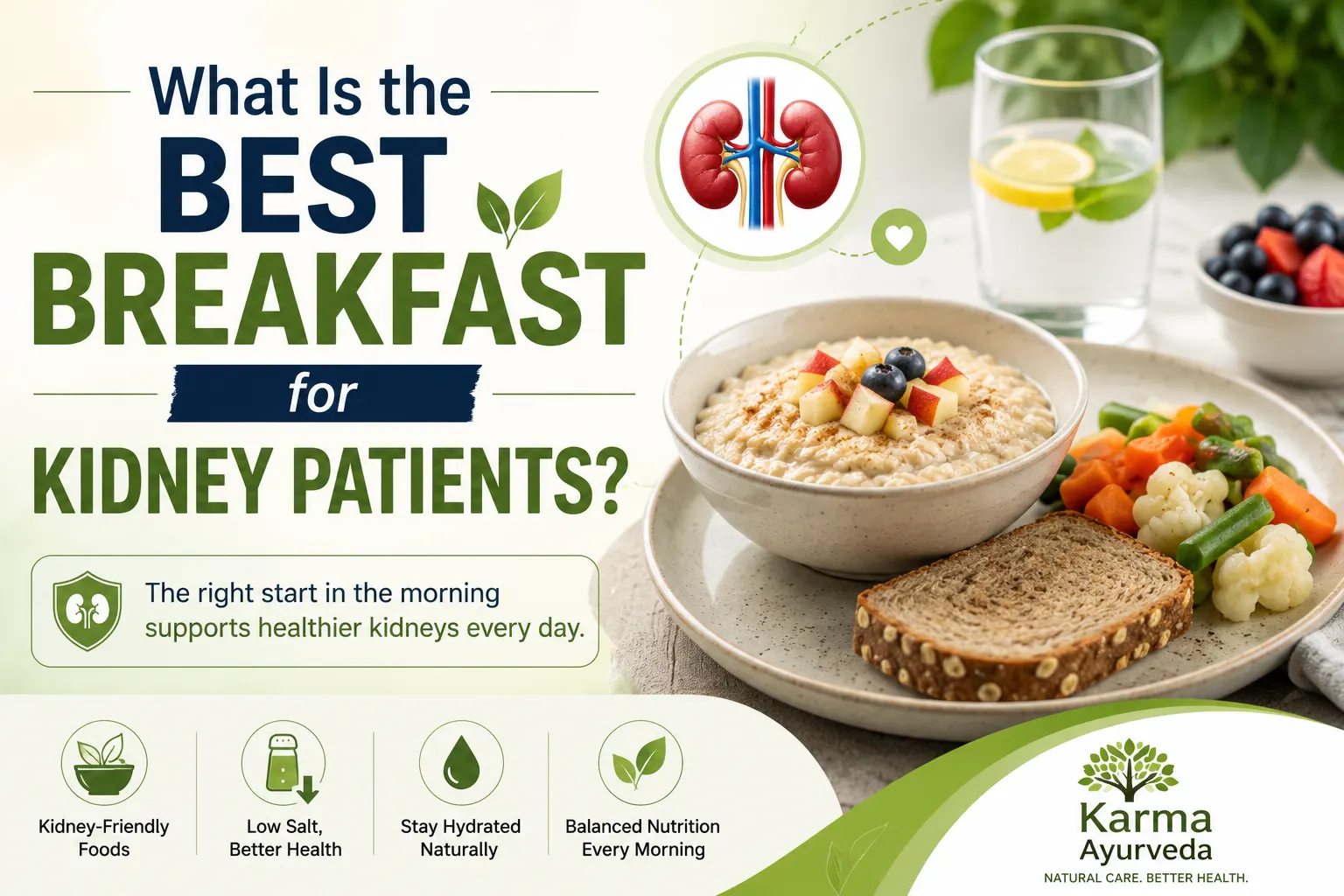

Honestly? The best breakfast for kidney patients is one that's light on salt, doesn't go overboard on potassium or phosphorus, keeps protein sensible, and still tastes like something you'd actually want to eat. Not a punishment plate.
So, make yourself a cup of tea (we'll get into which kind works better in a bit), and let's actually get into it: real food, a bit of science, and even how Ayurvedic treatment for kidney disease looks at mornings very differently than the average nutrition chart does.
Why Breakfast Actually Matters This Much?
I used to think breakfast was just... breakfast. Turns out, for someone dealing with chronic kidney disease (CKD), the first meal of the day carries more weight than people assume. Here's why:
-
It's usually the first big dose of salt, potassium, or phosphorus your body has to deal with all day
-
A protein-heavy start puts more pressure on kidneys that are already working overtime
-
Sugary cereals spike blood sugar, which quietly messes with blood pressure and fluid balance too
-
A bad breakfast tends to snowball; one wrong choice at 8 AM somehow becomes three wrong choices by dinner
There's actual research backing this up too. A 2020 review in the Journal of Renal Nutrition found that people who stuck to consistent, low-sodium, portion-aware eating patterns saw slower CKD progression compared to those who didn't. So no, this isn't just something your doctor says to sound thorough. It genuinely adds up.
So What Actually Makes a Breakfast "Kidney-Friendly"?
Let's skip the chemistry class version of this. In plain terms, a best breakfast for kidney patients usually checks these boxes:
-
Goes light on salt; because extra sodium makes your body hold onto fluid, which is more work for kidneys that already have enough on their plate
-
Keeps potassium in check; this matters more in later stages, since damaged kidneys can't clear out excess potassium the way they used to
-
Has moderate protein, not a mountain of it; enough to hold onto muscle, not so much that it overworks the filtering process
-
Watches phosphorus; the sneaky kind found in processed food, colas, and honestly even some things marketed as "healthy"
-
Balances fluid intake; not too much, not too little, and yes, this really does depend on what your own doctor tells you
It's less about cutting everything out and more about finding that sweet spot. Kind of like tuning a guitar; too tight and something snaps, too loose and it just sounds off.
Breakfasts That Won't Make You Feel Like You're On a Diet
This is the fun part, I promise. You are not sentenced to a lifetime of plain oats (unless you genuinely love plain oats, in which case, respect). Some breakfasts that actually work and taste like real food:
-
Vegetable-stuffed moong dal chilla; skip the extra salt, lean on coriander, cumin, and a bit of ginger for flavor
-
Poha with plenty of veggies, light seasoning, and a good squeeze of lemon at the end
-
A soft egg white omelette with bell peppers and onion, nothing fancy needed
-
Apple or pear slices with a small handful of unsalted roasted makhana
-
Herbal tea instead of your regular chai, ideally one built around kidney-supportive herbs
None of these scream "I am on a diet." They just look like breakfast. Because that's really the goal here; not deprivation, just smarter choices.
📩 Ask a Kidney Expert (Free 10-Min Consultation)
Where Ayurveda Actually Fits In?
Here's where it gets genuinely interesting, at least to me. Long before renal diet printouts existed, traditional systems of medicine were already looking at organ health as a whole-body thing, not an isolated problem. Natural kidney disease treatment, especially through Ayurveda, tends to focus on reducing internal inflammation, supporting healthy urine flow, and clearing what's called "Ama," or toxin buildup; which, funnily enough, isn't too far off from how modern medicine talks about reducing metabolic waste.
Some herbs that keep coming up under Kidney disease Ayurvedic treatment conversations:
-
Punarnava (Boerhavia diffusa); traditionally used to help with fluid balance
-
Gokshura (Tribulus terrestris); often linked to urinary comfort
-
Varun (Crataeva nurvala); studied for its possible role in supporting urinary tract health
-
Palash and Kaasni; commonly used in traditional detox-focused formulations
A study published in the Journal of Ethnopharmacology looked into Punarnava's diuretic and anti-inflammatory effects and found promising results in animal studies, though the researchers themselves noted that human clinical trials are still limited. Which is really the honest way to look at any of this; encouraging, rooted in centuries of use, but not a magic fix with a guarantee stamped on it.
If you're searching for the best herbs for kidney disease, keep one thing in mind: "natural" doesn't automatically mean "safe for everyone." Some herbs can interact with medication or shift mineral levels in ways you don't want. Please talk to an actual Ayurvedic practitioner or your nephrologist before adding anything new. This isn't a corner you want to cut on your own.
Regular Breakfast vs. Kidney-Friendly Breakfast
|
Thing |
Regular Breakfast |
Kidney-Friendly Breakfast |
|
Salt |
"Just a little more, it needs flavor" |
Measured like it owes you money |
|
Banana smoothie |
Everyone's go-to |
Secretly a potassium bomb |
|
Cheese paratha |
Weekend tradition |
Occasional guest, not a resident |
|
Herbal tea |
"Maybe one day" |
The actual daily hero |
|
Protein |
However much fits on the plate |
Planned out, not eyeballed |
|
How you feel after |
Full, a little guilty |
Full, a little proud of yourself |
Nobody said eating this way had to be boring. It just comes with slightly stricter house rules.
Perfect Every Day? No. Consistent Most Days? Yes.
Here's something most health articles conveniently skip: you don't need a flawless breakfast every single morning. You need a mostly steady one. Renal nutrition specialists talk about this a lot; sustainable habits do far more good long-term than one "textbook perfect" meal followed by three chaotic ones. A study in the Clinical Kidney Journal actually found that how consistently someone stuck to their diet mattered more for slowing disease progression than how "perfect" any single meal was.
So if you end up eating something a bit too salty at a wedding, relax. The world isn't ending. Just get back on track the next morning like an adult, not like you've failed some test.
Key Takeaways
-
The best breakfast for kidney patients is about going easy on salt, watching potassium and phosphorus, and keeping protein reasonable; not cutting out joy entirely
-
Small swaps make a real difference: herbal tea instead of regular chai, veggie chilla instead of cheese paratha
-
Ayurvedic treatment for kidney disease often works well alongside modern nutrition advice, especially for inflammation and fluid balance
-
Best herbs for kidney disease, like Punarnava and Gokshura, show real traditional and early scientific promise but should never replace medical guidance
-
Being consistent matters far more than being perfect
-
Talk to a nephrologist or qualified Ayurvedic doctor before changing your diet in any big way
FAQs
Is oatmeal okay for kidney patients?
Yes, in a reasonable portion, oatmeal is usually a gentle and safe breakfast choice.
Can Ayurvedic herbs completely cure kidney disease?
No, herbs can support the body, but they should work alongside medical care, not replace it.
Do bananas have to be avoided completely?
Not entirely, but since they're high in potassium, portion and frequency need watching.
Is herbal tea safe to drink daily with kidney issues?
Most mild herbal teas are fine in moderation, though it's smart to run specific ones by your doctor.
Does cutting salt really make that much of a difference?
Yes, less salt means less fluid retention, which takes real pressure off kidneys that are already struggling.
Disclaimer: This blog is meant for general awareness only and isn't a substitute for professional medical advice. Every case of kidney disease is different. Please consult a qualified nephrologist or Ayurvedic practitioner before making changes to your diet or treatment plan.