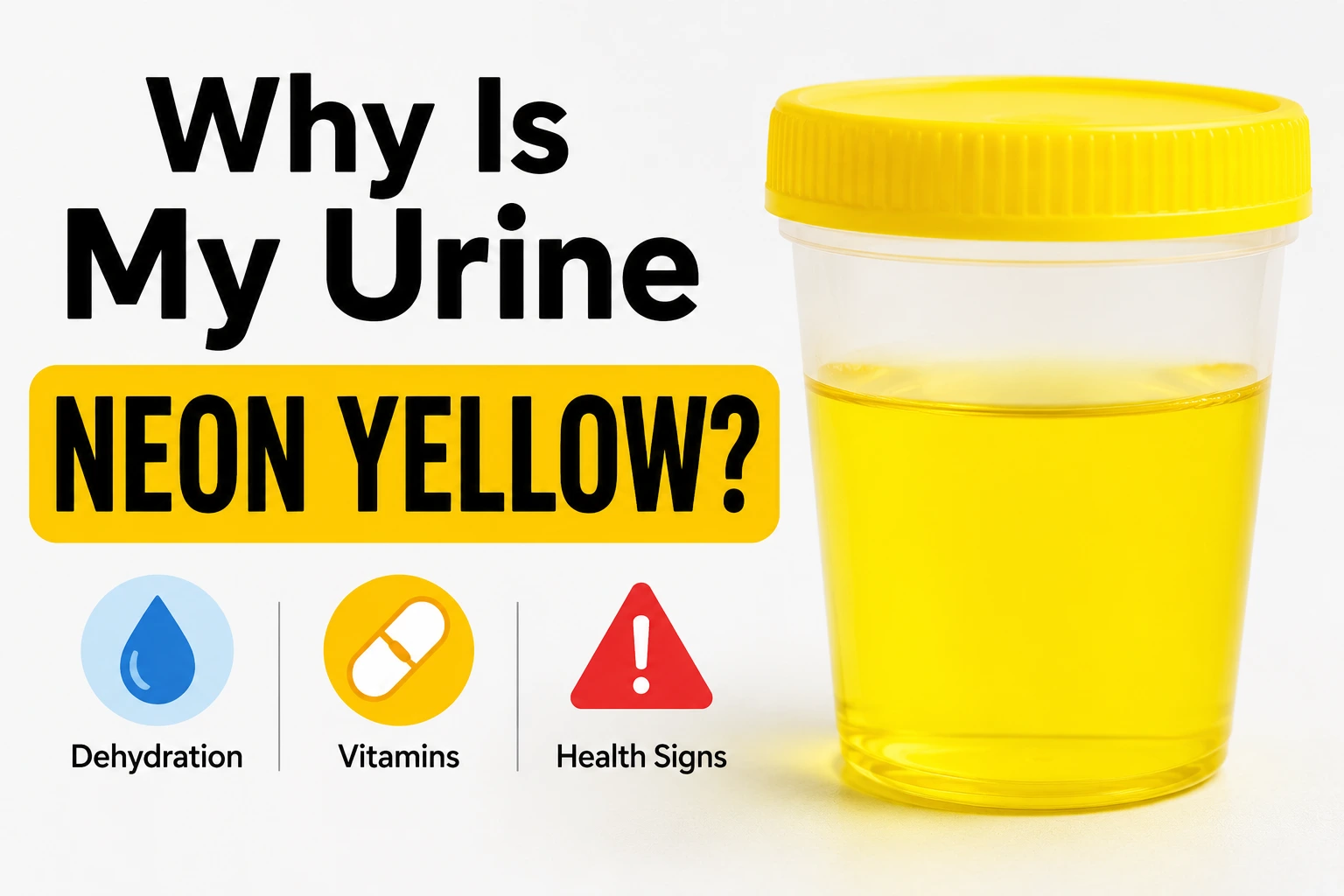

So, you just finished your morning business, went to flush, and stopped dead in your tracks. Instead of the usual "pale straw" color the doctors always rave about, your toilet bowl looks like a glow-stick factory exploded in it. It’s bright. It’s electric. It’s aggressively neon. Suddenly, you’re wondering, why is my urine neon yellow, and whether your body is trying to send you a secret message.
First of all, take a deep breath. You aren't turning into a superhero (though the "Neon Avenger" has a nice ring to it), and your kidneys aren't preparing for a rave. This is actually a very common phenomenon with a perfectly logical and slightly hilarious scientific explanation behind the bright yellow urine that people often panic about online.
Grab a glass of water, and let’s dive into the mystery of the radioactive-looking urine.
Meet the Culprit: Vitamin B2
If you recently started a new multivitamin or a B-complex supplement, you can stop the Google search right now. You’ve found your smoking gun. The specific culprit is Vitamin B2, also known by its much cooler-sounding science name: Riboflavin. In fact, one of the most common neon yellow urine causes is simply taking too many B vitamins.
The "flavin" part of that name actually comes from the Latin word flavus, which means yellow. Riboflavin is naturally a bright, yellowish-orange pigment. When you take a supplement, your body absorbs what it needs to keep your metabolism humming and your skin glowing. But here’s the thing: Vitamin B2 is water-soluble.
Unlike fat-soluble vitamins (A, D, E, and K), which your body tucks away in your "storage units" (fat cells) for a rainy day, water-soluble vitamins are more like houseguests who refuse to stay overnight. Your body takes what it can use immediately, and the rest gets escorted out via the urinary expressway.
When that excess riboflavin hits your urine, it maintains its natural pigment, creating that "Day-Glo" effect. It’s essentially your body saying, "Thanks for the extra vitamins, but I’m full! Here’s a light show for your trouble." This is also why people search for vitamins causing yellow urine after starting supplements.
The Science of the Glow
You might be wondering why it looks neon specifically. This isn't just a trick of the light. Riboflavin has a very specific chemical structure that allows it to absorb ultraviolet light and re-emit it as visible light. While there isn’t much UV light inside your bathroom (hopefully), the way riboflavin interacts with regular light makes it appear unusually vibrant to the human eye.
A study titled Riboflavin (Vitamin B2) and Oxidative Stress notes that this vitamin is essential for energy production, but the body has a very strict threshold for how much it can hold at once. Anything over that limit is excreted rapidly.
Are You Dehydrated or Just Over-Supplemented?
In the US, we are obsessed with hydration. We carry gallon-sized water bottles like they’re emotional support animals. So, when we see dark urine, our first instinct is "I’m a shriveled raisin, I need water!"
However, there is a big difference between "Dehydration Yellow" and "Vitamin Neon." Understanding dark yellow urine causes can help you figure out whether you simply need more water or need to cut back on supplements.
• Dehydration Yellow: This is usually a dark, concentrated amber or honey color.
• Vitamin Neon: This is bright, fluorescent, and looks like it belongs in a highlighter pen. It can happen even if you are perfectly hydrated and your urine is otherwise clear.
If you’re seeing neon, you’re likely just "expensive peeing." You paid for those high-end vitamins, and your body is literally flushing the surplus down the drain. So the next time you ask yourself, Why is my urine neon yellow, remember your supplements may be the real drama queens here.
Other Potential Causes for the Color Shift
While Vitamin B2 is the "usual suspect," a few other things can turn your bathroom trip into a colorful adventure:
• Other B-Vitamins: While B2 is the main neon-maker, Vitamin B12 (cobalamin) can also contribute to changes in urine color, though usually not as dramatically as its brother Riboflavin.
• Fortified Foods: Many American breakfast cereals and energy bars are "fortified" with massive amounts of B-vitamins. If you ate a bowl of "Total" or "Special K" followed by a Monster energy drink, you’ve basically created a riboflavin cocktail in your gut.
• Food Dyes: We love our colorful snacks in the US. Artificial dyes in candies, sodas, or even some medications can tint your urine.
• Carrots and Beets: Eating an ungodly number of carrots can turn your urine (and skin!) orange, while beets can lead to a condition called beeturia, which turns your pee pink or red. That one is significantly more heart-attack-inducing than neon yellow, trust me.
Sometimes people worry about kidney disease urine color changes when they notice anything unusual in the toilet bowl. While kidney problems can affect urine color, simple neon yellow urine from vitamins is usually harmless.
When Should You Actually Worry?
Usually, neon yellow is a "no-worries" situation. It’s a sign that your kidneys are working perfectly to filter out stuff you don't need. However, because this is a blog and I care about your health, let's talk about the "Red Flags" (or rather, the "Brown/Orange Flags"). Learning the difference between harmless color changes and genuine warning signs in urine is important.
You should put down the multivitamin and call an expert like Dr. Puneet Dhawan if:
-
Your urine is the color of Coca-Cola: An indicator of liver issues or severe muscle breakdown (rhabdomyolysis).
-
It’s cloudy or foul-smelling: Sign of Urinary Tract Infection (UTI).
-
There’s actual pain: Infection chances.
-
The whites of your eyes look yellow: Classic sign of jaundice.
Some urine shades can actually fall under dangerous urine colors, especially if accompanied by pain, fever, swelling, or blood in the urine.
The Bottom Line (Pun Intended)
At the end of the day, your neon urine is most likely just a harmless side effect of being health-conscious. You took your vitamins, your body used what it wanted to help your brain and muscles, and it sent the rest out in a blaze of glory.
It’s one of those weird human quirks that reminds us our bodies are actually complex chemical plants. The next time you see that glow in the bowl, don't panic when thinking, Why is my urine neon yellow. Just give yourself a pat on the back for being well-nourished and maybe drink a glass of water just for good measure.
FAQ
Q: Is neon yellow pee ok?
A: Usually yes, often from vitamins or supplements, not serious.
Q: Why would my pee be a neon color?
A: Most often from B vitamins, certain foods, or medications.
Q: Does light yellow urine mean kidney problems?
A: Not usually; light yellow is typically normal and well-hydrated.
Q: Is neon yellow pee dehydration?
A: No, neon yellow is usually overhydration or vitamins, not dehydration.