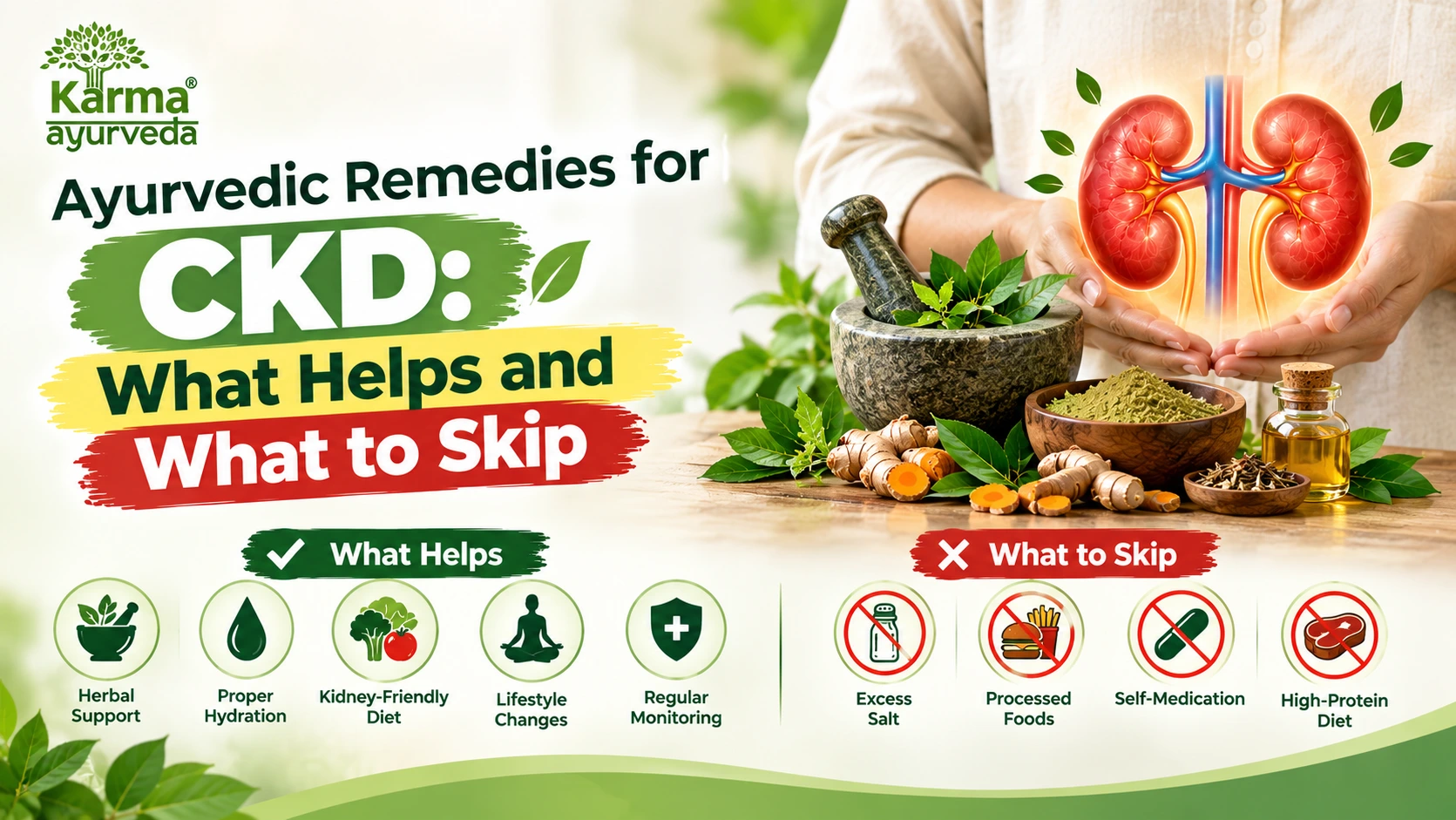

Ayurvedic remedies for CKD include herbs, diet modification, and lifestyle habits that are used to improve the overall health of a CKD patient. These include: punarnava and gokshura herbs, a modified diet plan, and calming lifestyle habits.
Chronic Kidney Disease (CKD) refers to a progressive decline in the functioning of your kidneys over time. This is a quiet condition, and its development is usually gradual. As a result, it is perfectly natural to consider suggestions to use ancient herbs to treat the disease. In the following section, we will review the recommendations of Ayurveda, the scientific evidence, and some points of skepticism regarding the use of ancient herbs.
Ayurveda's perspective on CKD
In Ayurvedic medicine, kidney disease is considered to be caused by disturbed doshas, poor digestion, and the presence of toxins (ama) in the body. Ayurveda uses the individual approach to treatment: diet, herbs, routines, and lifestyle changes. This approach is effective, as different patients with the same disease may have totally different results in laboratory analyses.
Herbs That People Frequently Discuss
There are several plants that are known to help your kidneys work in the best possible manner.
- Punarnava (Boerhavia diffusa): traditionally used for swelling and fluid balance
- Gokshura (Tribulus terrestris): used for urinary comfort
- Varun (Crateva nurvala): urinary health
- Turmeric: studied for its anti-inflammatory effects
- Giloy (Tinospora cordifolia): an herb often recommended for the enhancement of immunity. It has to be used with caution in some cases.
These can be regarded as supporting cast members, and they will not have a role in directing the movie.
Daily Ayurvedic-Inspired Habits
But not all useful herbs are herbs at all.
- Eat fresh, simple, home-cooked meals
- Watch the amount of salt, pickles, and processed foods
- Regular meals (your digestion likes routine)
- Walk, stretch, or do some yoga
- Sleep on time because tired bodies are unable to restore properly.
- Manage your stress with breathing exercises or meditation.
All these things that your grandmother was saying were quite truthful, although she believed ginger fixed everything.
Quick Comparison: Ayurveda vs Conventional Care
|
Conventional Care |
Ayurvedic Support |
|
|
Main job |
Controls BP, sugar, protein loss, slows progression |
Supports diet, lifestyle, and overall well-being |
|
Evidence |
Strong, large trials |
Growing, but limited |
|
Is there any other form of treatment? |
Yes, there is. They can use the technique called "transcatheter embolization". |
It's not a treatment option for advanced disease. |
|
Vibe |
The coach |
The energetic assistant coach |
What Does the Research Say?
So, let's stay realistic. One article by Kim et al. in Evidence-Based Complementary and Alternative Medicine (2013) reviewed the usage of medicinal herbs for the protection of kidneys and got promising lab results, but mentioned that there is a need for further studies on people. Moreover, one investigation by Jiménez-Osorio et al. in Oxidative Medicine and Cellular Longevity (2016) explored how curcumin affects oxidative stress in kidney diseases. Besides, it is worth mentioning that there is even a case report by Debelle et al. in Kidney International (2008) in which Aristolochia caused severe kidney injury. Thus, there is potential, but it is not a panacea.
Herbs and Products to Be Careful With
- Aristolochia, a plant that causes kidney damage.
- Large amounts of licorice that can influence blood pressure and potassium levels in the human organism
- Herbal powders without labels, which may contain heavy metals and steroids
- Potassium-rich herbal juices in patients with stage IV/V CKD, since potassium can be retained
Many herbs are potent, and in CKD your body removes them much slower than normal. Therefore, a simple tea may become a big problem.
Where Ayurveda fits
Many people are looking for CKD Ayurvedic treatment for dietary help, lifestyle support, and comfort with symptoms. In particular, Dr. Puneet Dhawan explains the idea of an individual approach, and this makes more sense than a ready-made recipe. Of course, any natural treatment should be cleared with your nephrologist if there are any changes in potassium, creatinine, or eGFR.
Final Thoughts
Ayurvedic remedies for CKD may be helpful in addition to medical treatment of kidney diseases. However, blood pressure control, management of sugar levels in the blood, kidney-friendly diet, and laboratory analyses are necessary in any case. If one wants to try complementary treatment, Karma Ayurveda may be chosen as an addition to medical therapy with the knowledge of the doctor.
Main Points
- Ayurveda, unlike traditional medicine, uses herbs, diet and lifestyle for the treatment and overall support of the patient.
- Punarnava, gokshura, varun and turmeric are commonly discussed
- Evidence is encouraging but still limited in humans
- Some herbs can harm weak kidneys, so caution matters
- Always involve your nephrologist before starting anything
📩 Ask a Kidney Expert (Free 10-Min Consultation)
FAQs
Can Ayurveda cure CKD?
Sadly no, it may support wellbeing but can’t replace medical treatment.
Which herb is best for CKD?
No single champion exists, and your doctor gets the final say.
Is Ayurvedic treatment safe for CKD patients?
It can be, but only with the right herbs, doses and medical supervision.
Can I take Ayurvedic medicines along with allopathic drugs?
Often yes, but tell both your doctors so nothing clashes.
Can diet changes help with CKD?
Absolutely, since less salt, balanced protein and fresh foods often make a real difference.
Disclaimer
This blog is for general education only and isn’t a substitute for professional medical advice, diagnosis or treatment. Always consult your nephrologist or qualified healthcare provider before starting, changing or stopping any herb, supplement, medicine or treatment plan.