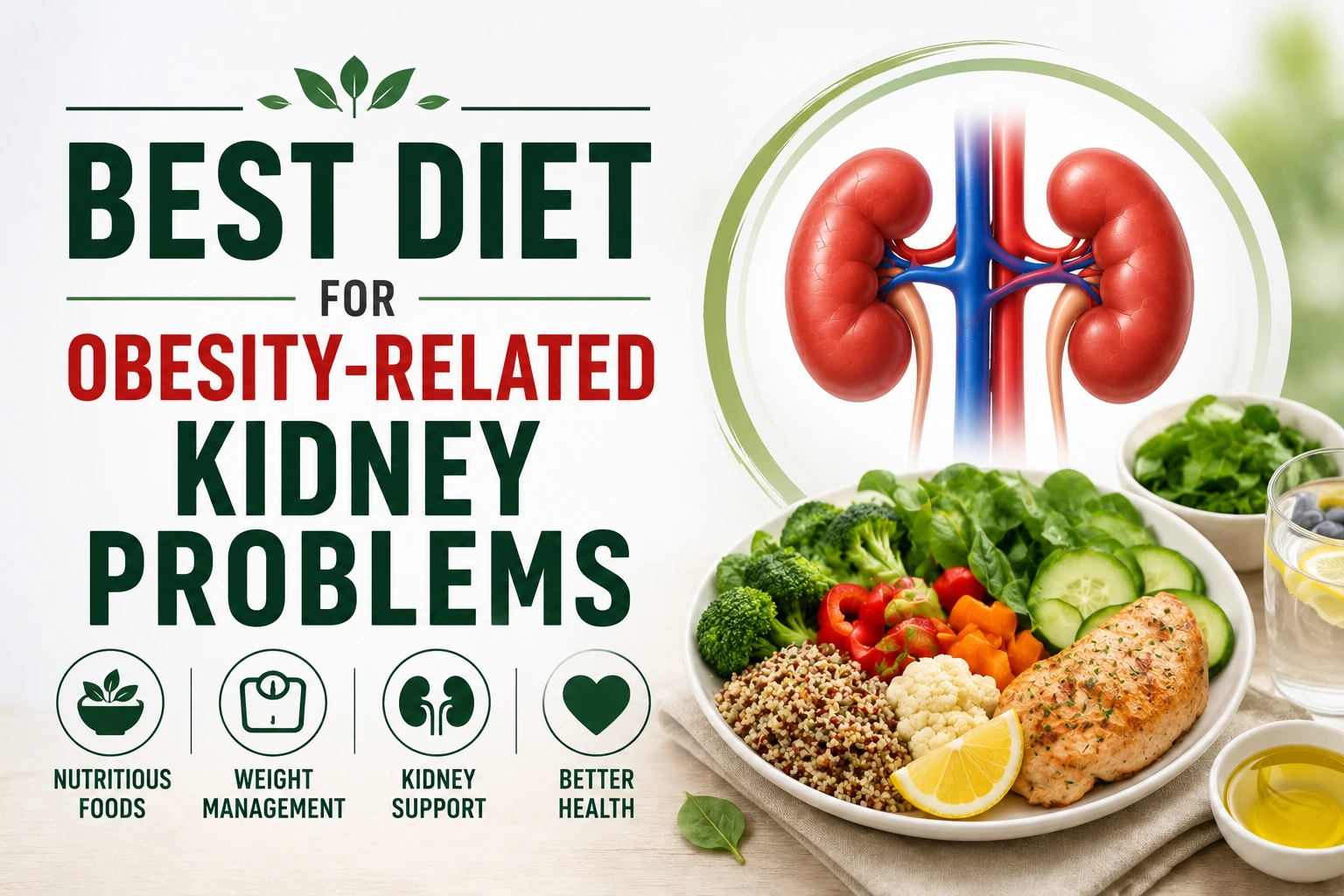

The best diet for obesity-related kidney problems is one that's lower in sodium, controlled in protein, rich in fiber, and built around a calorie deficit that helps you lose weight slowly without putting your kidneys through extra stress. That's the one-line answer. Now let's actually talk about why, because "eat less salt" isn't exactly a satisfying explanation, is it?
Here's the thing nobody warns you about: carrying extra weight doesn't just affect your knees or your jeans size. It quietly leans on your kidneys, too. Your kidneys are basically tiny filtration plants working 24/7, and when there's more body mass to support, they have to filter more blood, manage more blood pressure, and deal with more inflammation. Over time, this combo is what doctors call obesity kidney disease, and it's more common than most people realize.
The good news? Food is genuinely one of the most powerful tools you have here. Not a magic fix, not a "detox tea" situation, just real, boring, consistent eating habits that add up.
Why Weight and Kidney Health Are Roommates, Not Strangers
Your kidneys filter about 50 gallons of blood a day. Now imagine asking them to do that for a body carrying significantly more weight than it's built for. It's like asking one barista to make coffee for a café versus a stadium. Same barista, very different workload.
A widely cited study, "Obesity-Related Glomerulopathy" by Dr. Vivette D'Agati and colleagues (research spanning observations from the 1990s through 2016, published in Nature Reviews Nephrology), found that excess body weight is directly linked to changes in kidney structure, including a condition where the kidneys' filtering units become enlarged and overworked. This isn't fear-mongering; it's just biology asking for backup.
So, can losing weight improve kidney function? Based on existing research, modest and steady weight loss has been associated with improved kidney filtration markers and reduced protein leakage in urine, though results vary by individual and underlying health conditions. It's not an overnight fix, and it's not guaranteed for everyone, but the direction of the evidence is encouraging.
The Real Building Blocks of a Kidney Diet
Let's break down what actually goes on the plate. Think of this as your kidney diet cheat sheet; not a punishment, just a smarter way of eating.
-
Go easy on sodium. Salt makes your body hold onto water, which raises blood pressure, and high blood pressure is basically kryptonite for kidneys. Aim for whole foods over packaged ones; chips and instant noodles are sneaky sodium bombs.
-
Watch your protein, don't fear it. Too much protein can overwork kidneys that are already struggling. This doesn't mean cutting it out; it means right-sizing portions, ideally with guidance from a doctor or dietitian based on your kidney function stage.
-
Fill up on fiber. Vegetables, fruits (the kidney-friendly kind, more on that below), and whole grains help manage blood sugar and weight, which indirectly protects kidney function.
-
Mind your potassium and phosphorus. If kidney function is already reduced, these minerals can build up in the blood. Bananas, oranges, dairy, and nuts may need portion control depending on your individual lab results.
-
Stay hydrated, but don't overdo it. More water isn't automatically better if your kidneys are struggling to process it; this is genuinely something to check with your doctor.
Foods for Obesity Related Kidney Disease (Without the Boring Diet-Food Stereotype)
When people hear "diet for kidney health," they imagine plain rice and sadness. That's not it at all. Some genuinely tasty and accessible foods for obesity related kidney disease include cauliflower, cabbage, berries, apples, garlic, onions, olive oil, egg whites, and skinless chicken in moderate portions. None of this requires a personality transplant or a trip to a specialty store.
A study published as "Dietary Approaches to Stop Hypertension (DASH) and Kidney Disease" by Dr. Lynda Frassetto and team (research conducted in the early 2010s, published in Clinical Journal of the American Society of Nephrology) found that DASH-style eating; rich in fruits, vegetables, and low-fat dairy, but lower in sodium; was associated with better blood pressure control, which is one of the biggest protective factors for kidney health.
A Simple Snapshot: What to Eat, What to Watch
Here's a quick table because, honestly, nobody wants to memorize a textbook while trying to figure out dinner.
|
Food Category |
Kidney-Friendlier Choices |
Use With Caution |
|
Proteins |
Egg whites, skinless chicken, tofu (in moderation) |
Red meat, processed meats, large protein portions |
|
Carbs |
White rice, oats, white bread (portion-controlled) |
Whole wheat bread/pasta in large amounts (if potassium/phosphorus is a concern) |
|
Fruits |
Apples, berries, grapes |
Bananas, oranges, dried fruits |
|
Vegetables |
Cabbage, cauliflower, bell peppers |
Spinach, potatoes, tomatoes (in large amounts) |
|
Fats |
Olive oil, small amounts of nuts |
Fried foods, butter-heavy dishes |
|
Beverages |
Water (as advised by doctor) |
Sugary sodas, excess caffeine |
This isn't a rulebook carved in stone; it's a starting compass. What fits your plate depends heavily on your kidney function stage, lab results, and what your doctor or dietitian says.
Kidney Diet for Overweight Adults: Where Weight Loss Comes In
If you're specifically looking for a kidney diet for overweight adults, the strategy usually blends two goals at once: gentle, sustainable weight loss and reduced strain on kidney filtration. This is genuinely a balancing act, because crash diets or extreme calorie cuts can backfire; sudden, aggressive weight loss has been linked to muscle breakdown, which can actually increase the kidneys' workload temporarily.
A weight loss meal plan for kidney disease typically focuses on a moderate calorie deficit (think gradual, not dramatic), spaced-out meals to manage blood sugar, and swapping processed convenience foods for simpler home-cooked options.
Research published as "Weight Loss Interventions in Chronic Kidney Disease" by Dr. Holly Kramer and colleagues (study period through the mid-2010s, published in American Journal of Kidney Diseases) observed that gradual weight loss through diet and lifestyle changes was associated with improvements in kidney-related markers in several participants, though the researchers noted that results aren't uniform across all kidney disease stages.
Building Your Own Obesity Kidney Disease Diet Plan
If you're trying to put together an actual obesity kidney disease diet plan, here's a realistic, non-overwhelming way to start:
-
Start your day with something simple and low-sodium; oats with berries work nicely.
-
Keep lunch balanced: a portion of lean protein, a fiber-rich vegetable, and a modest carb portion.
-
Snack smart; an apple or a small handful of unsalted nuts beats packaged snacks.
-
Dinner should be light on sodium and portioned protein, with most of the plate filled with kidney-friendly vegetables.
-
Check labels obsessively for hidden sodium; sauces and dressings are usually the sneaky culprits.
None of this needs to feel like punishment. It's less about restriction and more about swapping habits gradually so they actually stick.
The Honest Bottom Line
So, what's the best diet for obesity related kidney problems, really? It's not a single magic food or a 7-day cleanse. It's a steady pattern: lower sodium, mindful protein, more fiber, gradual weight loss, and a genuine partnership with your healthcare provider who can interpret your specific lab numbers. Diet plays a real, evidence-supported role in supporting kidney health alongside obesity management, but it works best as part of a bigger picture that includes medical guidance, movement, and patience.
Disclaimer: This article is for general information only and isn't a substitute for medical advice. If you're dealing with obesity-related kidney concerns, please loop in a nephrologist or registered dietitian who can personalize this based on your actual health profile; your kidneys deserve a plan made just for them.
FAQ
1. What is the best diet for obesity-related kidney problems?
A diet rich in vegetables, whole grains, lean protein, and healthy fats is the best diet for those with renal issues.
2. Can losing weight improve kidney health?
Yes, a healthy weight reduces stress on the kidneys, leading to better renal health.
3. Which foods should people with obesity-related kidney disease avoid?
Limit processed foods, sugary drinks, excess salt, and unhealthy fats.