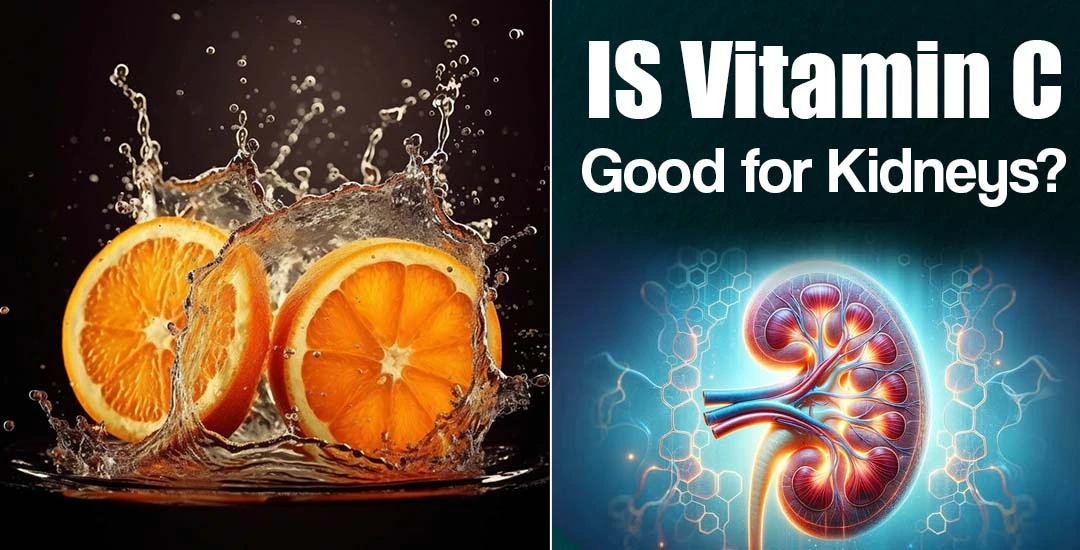

Our kidneys work 24/7, never ask for a raise, and spend their lives cleaning up your blood while you’re busy binge-watching shows or scrolling through cat memes. Naturally, you want to treat them right. You’ve probably heard that Vitamin C is the "holy grail" of vitamins; the superhero that fights off colds and keeps your skin glowing. But when it comes to the internal plumbing, is vitamin C good for kidneys?
The answer, like most things in life (and Facebook relationship statuses), is: it’s complicated.
What Does Vitamin C Actually Do?
Before we dive into the kidney pool, let’s look at why we love Vitamin C. Scientifically known as ascorbic acid, Vitamin C is an antioxidant. Imagine it as a tiny bodyguard that neutralizes "free radicals"; those chaotic molecules that try to damage your cells. It helps your body make collagen, absorb iron, and keep your immune system from waving the white flag every time someone sneezes in your general direction.
But here’s the kicker: your body doesn’t make Vitamin C on its own. You have to eat it. And because it’s water-soluble, your body doesn’t store it for a rainy day. Whatever you don’t use, you pee out. This is where your kidneys enter the chat.
The Kidney Connection: Friend or Foe?
When you ask, "Is vitamin C good for kidneys?" the short answer is yes, in moderation. For a healthy person, Vitamin C helps reduce oxidative stress in the renal system. It keeps blood vessels flexible and can even help manage blood pressure, which is the kidneys’ best friend.
However, your kidneys are the ones responsible for processing that excess Vitamin C. If you’re taking just enough, they smile and wave it through. If you’re taking a massive dose, you’re essentially giving your kidneys a mountain of paperwork to file at 4:55 PM on a Friday. They’ll do it, but they won’t be happy about it.
The Dark Side: Oxalate and Stones
We can’t talk about Vitamin C and kidneys without mentioning the "S" word: Stones. Specifically, kidney stones.
When your body breaks down Vitamin C, it produces a waste product called oxalate. Usually, this isn't a problem. But if you have too much oxalate floating around, it can grab onto calcium and form crystals. These crystals eventually grow into kidney stones, which are essentially tiny, jagged rocks trying to pass through a very narrow tube. It is, quite literally, as fun as it sounds (which is to say, not at all).
This is why people often wonder how much vitamin C is bad for kidneys. For the average person, going over 2,000mg a day consistently is where you start entering the "danger zone." If you have a history of kidney stones or chronic kidney disease (CKD), your "danger zone" starts much lower.
Is Vitamin C Kidney Friendly?
If you are living with kidney issues, you have to be a bit of a detective with your supplements. So, is vitamin C kidney-friendly for everyone? Not necessarily.
-
For the healthy hero: A standard dose (around 75-90mg a day) is perfectly fine and actually quite helpful.
-
For the stone-prone: You might want to stick to getting your vitamins from actual food rather than high-dose supplements.
-
For the CKD warrior: Your doctor might actually limit your intake. When kidneys aren't at 100%, they can't flush out that oxalate efficiently, leading to a buildup that can cause further damage.
How to Get Your Vitamin C Without the Drama
You don’t need to swallow a pill the size of a subcompact car to stay healthy. In fact, nature has already packaged Vitamin C in much tastier ways that are generally safer for your filtration system.
-
Bell Peppers: These are the unsung heroes of the veggie world.
-
Strawberries: Low in potassium (another kidney concern!) and high in Vitamin C.
-
Cauliflower: It can be rice, it can be pizza crust, and it can be a kidney-safe Vitamin C source.
-
Citrus Fruits: A little lemon in your water or an orange for a snack is usually good for the kidneys in its most natural form.
The beauty of getting vitamins from food is that it’s hard to "overdose." Your stomach will usually tell you to stop eating oranges long before your kidneys start panicking about oxalate levels.
The Big Picture: Kidney and Liver Health
Your kidneys don't work in a vacuum; they’re part of a tag team with your liver. While the liver processes toxins and breaks down chemicals, the kidneys finish the job by flushing them out. If you're looking for the best vitamins for kidneys and liver, you shouldn't just focus on Vitamin C.
The "Dream Team" usually includes:
-
Vitamin B6: Helps reduce oxalate levels (the stuff that causes stones!).
-
Vitamin D: Essential for calcium balance, which keeps the kidneys from working too hard.
-
Vitamin E: Another antioxidant that helps the liver stay "greased" and functional.
-
Iron: But only if your doctor says so, as your kidneys help regulate red blood cell production.
Practical Tips for Happy Kidneys
If you want to keep your internal filters running like a well-oiled machine, follow these simple rules:
-
Hydrate like it’s your job: Water dilutes the stuff that turns into stones. If your pee looks like pale lemonade, you’re winning at life.
-
Watch the salt: Salt raises blood pressure, and high blood pressure is like a wrecking ball for kidney tissues.
-
Don't be a supplement junkie: Just because a bottle says "Natural" doesn't mean you should take ten of them. Always ask your doctor before starting a high-dose regimen.
-
Read the labels: You’d be surprised how much Vitamin C is tucked into energy drinks and "wellness shots."
The Final Verdict
So, is vitamin C good for kidneys?
Yes, it is, provided you aren't trying to break a world record for most supplements consumed in a single day. Your kidneys love Vitamin C when it comes from a balanced diet, and it helps keep your immune system strong. They don't love it when it's shoved down their throats in mega-doses that turn into painful stones.
Think of Vitamin C like a good spicy salsa. A little bit adds flavor and makes everything better. A whole gallon of it? You’re going to be in a world of hurt tomorrow.
Keep your portions sensible, stay hydrated, and your kidneys will keep doing their silent, heroic work of keeping you alive and kicking. If you have any doubts, especially if you've had "the stones" before, give your doctor a quick call. They’d much rather talk to you about vitamins now than see you in the ER with a kidney stone later!
Stay healthy, stay hydrated, and maybe go eat a bell pepper. Your kidneys will thank you.
FAQ
1. Can kidney patients take vitamin C?
Yes, but only in low doses and with a doctor’s advice.
2. What is the best vitamin for kidneys?
Vitamin B complex and vitamin D are generally the most helpful.
3. How much vitamin C is bad for kidneys?
More than 500–1000 mg daily can be harmful for kidney patients.