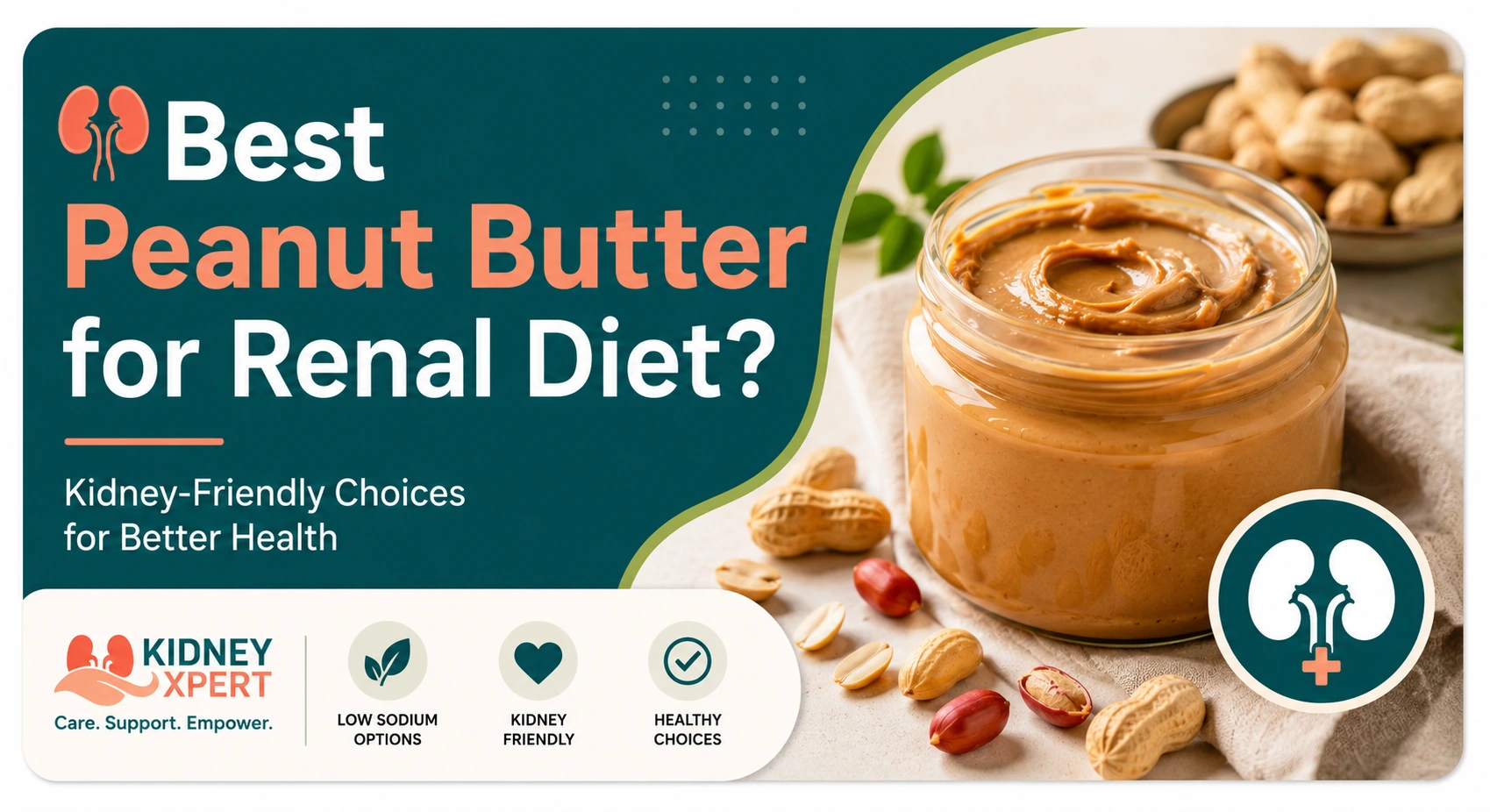

Being told you need to follow a renal diet feels a bit like being told you can go to the party, but you aren’t allowed to dance, double-dip, or talk to the DJ. Suddenly, phosphorus, potassium, and sodium, the three musketeers of the snack world, become the villains in your story. That’s why finding the best peanut butter for renal diet plans becomes surprisingly important.
Well, take a deep breath. We are going to navigate the sticky world of peanut butter together. It turns out, you don’t have to break up with your favorite spread; you just need to be a little more selective about who you bring home to meet your kidneys. Choosing the best peanut butter for renal diet routines is all about labels, ingredients, and portion control.
Why Your Kidneys Are Acting Like Divas?
To understand why we have to be picky about peanut butter, we have to understand the kidney's job. Think of your kidneys as a high-end wastewater treatment plant. When they are healthy, they filter out excess minerals and send them packing via your urine.
When you have CKD, the filters are clogged. If you eat too much phosphorus, it builds up in your blood, pulls calcium out of your bones (making them brittle), and can even harden in your heart. Potassium is similar; too much of it can make your heart rhythm go wonky.
According to the study Kidney Disease Outcomes Quality Initiative (KDOQI) Clinical Practice Guideline for Nutrition in CKD, managing these minerals is vital to keeping you out of the danger zone. This is exactly why many people look for the best peanut butter for CKD patients instead of regular supermarket options.
But here’s the plot twist: not all phosphorus is created equal.
The Secret Life of Phosphorus: Organic vs. Inorganic
This is the part where we get a little science-y, but stay with me. There are two types of phosphorus:
• Organic Phosphorus: Found naturally in plants (like peanuts) and animal proteins.
• Inorganic Phosphorus: Found in food additives and preservatives.
Your body is actually pretty bad at absorbing plant-based phosphorus. You only absorb about 30% to 50% of it because it’s tucked away in "phytates" that your gut can’t easily break down. However, your body absorbs nearly 100% of the inorganic phosphorus found in additives.
The study Shift in Paradigm: From Phosphorus to Phosphorus Additives highlights that the "hidden" phosphorus in processed foods is the real enemy, not necessarily the natural stuff found in a handful of nuts. This is great news for your PB&J aspirations and for anyone searching for a low-phosphorus peanut butter option.
The Scouting Report: What to Look for on the Label
When you are standing in the grocery aisle staring at a wall of jars, you need to be a detective. Put on your imaginary trench coat and look for these clues if you want the best peanut butter for renal diet success:
• The Ingredient List Should Be Short: Ideally, it should say "Peanuts" and... that’s it. Maybe a little salt if your doctor allows it. If the ingredient list looks like a chemistry final exam, put it back.
• Zero Phosphorus Additives: Look for words containing "phos." If you see "Sodium acid pyrophosphate" or "Tricalcium phosphate," run away.
• Low Sodium: Most commercial brands load their jars with salt to make them shelf-stable and addictive. Your kidneys hate salt more than a cat hates a vacuum cleaner. Aim for "Unsalted" or "No Salt Added" versions.
• No Hydrogenated Oils: These are the fats that stay solid at room temperature and aren't great for your heart. Since kidney health and heart health are basically joined at the hip, skip the funky oils.
This careful label-reading habit can help you avoid some of the foods kidney patients should avoid on a regular basis.
Top Contenders for the Renal-Friendly Title
While I can’t tell you exactly which jar to buy (because I’m an AI, not your doctor), here are the types of peanut butter that generally win the "Kidney-Friendly" pageant:
-
Fresh-Ground Peanut Butter: Many health food stores (and even some mainstream supermarkets like Whole Foods or Kroger) have those "grind-your-own" machines. It’s loud, it’s satisfying, and the only ingredient is peanuts. This is often considered the best peanut butter for renal diet followers because it skips unnecessary additives.
-
Natural Unsalted Brands: Brands like Laura Scudder’s or Adams often offer a "Natural Unsalted" version. Yes, the oil separates and sits on top. Yes, you have to stir it. Consider it a mini-workout for your forearms before you eat.
-
Spread the Love (Literally): Portion control is your best friend. A standard serving is two tablespoons, but for a renal diet, one tablespoon is often the "sweet spot." This makes it easier for peanut butter for kidney patients to fit safely into meal plans.
The Great Nut Butter Alternatives
If your phosphorus levels are still hitting the ceiling, or if your dietitian has given peanut butter the "red light," don’t despair. There are other players in the game:
• Macadamia Nut Butter: Macadamias are the "low phosphorus" kings of the nut world. They are buttery, delicious, and much easier on the kidneys.
• Walnut Butter: Lower in phosphorus than peanuts and packed with heart-healthy omega-3s.
• Almond Butter: Often touted as a health food, but be careful! It’s actually quite high in oxalates, which can lead to kidney stones. The study Nutrient Composition of Selected Tree Nuts confirms that while almonds are healthy, they might not be the best choice if you are prone to stones.
For some people on dialysis, these alternatives may even work better than traditional peanut butter. Choosing a healthy peanut butter for dialysis patients often depends on mineral levels, sodium content, and serving size.
How to Enjoy PB Without Ending Up in the Doghouse
Life is too short for sad toast. Here is how to incorporate peanut butter into a renal-friendly lifestyle without upsetting your medical team:
• Pair it with White Bread: Wait, what? Usually, white bread is the "bad guy," but for renal patients, whole wheat is much higher in phosphorus and potassium. A slice of sourdough or white bread with a thin layer of natural PB is a renal-safe classic.
• Apple Slices are Your Friend: Apples are low in potassium. Dipping a few slices into a measured tablespoon of peanut butter is a crunchy, kidney-safe delight.
• The "Double Play": If you use peanut butter, try to avoid other high-phosphorus foods in the same meal, like dairy or beans. It’s all about the balance.
With smart portions and planning, peanut butter can absolutely be one of the best foods for kidney health when included carefully in a balanced renal diet.
A Note on Potassium and the "Leaching" Myth
You might have heard that you can soak potatoes to get the potassium out. Sadly, you cannot "soak" the potassium out of peanut butter. If you try, you will just end up with a very sad, watery peanut soup that no one wants to eat.
The study Effect of Processing on the Potassium Content of Foods reminds us that while boiling can help with vegetables, nuts are what they are. This is why sticking to the portion size is the only real way to manage the load. That’s another reason dietitians recommend the best peanut butter for renal diet plans in small amounts rather than banning it completely.
Conclusion
Peanut butter doesn’t have to be a forbidden fruit. By choosing natural, unsalted varieties and avoiding those sneaky chemical additives, you can keep the "nut" in your nutrition.
Always remember to check in with your renal dietitian or an expert like Dr. Puneet Dhawan. They are the Gandalf to your Frodo; they have the maps and the wisdom to get you through the dark forest of food labels.
So, go forth to the grocery store. Read those labels like they are the latest tabloid gossip. Find yourself a jar of the good stuff, stir in that oil with pride, and enjoy your snack. Your kidneys (and your taste buds) will thank you. Finding the best peanut butter for a renal diet may take a little trial and error, but your perfect jar is definitely out there.
FAQ
Q: What kind of peanut butter is kidney-friendly?
A: Natural, unsalted peanut butter in small amounts is usually kidney-friendly.
Q: Can you have a peanut butter sandwich on a renal diet?
A: Yes, but keep it small and choose low-sodium bread and natural peanut butter.
Q: Can you eat peanut butter when you have kidney problems?
A: In moderation, yes, just watch the salt and portion size.
Q: What kind of cheese is ok for kidney disease?
A: Low-sodium, reduced-phosphorus cheeses like cream cheese or ricotta are safer choices.