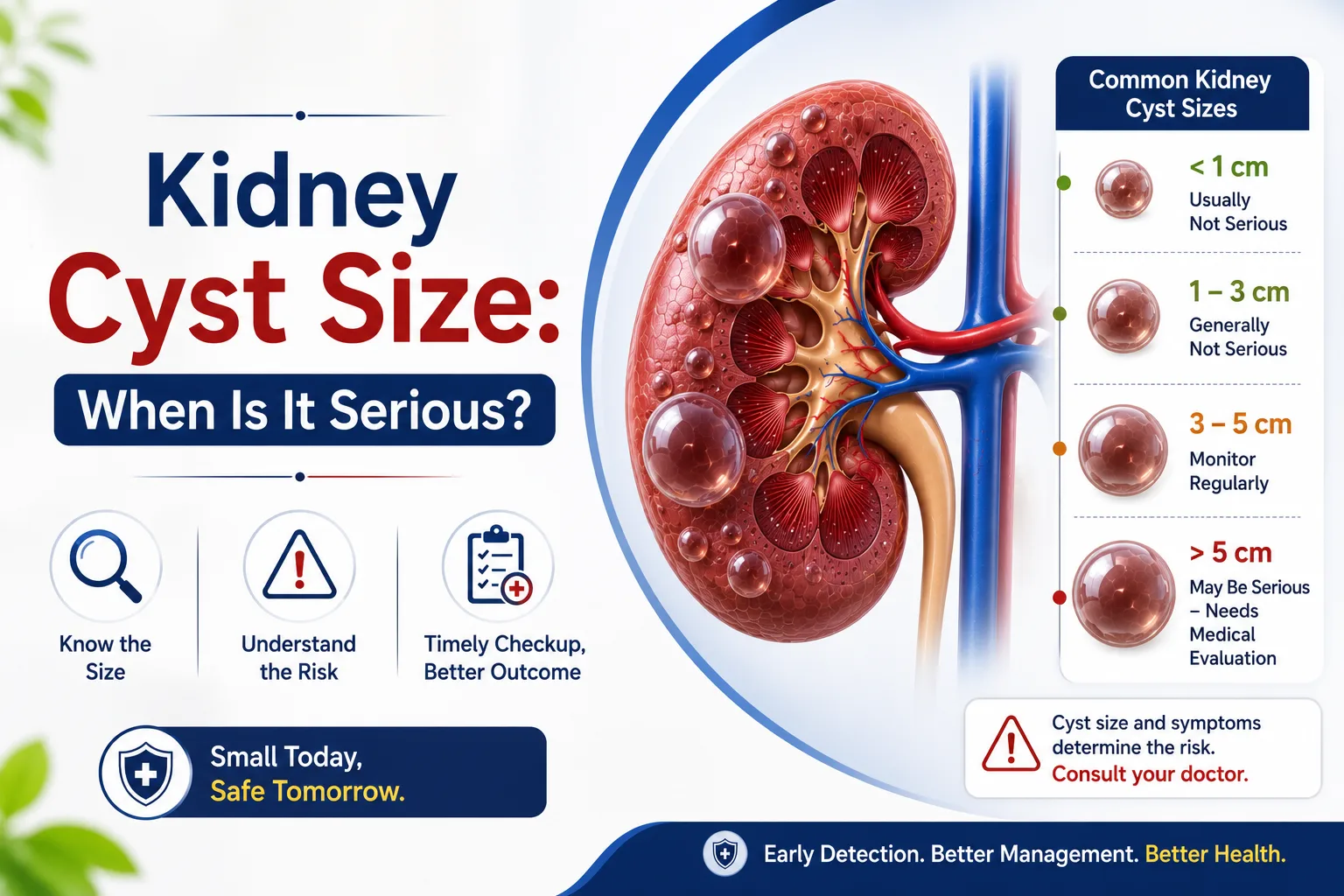

Short answer: most kidney cysts under 2 cm are basically harmless bystanders, but once a cyst crosses that 2 cm mark, gets bigger than 4-5 cm, or starts looking "complex" on a scan, doctors start paying closer attention. Size alone isn't the whole story; but it's a big part of it, and today we're breaking down exactly when a little fluid-filled pocket in your kidney goes from "meh, ignore it" to "okay, let's actually talk about this."
First, What Even Is a Kidney Cyst?
Picture a tiny water balloon chilling inside your kidney. That's basically a simple kidney cyst; a round sac filled with fluid, usually harmless, usually found by accident when you're getting a scan for something totally unrelated. Ever gone to the doctor for a stomach ache and come out with a random diagnosis you didn't ask for? Yeah, kidney cysts are notorious for that kind of surprise cameo.
They're incredibly common too. One study on incidental scan findings found renal cysts showed up in roughly 30.8% of adults undergoing abdominal CT scans for completely unrelated reasons. So if your report mentions one, take a breath; you're in very crowded company.
So When Does Size Actually Matter?
This is where the Bosniak classification system comes in, which is basically the report card doctors use to grade how "worried" a cyst looks. It's been called the gold standard for figuring out what a complicated-looking kidney cyst actually is. It sorts cysts from Category I (totally chill, simple, boring) all the way to Category IV (needs a serious conversation with a urologist).
Here's the thing though; size sneaks into almost every category:
-
Under 2 cm: Usually low-risk, even if the cyst looks a bit "complex" on imaging.
-
Over 2 cm: This is a genuine turning point. Research has linked cysts larger than 2 cm to a meaningfully higher chance of malignancy, alongside being male and being younger than 50.
-
3 cm and up with dense, high-attenuating features: Doctors specifically flag these for extra scrutiny, since there's a defined criterion for high-attenuating cystic lesions once they hit 3 cm or more.
-
7.5–11 cm and climbing over time: This is where things get genuinely serious. One case report described cysts ballooning from 7.5 cm to 9.4 cm and beyond over just a year, eventually accompanied by unexplained weight loss, fatigue, and declining kidney function.
Basically, size is like a smoke alarm. One beep doesn't mean the house is on fire, but if it keeps beeping louder and more often, you check it out.
It's Not Just About Size, Though
Here's the plot twist: a cyst can be small and still weird-looking, or huge and still totally boring. The Bosniak categories also weigh in things like walls, septations (basically little internal walls dividing the cyst), calcifications, and whether it "enhances," meaning it lights up with contrast dye, hinting at blood flow, which cysts normally shouldn't have.
For example, category IIF cysts (the "F" stands for "follow-up," not "fine," sadly) sit in a gray zone. Follow-up research found malignancy in these was fairly rare, with only about 5-6% of IIF cysts turning out to be cancerous in early studies, though a more detailed hospital-based study found the number could run as high as 17% among category IIF cysts that ended up going to surgery. Meanwhile, category IV cysts are a different story entirely; one study found malignancy in a staggering 90% of category IV cysts.
A Quick (Slightly Judgy) Comparison Table
|
Bosniak Category |
Vibe Check |
Malignancy Risk |
What You Should Do |
|
I |
The cyst equivalent of a Sunday nap |
Practically zero |
Nothing. Forget about it. |
|
II |
Mild main-character energy, but chill |
Very low |
Occasional check-in |
|
IIF |
The "it's complicated" of cysts |
Roughly 5-17% |
Regular imaging follow-up |
|
III |
Suspicious side-eye territory |
Around 40-54% |
Usually needs specialist review, often surgery |
|
IV |
Full drama, no subtlety |
Up to ~90% |
Treat as likely cancerous, act fast |
Other Red Flags Besides Size
Even a small cyst deserves a second look if it comes with:
-
Persistent flank or back pain
-
Unexplained fever
-
High blood pressure that's suddenly harder to control
-
A rapid growth pattern on repeat scans
Key Takeaways
-
Most kidney cysts are simple, small, and harmless; found by accident, not by symptoms.
-
The 2 cm mark is a genuine turning point for risk, especially combined with younger age or being male.
-
The Bosniak classification matters more than raw size alone; internal structure counts too.
-
Category IIF cysts need watching; category III and IV need real medical attention.
-
Rapid growth over time, pain, or blood in urine are red flags regardless of current size.
-
Regular follow-up imaging is the simplest way to catch trouble early.
Conclusion
Kidney cysts are a bit like uninvited houseguests; most just sit quietly in the corner and never cause trouble, but every once in a while one starts rearranging your furniture and you need to step in. Size gives you a rough sense of how much attention a cyst deserves, but it's the combination of size, structure, and symptoms that really tells the story. If your scan report mentions a cyst, don't panic; just don't ignore the follow-up either.
FAQs
Q: What size of kidney cyst is considered dangerous?
Cysts over 2 cm, especially with complex features, get more medical attention, though "dangerous" really depends on the full picture, not size alone.
Q: Can a kidney cyst shrink on its own?
Simple kidney cysts rarely shrink significantly, but they also often just sit still for years without causing any harm.
Q: Do all kidney cysts need surgery?
Nope; most simple cysts never need surgery; only complex or symptomatic ones typically do.
Q: How often should a kidney cyst be monitored?
Complex cysts usually get repeat imaging every 6-12 months, while simple ones often need no monitoring at all.
Q: Can kidney cysts turn into cancer?
Simple cysts rarely do, but complex, higher-category cysts carry a real, though still relatively small, risk.
Disclaimer: This blog is for general informational purposes only and isn't a substitute for professional medical advice, diagnosis, or treatment. Kidney cysts vary case to case, so always consult a qualified doctor or urologist regarding your specific scan results, symptoms, or treatment options.