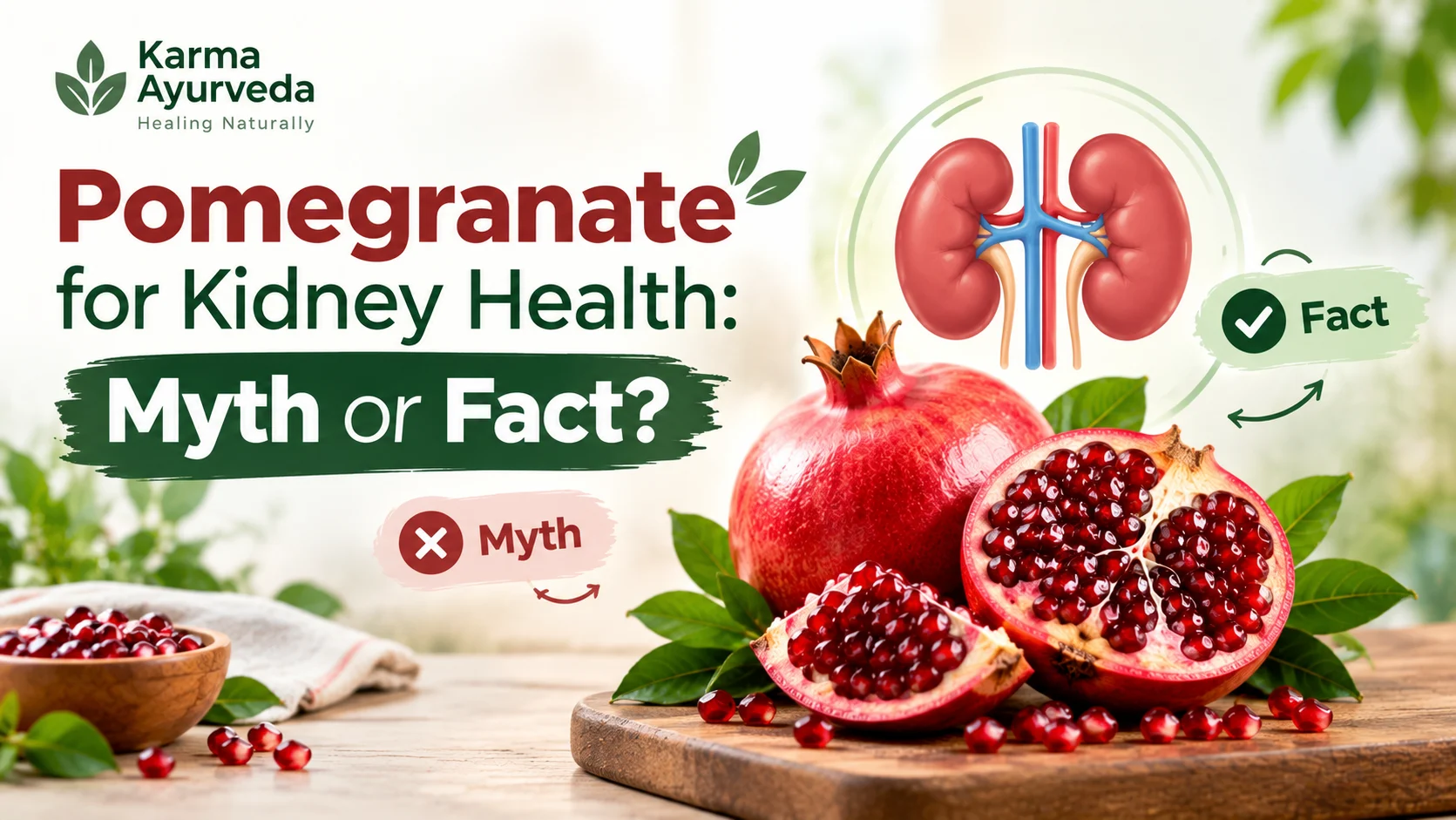

Quick answer, no fluff: pomegranate is genuinely helpful for most people's renal health, but if you already have advanced kidney disease, you can't just eat it like there's no tomorrow. It's fact, not myth; with an asterisk.
Let's talk about pomegranate and kidneys, minus the WhatsApp-forward energy.
What's Actually Going On With These Organs?
Your renal system; two unglamorous, bean-shaped organs tucked away doing the least appreciated job in your body; spends all day filtering junk out of your blood. Nobody sends them flowers. Nobody even thinks about them until something goes wrong. And when things do go sideways (diabetes, high blood pressure, one too many decades of eating instant noodles at 1 AM), oxidative stress piles up and inflammation moves in like an unwanted roommate who never pays rent.
This is where pomegranate actually earns its reputation. It's stacked with antioxidants; a compound called punicalagin does a lot of the heavy lifting, along with polyphenols and anthocyanins, which is also why the seeds look like tiny rubies instead of, I don't know, beige mush. Some research even puts its antioxidant capacity above green tea and red wine, which is a wild flex for a fruit most people avoid because peeling it feels like defusing a bomb.
So, Is Pomegranate Good for Kidney Patients?
Here's where the internet usually loses its mind. Half the articles scream "MIRACLE CURE," the other half scream "STAY AWAY," and somewhere in between is the actual, boring, sensible answer.
There's a 2010 study; people usually call it the Kristal dialysis study; that followed patients undergoing hemodialysis. The people who drank pomegranate juice showed less inflammation and noticeably less damage from oxidative stress. That matters a lot, because dialysis patients don't usually die from kidney failure itself; they die from heart-related complications or infections, and this same group of patients showed better blood pressure numbers and cholesterol profiles too.
Great news, right? Except; and this is the part every enthusiastic wellness account conveniently skips; pomegranate juice has a decent amount of potassium in it. And potassium overload is a real problem if you're managing chronic kidney disease on a restricted diet. So no, this isn't "drink a liter a day, cancel your dialysis appointment." It's more like "have a small glass, get your potassium checked, don't go rogue." Much less exciting. Much more responsible.
The Actual Science (I Promise This Won't Feel Like Homework)
I know, I know, "studies show" is the most overused phrase on the internet. But bear with me because a couple of these are genuinely worth knowing.
-
Oxidative stress gets worse as kidney function declines. A study comparing people at different stages of chronic kidney disease found that oxidative markers kept climbing while antioxidant enzyme levels kept dropping, and the sickest patients had it the worst. Makes sense, honestly. The harder your filtration system struggles, the more backup it needs.
-
Diet matters more than we give it credit for. A massive cohort study out of Iran, tracking close to ten thousand adults, found a real link between how many antioxidant-rich foods people ate and how well their kidneys held up over time. Not proof pomegranate alone fixes everything, but it's a strong hint that food choices aren't just noise.
-
Even animal studies back this up. Researchers looking at chemo-induced kidney damage in rats found that pomegranate flower extract had a protective effect, largely thanks to gallic acid, one of its main compounds. Not humans, sure, but it's the kind of groundwork that usually leads to bigger trials.
-
Antioxidants in general show promise for slowing CKD progression, according to a broader review of antioxidant treatments; though results were mixed depending on which antioxidant was studied.
None of this makes pomegranate a substitute for medication. But it also means my aunt wasn't just making things up to sound wise at family dinners, which, again, mildly annoying to admit.
Pomegranate vs. Everyone Else: A Comparison Table Nobody Asked For But Here It Is Anyway
|
Food/Drink |
Potassium Level |
Antioxidant Power |
Verdict |
|
Pomegranate (small portion) |
Moderate |
Very High |
Solid choice, don't binge it |
|
Pomegranate juice (no limits) |
High |
Very High |
Delicious, but your potassium levels will have opinions |
|
Banana |
High |
Low-Moderate |
Enthusiastic but exhausting in large amounts |
|
Green tea |
Low |
High |
The calm, dependable one |
|
Watermelon |
Moderate-High |
Moderate |
Fine, just don't eat the whole thing at 11 PM |
|
Apples |
Low |
Moderate |
Boring but reliable, like a good accountant |
Pomegranate is basically that one friend who's amazing at parties but needs to be reminded not to overdo it.
Where Ayurveda Come Into the Picture?
If you grew up anywhere near a South Asian household, you've heard some version of my aunt's speech. And to be fair, that tradition isn't baseless. Ayurvedic kidney treatment has leaned on pomegranate, called Anar or Dadima in classical texts, for generations, usually as part of a bigger formula rather than a standalone fix.
In most kidney disease Ayurvedic treatment approaches, pomegranate shows up alongside herbs like Punarnava, Gokshura, and Varun, each picked for their own reasons; some help with fluid balance, some support urinary flow, some are used specifically for stone-related issues.
A few names that keep coming up when people search for the best herbs for kidney disease:
-
Punarnava – often used to ease fluid retention and support urinary flow
-
Gokshura – commonly used for general urinary tract support
-
Varun – traditionally associated with managing stones
-
Pomegranate peel and seed extracts – valued mostly for their antioxidant punch
None of this is meant to replace a doctor. It's meant to work alongside one, ideally with someone who actually knows what they're doing rather than a random shop owner who insists everything cures everything.
What About "Natural Treatment" in General?
Every second reel these days promises some natural treatment for kidney diseases that will apparently fix you overnight for the price of a $40 supplement. It won't. What actually helps; staying properly hydrated, managing blood sugar and blood pressure, cutting back on ultra-processed food, and yes, including antioxidant-rich foods like pomegranate in sensible amounts; is slow, unglamorous, and doesn't make for a satisfying before-and-after post. But it's what actually works over years, not weeks.
Pomegranate: Good for Kidneys or Not? The Real Verdict
-
If your renal function is normal, go ahead, enjoy pomegranate freely.
-
Early-stage concerns? Moderate amounts are usually fine; just get your potassium checked periodically.
-
On dialysis or dealing with advanced CKD? Be careful with the juice specifically; talk to your nephrologist before making it a habit.
-
On blood thinners, pregnant, or managing blood pressure meds? Worth a quick check with your doctor since pomegranate can interact with certain medications.
So, myth or fact? Fact, mostly. Just not the unconditional, eat-it-by-the-bucket kind of fact your family group chat wants it to be.
Key Takeaways
-
Pomegranate and kidneys genuinely get along, mostly because of the fruit's strong antioxidant profile.
-
Dialysis patients in real studies showed reduced inflammation and better cardiovascular markers with controlled pomegranate juice intake.
-
Potassium content is the main thing to watch if you have advanced kidney disease.
-
Ayurvedic kidney treatment has used pomegranate for generations, usually paired with herbs like Punarnava and Gokshura.
-
No single food replaces actual medical treatment; think support, not substitute.
-
Moderation and a quick chat with your doctor beat blindly following any wellness trend.
📩 Ask a Kidney Expert (Free 10-Min Consultation)
FAQs
Is pomegranate good for kidney patients?
Mostly yes in moderate amounts, but if you're on dialysis or have advanced disease, check your potassium levels with your doctor first.
Is pomegranate good for kidneys or not, honestly?
Yes, generally; just don't treat the juice like water and drink it unlimited.
Can pomegranate replace kidney disease Ayurvedic treatment plans?
No, it works alongside traditional or modern treatment, not instead of it.
What are the best herbs for kidney disease people usually pair with pomegranate?
Punarnava, Gokshura, and Varun show up most often in traditional formulations.
Is there a natural treatment for kidney diseases that actually holds up?
Steady hydration, blood sugar control, and antioxidant-rich foods help over the long run, but none of it replaces a doctor's care.
Disclaimer
This article is for general information only and isn't medical advice. Pomegranate and Ayurvedic herbs can interact with certain medications or health conditions. Please talk to a qualified doctor or nephrologist before changing your diet, especially if you already have a kidney-related condition.