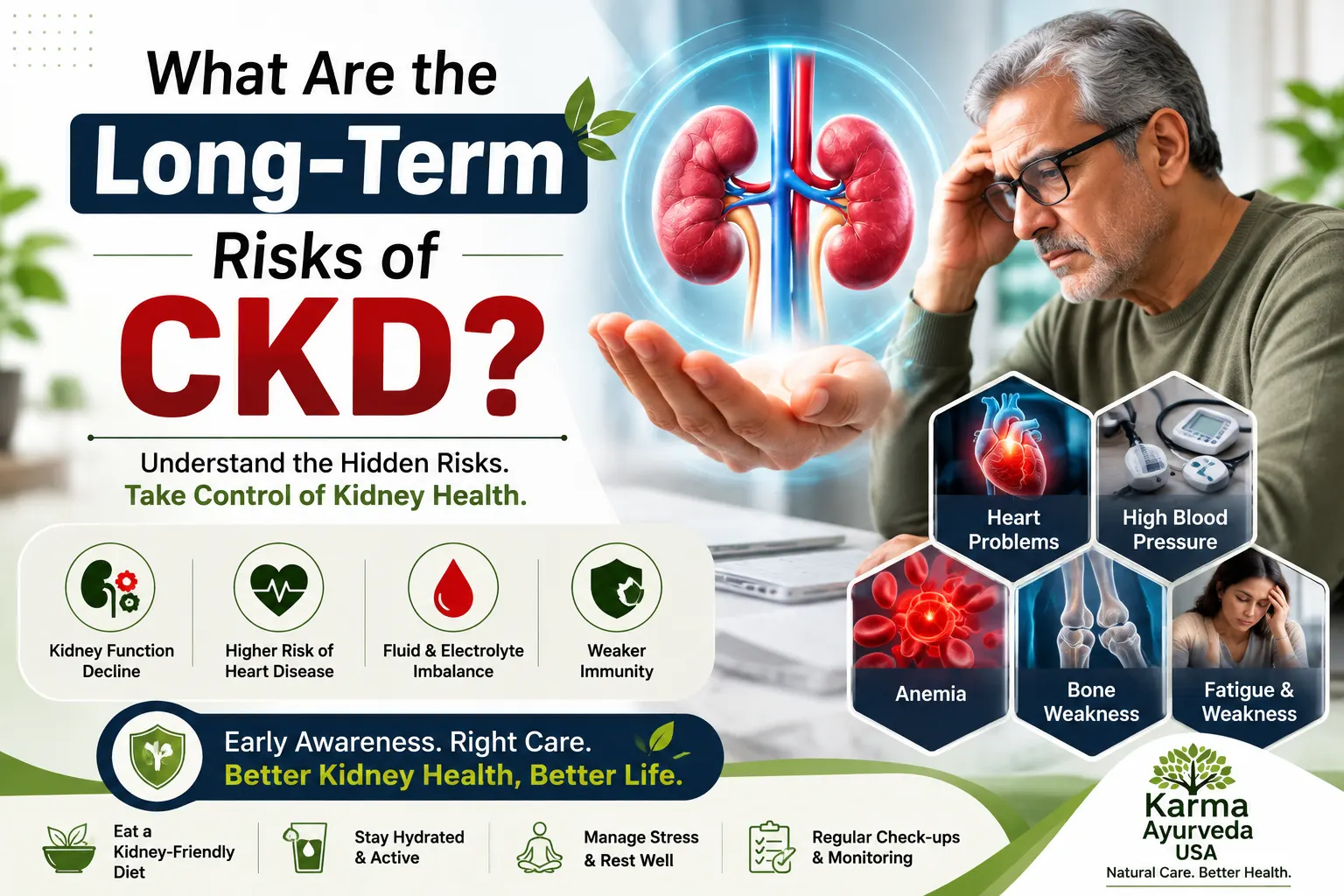

Short answer: if chronic kidney disease goes unmanaged for years, it slowly wears down your heart, your bones, your blood, and eventually your kidneys themselves, sometimes all the way to kidney failure. That's the blunt version. Now let's actually talk about it properly.
I'll be honest, I used to think "kidney disease" was one of those things that only happened to other people, older relatives, that one uncle who "doesn't really watch his sugar." Turns out it's a lot more common, a lot quieter, and honestly a lot more relevant to regular people than most of us assume. So, grab your chai (or coffee, no judgment) and let's get into it.
First, What's Actually Going On In There
Your kidneys are basically two fist-sized filtration plants working around the clock, cleaning your blood, balancing your fluids, and quietly doing a hundred jobs you never think about until they stop. Chronic kidney disease means that filtering job starts slipping, not overnight like a sudden case of renal failure, but gradually, over years.
And here's the annoying part: it barely announces itself. You could be down to 40% kidney function and still feel completely fine, still be out there eating your samosas and complaining about the weather like nothing's wrong. That's the whole reason CKD gets called a "silent" condition. It doesn't shout. It just... quietly builds.
So What Happens If It's Left Alone
This is really the heart of the question everyone's actually asking. Left unchecked, CKD doesn't just sit still, it starts pulling other parts of your body into the mess with it.
-
Heart trouble, first and worst. This is genuinely the big one. Studies published in places like Nature Communications and Cardiovascular Diabetology have found that people with CKD carry a much steeper risk of heart disease, stroke, and even sudden cardiac events compared to people with healthy kidney function. One paper looking at UK Biobank data even linked early-stage CKD to a noticeably higher risk of sudden cardiac death, which honestly was more alarming to read about than I expected.
-
Weaker bones over time. Kidneys help manage your calcium and phosphorus levels. When they fall behind, your bones quietly pay the price.
-
Constant, unexplained tiredness. Kidneys produce a hormone that tells your body to make red blood cells. Less of that hormone means anemia, which means that "I'm just tired all the time" feeling that people brush off way too easily.
-
Swelling and blood pressure spikes. Fluid and salt balance goes sideways, and suddenly your ankles or your face look puffier than usual for no obvious reason.
-
Eventually, kidney failure. If none of this gets managed, CKD can progress to the point where dialysis or a transplant isn't optional anymore, it's necessary.
A modeling study built on data from the SHARP trial (that's the Study of Heart and Renal Protection, a fairly large one) tracked people through worsening CKD stages and found cardiovascular risk climbing right alongside kidney decline. Basically, the two problems move together, hand in hand, whether you want the company or not.
Why Does Nobody Catch This Earlier?
Mostly because CKD gives so few warning signs early on, and doctors can only act on what shows up in tests. This is exactly why a routine blood or urine test matters more than people give it credit for, and why actually seeing a kidney disease doctor (a nephrologist, if you want the proper term) when something looks slightly off can change everything. Catching this in stage 1 or 2 is a completely different situation than catching it in stage 4, when options start narrowing fast.
Alright, But What Can You Actually Do About It
Here's the part that should make you feel a bit better: CKD isn't automatically a death sentence for your kidneys. CKD treatment has genuinely come a long way. Depending on how advanced things are, it can involve managing blood pressure, keeping blood sugar in check (diabetes and CKD show up together far too often), adjusting your diet, and using medications specifically built to slow kidney decline.
For people looking into natural kidney treatment, it's worth remembering that "natural" doesn't automatically mean safe or suitable for everyone with CKD. Any supplements, herbs, or alternative approaches should be discussed with a healthcare professional, especially because kidney disease can change how your body handles certain substances.
A quick way to picture where you stand:
|
What You're Doing |
What Your Kidneys Would Probably Say |
|
Ignoring symptoms for years |
"Guess I'll just quietly clock out then." |
|
Getting regular checkups |
"Oh, someone's actually paying attention. Nice." |
|
Managing blood pressure & sugar |
"Alright, I can work with this." |
|
Catching it early |
"We got this one in time. Good job, honestly." |
Living With It, Long Term
Managing chronic kidney disease isn't about doing one dramatic thing right; it's about doing a bunch of boring things consistently. Drinking enough water, cutting back on excess salt, moving your body a little each day, actually showing up to follow-up appointments instead of "I'll go next month." None of it is exciting. All of it works better than any shortcut you'll find online.
Some people also explore the best Ayurvedic herbs for kidneys as part of their approach to kidney wellness. If you're considering herbs or Ayurvedic products, talk to your nephrologist or healthcare provider first rather than adding something on your own. With CKD, even seemingly harmless supplements can sometimes interfere with medications or affect electrolyte and kidney function.
Key Takeaways
-
CKD develops slowly and often silently, so regular screening matters more than symptoms alone.
-
Long-term risks include heart disease, bone weakening, anemia, and eventually kidney failure.
-
Cardiovascular disease is one of the most significant threats linked to CKD progression, according to multiple published studies.
-
Early detection and consistent management dramatically improve long-term outcomes.
-
A nephrologist can help tailor a treatment plan specific to your stage and health profile.
-
If considering Ayurvedic treatment for kidneys, discuss it with your healthcare provider so it can be evaluated alongside your existing CKD treatment.
📩 Ask a Kidney Expert (Free 10-Min Consultation)
FAQs
Is chronic kidney disease reversible?
In most cases CKD can't be fully reversed, but its progression can often be slowed down significantly with the right care.
What is the biggest long-term risk of CKD?
Heart disease and cardiovascular complications are generally considered the most serious long-term risk of CKD.
Can CKD lead to kidney failure?
Yes, if left unmanaged, CKD can progress over time into kidney failure, which may eventually require dialysis or a transplant.
When should I see a kidney disease doctor?
It's smart to see a nephrologist as soon as blood or urine tests suggest reduced kidney function, rather than waiting for symptoms.
Does diet really make a difference in CKD?
Yes, watching salt, protein, and fluid intake can genuinely slow down kidney damage over the long run.
Disclaimer: This blog is for general informational purposes only and isn't a substitute for professional medical advice, diagnosis, or treatment. Always consult a qualified kidney disease doctor or healthcare provider regarding your specific condition before making any health-related decisions.