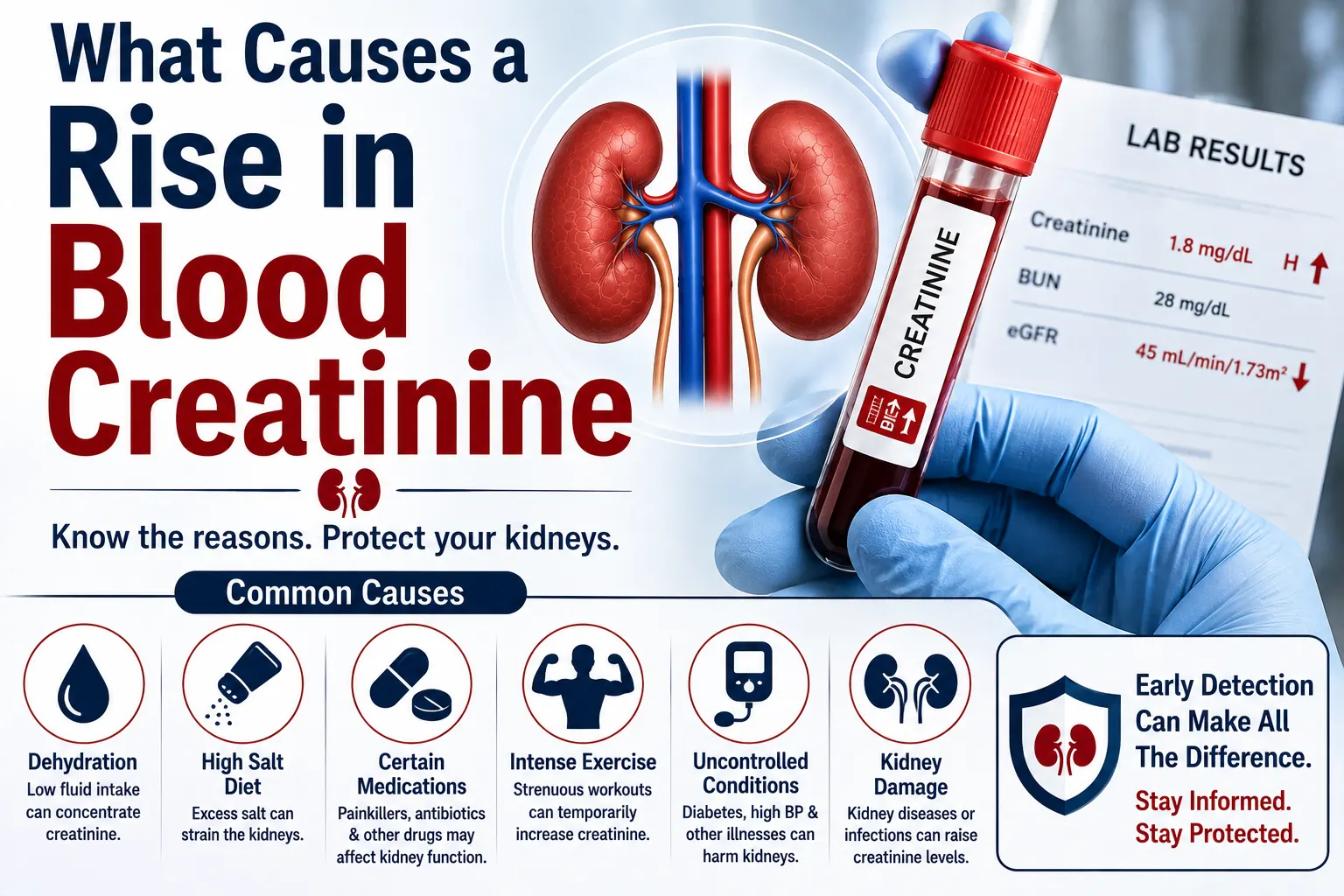

A rise in blood creatinine usually means your kidneys are working harder than they'd like to filter waste, and the number climbing on your lab report is basically your body waving a little red flag. If that flag has already turned into something bigger, like a creatinine 4.2 treatment plan being discussed with your doctor, don't panic just yet; let's actually understand what's going on before we spiral into WebMD-induced despair.
So, Why Is Creatinine Even a Thing?
Creatinine is a waste product made by your muscles, basically the leftover crumbs from your body constantly breaking down and rebuilding muscle tissue. Normally, your kidneys filter it out like a bouncer at a club; no trouble, no fuss, out you go. But when kidney function starts slowing down, creatinine doesn't get shown the door fast enough, and it starts hanging around in your bloodstream longer than it should.
That build-up is what shows up as a higher number on your blood test. And depending on how high that number climbs, doctors start talking about different stages of care; anywhere from lifestyle tweaks to a full-blown creatinine 4.2 treatment conversation, and in more serious cases, even a creatinine 5 treatment or creatinine 8 treatment discussion.
The Usual Suspects Behind High Creatinine
Let's talk about the high creatinine causes that actually show up most often in real life:
-
Dehydration – Not drinking enough water is basically asking your kidneys to filter syrup instead of juice.
-
Chronic kidney disease (CKD) – The long, slow decline in renal function over months or years.
-
High blood pressure or diabetes – The two biggest troublemakers damaging kidney tissue over time.
-
Certain medications – NSAIDs, some antibiotics, and even a few supplements can strain the kidneys.
-
High-intensity workouts or excess protein intake – More muscle breakdown means more creatinine floating around temporarily.
-
Urinary tract blockages – Kidney stones or an enlarged prostate can back things up, literally.
A study published in the American Journal of Kidney Diseases found that even short-term dehydration can temporarily spike creatinine levels, which is a good reminder that not every high reading means a disaster; sometimes it just means you forgot your water bottle again.
When the Numbers Start Climbing: What's the Difference?
Here's a lighthearted (but genuinely useful) way to look at how treatment approaches usually shift as creatinine levels rise:
|
Creatinine Level |
What It Usually Means |
Typical Approach |
|
Around 1.2–2 |
Kidneys grumbling a bit |
Hydration, diet tweaks, monitoring |
|
Around 4.2 |
Kidneys seriously overworked |
Creatinine 4.2 treatment: medication, diet control, regular monitoring |
|
Around 5 |
Function significantly reduced |
Creatinine 5 treatment; closer supervision, possible medication changes |
|
Around 8 |
Advanced kidney trouble |
Creatinine 8 treatment; often involves dialysis planning |
Think of it like your car's engine light. A flicker means check the oil. A steady glow means visit the mechanic. A full dashboard meltdown means you're not driving anywhere until someone qualified takes a look; which, in kidney terms, means booking time with a kidney disease doctor, not a Google search at 2 a.m.
Can You Actually Bring Creatinine Down?
Good news: in many early and moderate cases, yes. Research published in the Clinical Journal of the American Society of Nephrology showed that dietary protein moderation and better blood pressure control meaningfully slowed the progression of kidney damage in patients with early-stage CKD. So this isn't necessarily a one-way street.
Common steps doctors often recommend include:
-
Cutting back on excess salt and processed food
-
Managing blood sugar and blood pressure consistently
-
Staying well hydrated (but not overdoing it either; balance, people)
-
Avoiding unnecessary painkillers
-
Following up regularly instead of ignoring the lab report in a drawer
The Bottom Line
A rising creatinine level isn't something to shrug off, but it's also not automatically a five-alarm emergency. It's information; your body's way of saying "hey, check on me." Whether that means simple lifestyle changes or a structured creatinine 4.2 treatment plan depends entirely on your specific case, which is exactly why a real conversation with a doctor beats internet spiraling every single time.
Key Takeaways
· When kidneys are unable to remove waste, creatinine levels increase significantly
· Too little hydration, stress, and medications can cause this increase
· Approaches to the treatment can be quite different depending on the circumstances and severity of the increase
· Changing the diet and lifestyle can help in many cases if done at an early stage
· The optimal option is to see a specialist regularly, keeping kidney health under permanent control
Frequently Asked Questions
What is considered dangerous in terms of creatinine levels?
In most cases, values above 4-5 mg/dL are considered to require urgent medical assistance.
Can the creatinine levels be brought back to normal with the help of nature only?
At initial stages, yes; drinking more water, changing the diet, and managing blood pressure will help.
Does working out increase creatinine levels?
Yes, due to muscle breakdown, high-intensity workouts increase creatinine temporarily.
When to consult a kidney doctor?
If the tests show high creatinine levels regularly, do it at once; do not wait for the symptoms to worsen.
Is it always necessary to apply dialysis for high creatinine levels?
Usually, it is required only at serious stages, in case of the level of creatinine equal to 8.
Disclaimer: This blog is for general informational purposes only and isn't medical advice. Creatinine levels and treatment needs vary greatly by individual health history. Please consult a qualified nephrologist or physician before making any decisions about diagnosis or treatment.