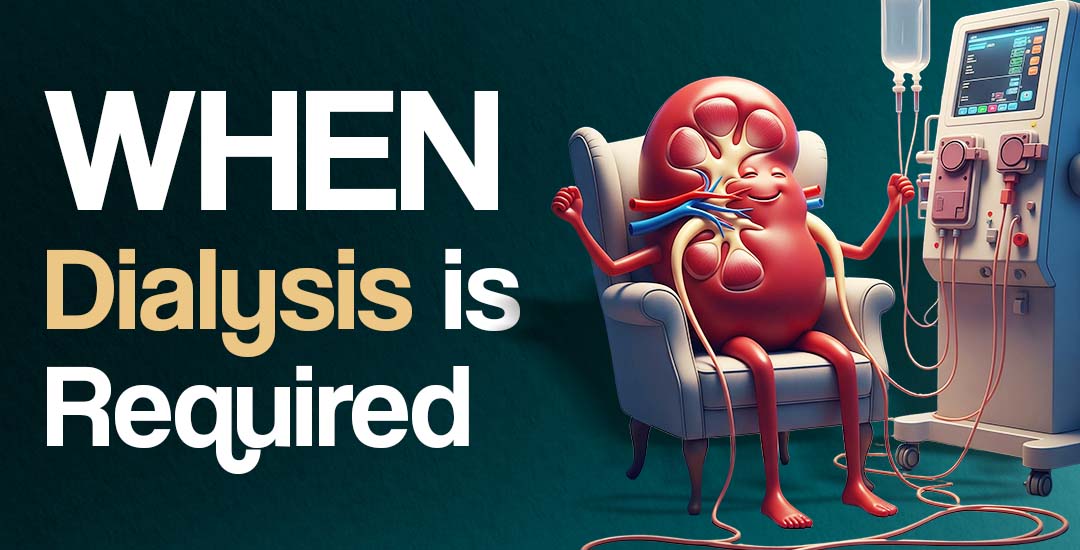

If you’re reading this, you’re likely wondering about the "D-word": Dialysis. It sounds scary, like something out of a sci-fi movie where the robots finally take over, but it’s actually just a very hard-working medical roommate that helps you stay on this side of the dirt. Let’s break down the mystery of when dialysis is required.
Have any renal issues? Fill in the details and get an expert advice.
How Do Doctors Decide Dialysis
Doctors don't just throw a dart at a calendar to decide when you start. They look at a "Triple Threat" of factors:
-
Laboratory Values: They check your GFR, but also your levels of potassium (very important for your heart), phosphorus, and urea.
-
Clinical Symptoms: Are you confused? Are you incredibly itchy? Is there fluid in your lungs? These are "Start Now" signals.
-
Future Planning: If they see your numbers trending downward, they’ll want to get your "access" ready. For hemodialysis, this usually means a small surgery on your arm (a fistula) that needs a few months to heal before it can be used. Doctors want it ready before the emergency happens, because nobody likes an emergency.
Signs You Need Dialysis
Your body isn't exactly subtle when its filtration system is failing. It doesn’t just send a polite email; it screams. However, some of these signs are sneaky and can feel like you’re just having a "bad week." Here are the pointers to watch out for:
-
The Puff Factor: You wake up, and your ankles look like C-cell batteries, or your eyes are so puffy you look like you’ve been crying over a lost sourdough starter. This is fluid retention.
-
Extreme Fatigue: I’m not talking "I stayed up too late watching cat videos" tired. I’m talking "I just brushed my teeth, and now I need a three-hour nap" tired.
-
The Metal Mouth: Everything you eat starts to taste like you’re chewing on a handful of loose change. This is due to urea buildup in your blood.
-
Shortness of Breath: You feel winded just walking to the fridge. This happens because fluid is backing up into your lungs.
-
Nausea and Lack of Appetite: The thought of your favorite pizza makes you want to hide under the covers.
-
The Itch: It’s an itch that feels like it’s coming from inside your bones. Scratching doesn’t help because the "itch" is actually waste products irritating your nerves.
Kidney Failure Dialysis Requirement
So, why can't we just take a pill and call it a day? Well, kidney failure is a bit more complicated than a standard infection. When we talk about the dialysis requirement, we are looking at End-Stage Renal Disease (ESRD).
Stages When Dialysis is Required
Doctors love numbers. They use something called the Glomerular Filtration Rate (GFR) to figure out how well your kidneys are doing. Think of GFR like a percentage grade on a math test.
-
Stage 1 and 2: Your kidneys are basically honor students. Maybe a little distracted, but they’re doing fine.
-
Stage 3: This is the "Yellow Light." You need to start paying attention, eating better, and listening to your doctor.
-
Stage 4: This is the "Pre-Gaming" for dialysis. Your GFR is between 15 and 29. Your doctor will start talking about "options" and "access points." It’s getting serious.
-
Stage 5: This is kidney failure (GFR below 15). This is the stage where dialysis becomes a requirement for survival. Your kidneys are now essentially on permanent vacation.
At What Stage Dialysis is Needed
As mentioned, Stage 5 is the official "Welcome to Dialysis" zone. However, it’s not just about the number on a lab report. A doctor isn't going to look at a GFR of 14 and say, "Aha! Get the machine!" if you feel absolutely fantastic.
The stage is a guide, but your symptoms are the real boss. If your GFR is 12 but you’re eating well, sleeping well, and your potassium levels aren't trying to stop your heart, a doctor might wait. But if your GFR is 16 and you can’t stop vomiting and your legs look like balloons, they’ll likely start you sooner. It’s a delicate balance of math and "how do you actually feel?"
When Dialysis is Required
Think of your kidneys as the ultimate bouncers at the hottest club in town (which is your body). Their job is to kick out the troublemakers: toxins, extra fluid, and waste, while keeping the VIPs like proteins and red blood cells inside. When these bouncers get tired, or worse, fall asleep on the job, the "club" starts to get messy.
Don’t miss this read: shocking truth about: Is Dialysis Necessary for Kidney Disease
Dialysis is required when your kidneys can no longer perform their duties well enough to keep you alive. Usually, this happens when you’ve lost about 85% to 90% of your kidney function. At this point, the toxins in your blood start to pile up like unwashed dishes in a college dorm. If you don't bring in a professional cleaning crew (dialysis), things get dangerous pretty fast.
Dialysis Treatment in USA
In the United States, we have a pretty robust system for handling dialysis, though it can feel like a maze of paperwork and insurance phone calls. The good news is that the US has some of the most advanced technology and widespread access to clinics in the world.
Most people in the US receive treatment through specialized dialysis centers. These places are like high-tech spas, minus the cucumber water and the soothing whale music. You go in, get hooked up, chat with the nurses, maybe watch a movie, and then go home. The federal government (specifically Medicare) actually covers a huge portion of dialysis costs for most citizens, regardless of age, because they recognized way back in the 70s that this is life-saving stuff.
Have any renal issues? Fill in the details and get an expert advice.
Dialysis Options for US Patients
You actually have more choices than you might think. It’s not a one-size-fits-all situation.
-
In-Center Hemodialysis: You go to a clinic three times a week for about four hours. You get to know the staff, and they do all the heavy lifting.
-
Home Hemodialysis: You (and a brave family member or friend) learn how to run the machine at home. It gives you more freedom and can be done more frequently for shorter bursts, which is often easier on the heart.
-
Peritoneal Dialysis (PD): This is the "no needles" option. It uses the lining of your own abdomen to filter your blood. You can often do this while you sleep! It requires a small surgery to place a catheter, but many people love it because they don't have to spend their afternoons in a clinic.
-
Nocturnal Dialysis: Some clinics offer sessions while you sleep, which means your days stay wide open for work, hobbies, or staring at the wall in peace.
Conclusion
Kidney failure is a big, heavy life change, but it’s not the end of the book; it’s just a very dense chapter. Dialysis is a tool; a mechanical sidekick that steps in when your body needs a break. Whether you’re opting for the social vibes of an in-center clinic or the DIY spirit of home dialysis, the goal is the same: keeping you around to annoy your family and eat (some) of your favorite foods for a long time to come.
FAQ
Q: Is 4.5 creatinine need dialysis?
A: Not always; dialysis depends on symptoms and overall kidney function, not just the number.
Q: What are the signs that you need dialysis?
A: Severe fatigue, swelling, breathlessness, nausea, and confusion.
Q: Is 2.5 creatinine level need dialysis?
A: No, you can control the symptoms with diet and medicines at this stage.
Q: What are 5 indications for needing dialysis?
A: Fluid overload, high potassium, severe acidosis, toxin buildup symptoms, etc.