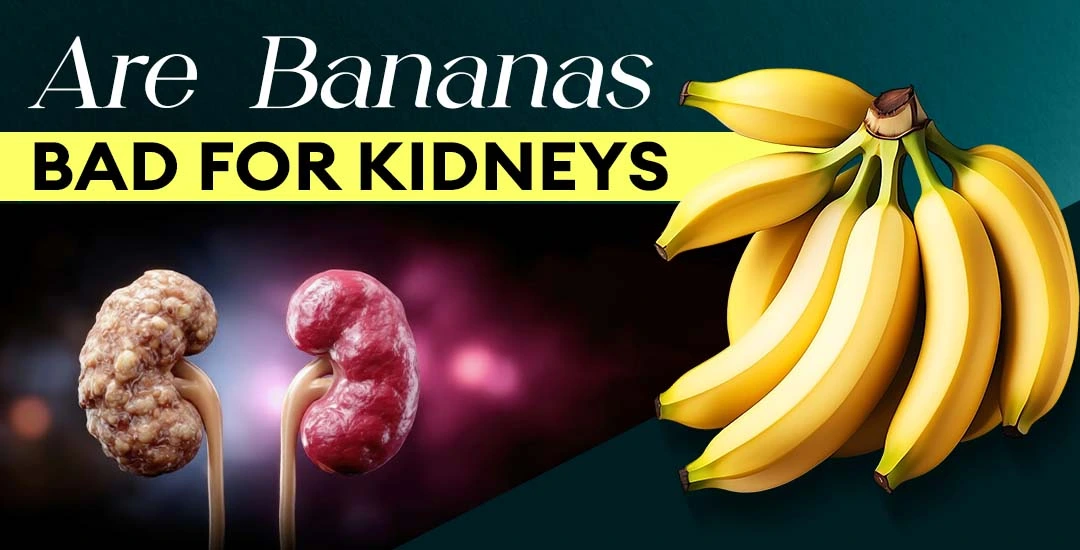

Bananas. The most loyal fruit in your kitchen. They are always there; on your breakfast plate, in your gym bag, on hospital diet charts, and sometimes even in your mom’s handbag “just in case.” But the moment someone hears the words “kidney problem,” bananas suddenly become public enemy number one.
So, let’s answer the big question honestly and calmly:
Are bananas bad for kidneys?
Short answer: Not for everyone.
Long answer: It depends on your kidney health, not on the banana.
Let’s break it down in a friendly, no-medical-jargon way.
Don’t miss this read: Is Kombucha Good for Kidneys?
Why Do Bananas Get a Bad Reputation?
Bananas are rich in potassium. And potassium is like that friend who is amazing in the right amount, but causes chaos if things get out of control.
Healthy kidneys act like smart filters. Hyperkalemia is a medical condition that occurs when your kidneys can no longer filter out excess potassium effectively. In a healthy individual, the body's kidneys are able to remove excess potassium from the blood and eliminate it through urine, therefore preventing hyperkalemia from occurring. However, when an individual has weak or damaged kidneys, this ability to filter excessive amounts of potassium will decrease, leading to hyperkalemia. Hyperkalemia could be fatal if not detected and treated properly.
So, bananas are not evil.
They just become a problem when kidneys can’t handle potassium properly.
If You Have Healthy Kidneys
Good news first. If your kidneys are healthy, bananas are absolutely safe. In fact, they are beneficial. Bananas help with:
-
Energy levels
-
Muscle function
-
Digestion
-
Heart health
-
Preventing cramps
Your kidneys know exactly what to do with the potassium from bananas. They don’t panic. They don’t complain. They simply do their job. So, if you have normal kidney function, enjoy your banana without guilt. One banana a day is not going to destroy your kidneys. That’s a myth.
Are Bananas Bad for Chronic Kidney Disease Patients?
Now this is where things change. If someone has chronic kidney disease (CKD), especially in later stages, potassium management becomes very important.
For those with early-stage kidney disease, there are generally no restrictions regarding banana consumption. However, people with early-stage kidney disease should be aware of the importance of monitoring portion sizes.
As kidney disease progresses to late stages, potassium levels tend to increase, and as a result, individuals with late-stage kidney disease may be advised to either limit or eliminate banana consumption. So, yes banana for kidney disease patients, especially in the advanced stage CKD patients, is a “No”.
That being said, if you're advised by your physician to limit or eliminate bananas, there is nothing to suggest that banana consumption caused your kidney disease; rather, it indicates that your kidney is no longer capable of efficiently metabolizing potassium.
So, blaming bananas here is like blaming water when a pipe is already broken.
Can Kidney Patients Eat Bananas Daily?
Short answer: It depends. Bananas are high in potassium, which can be problematic for late-stage CKD patients or if potassium levels are high. Some early-stage patients may eat small amounts. Always check blood reports and follow your doctor's or dietitian’s advice.
How Much Potassium Is in a Banana?
Let’s keep this simple.
One medium banana contains around 400–450 mg of potassium.
Is that high?
Yes, compared to some fruits.
Is it dangerous?
Only if your potassium levels are already high.
Many kidney patients are advised to stay within a daily potassium limit. That limit differs from person to person. This is why one kidney patient may eat half a banana safely, while another may be told to avoid it completely.
There is no one-size-fits-all rule.
Common Myths About Bananas and Kidneys
While we are here, let's debunk some common misconceptions.
Myth 1: Bananas can lead to kidney failure.
No, they do not. Kidney failure is typically the result of pre-existing medical conditions such as diabetes or hypertension, and/or due to infection or long-term damage, not from banana consumption.
Myth 2: People on dialysis or people with chronic renal disease should avoid ALL bananas.
Incorrect. People with mild chronic renal disease may continue to eat small amounts of bananas, particularly in the early stages of the disease.
Myth 3: Eating one banana will raise creatinine levels and shoot them right up.
Creatinine is related to how well the kidneys are working and not to just one particular food item.
Myth 4: Bananas are foods to avoid in kidney disease.
Not true. Many foods have potassium. Bananas just get the spotlight because they are famous.
What Matters More Than Bananas
Here’s the truth most people miss. For kidney health, what matters more is:
-
Overall diet
-
Salt intake
-
Blood pressure
-
Blood sugar control
-
Hydration
-
Lifestyle habits
If someone eats junk food all day, ignores doctor advice, skips medicines, and then worries about one banana, well, the banana is not the real problem here.
Food works as a team. No single fruit can make or break your kidneys overnight.
Can Kidney Patients Eat Bananas Safely?
In many cases, yes, but with care. Some common approaches doctors use:
-
Eating half a banana instead of a whole one
-
Eating bananas less frequently
-
Pairing potassium-rich foods with low-potassium meals
-
Monitoring blood potassium levels regularly
The keyword is balance, not fear. And always remember, what works for one kidney patient may not work for another.
What If You Love Bananas?
If you love bananas and have kidney issues, don’t panic. There are options.
-
Talk to your doctor or diet expert
-
Get your potassium levels checked
-
Adjust portion size instead of fully cutting it out
-
Focus on improving kidney health overall
Food should not feel like punishment. It should feel manageable and realistic.
A Gentle Reminder for Everyone Reading This
Google is great. Social media is entertaining. But neither knows your lab reports. Before declaring any food as “good” or “bad,” always look at:
-
Your kidney stage
-
Your blood reports
-
Your doctor’s advice
Bananas are not villains.
They are just misunderstood.
Final Thoughts: So, Are Bananas Bad for Kidneys or Good?
Let’s wrap this up simply.
-
Healthy kidneys: They are safe and nutritious
-
Early kidney disease: You must eat bananas in moderation.
-
Advanced kidney disease: Completely avoid bananas or ask your doctor.
It’s not about fear. It’s about awareness. Your kidneys don’t need you to be scared of fruit. They need you to be informed, consistent, and kind to your body. Potassium-rich foods for kidney disease patients surely need surveillance from a long-term perspective.
FAQ
What foods are forbidden for kidneys?
High-salt, packaged foods, excess protein, fried items, cola drinks, and high-potassium foods.
Why can't kidney patients eat bananas?
Bananas are high in potassium, which weak kidneys can’t filter properly.
Is banana good for kidney creatinine?
No. If creatinine is high, bananas are usually avoided due to potassium.
Is cooked banana good for kidney patients?
Cooking slightly reduces potassium, but it’s still not safe unless a doctor allows it.
Is tomato bad for kidney patients?
Tomatoes are high in potassium; small amounts may be okay, but not in advanced kidney disease.