
Decoding the Early Signs of Poor Kidney Function
Alright, let’s talk kidneys. Those two quiet, bean-shaped overachievers sitting in your lower back, doing their job 24/7 without asking for applause. Filtering blood, removing waste, balancing fluids, managing minerals, helping control blood pressure; basically, running a full-time cleanup and quality-control department inside your body.
The problem? Kidneys are polite. They don’t complain loudly. When kidney function starts going downhill, the signs are often subtle, confusing, and easy to ignore. So, let’s break down the symptoms of poor kidney function in adults in very simple, very human language. No medical drama, no scary charts. Just real signs your body may show when kidney function isn’t at its best.
Have a kidney concern? Fill the form and speak with our doctor to get the right guidance for kidney care.
What are the Early Signs of Poor Kidney Function?
Now, how do you know if your kidney function is poor? Simple, just check for these symptoms:
Constant Tiredness
When kidneys don’t work well, waste products build up in the blood. This makes you feel sluggish, heavy, and low on energy, like your body is running on low battery mode. On top of that, weak kidneys may produce less of a hormone that helps make red blood cells. Fewer red blood cells mean less oxygen. Less oxygen means you feel tired doing even small things.
If climbing stairs feels like climbing a mountain and your bed feels more attractive than life itself, it might be more than just laziness. So, the next time someone asks, “Can poor kidney function cause fatigue?”, just nod your head yes.
Changes in Urination (Your Bathroom Habits Are Telling a Story)
Your kidneys and your urine are best friends. If something’s wrong with one, the other will snitch.
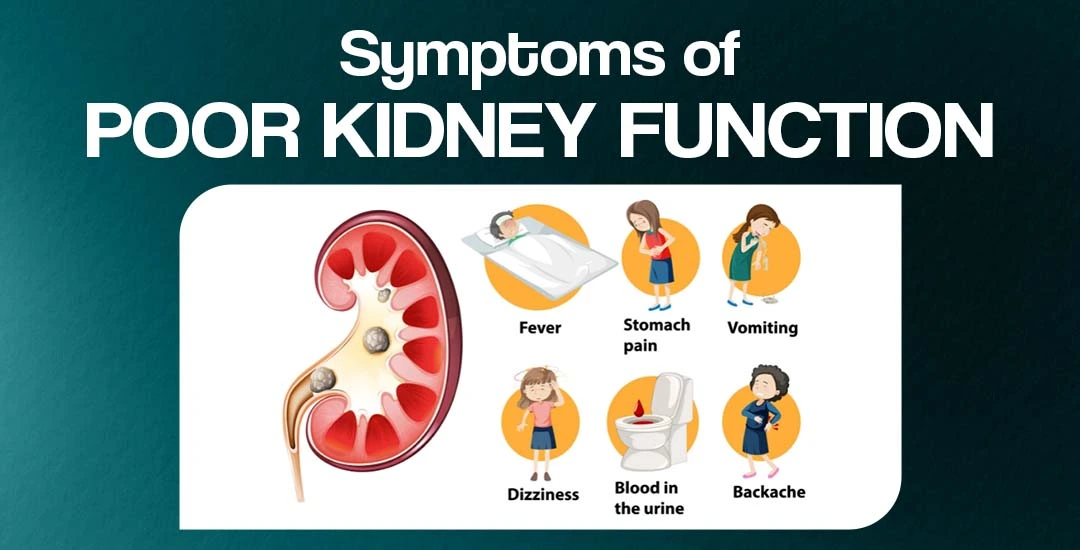
You might notice you’re urinating more often, especially at night. Or the opposite; you’re going less, even though you’re drinking enough water. Some people notice their urine looks foamy, bubbly, darker than usual, or has a strange smell.
Foam in urine often means protein is leaking; something kidneys are supposed to stop, not allow. Blood in urine, even tiny amounts, is another red flag. If your urine suddenly looks like it’s auditioning for a horror movie, don’t ignore it.
Swelling That Makes You Feel Puffy and Uncomfortable
Ever wondered about this: “Does poor kidney function cause swelling?” The answer is yes, it does. When kidneys don’t filter properly, extra fluid and sodium stay in the body. This fluid often settles in the feet, ankles, legs, hands, and even around the eyes. You may feel tightness, heaviness, or puffiness that doesn’t go away easily.
If your body starts looking like it’s storing water for a drought, your kidneys may be struggling to let go.
Loss of Appetite and Weird Food Feelings
Food is supposed to be enjoyable. When kidney function declines, appetite often declines with it.
Waste buildup in the blood can cause nausea, a metallic taste in the mouth, or a general “meh” feeling toward food. Some people say everything tastes odd. Others feel full very quickly. You may start avoiding meals without realizing why.
If your favorite food suddenly feels like a chore instead of a treat, your kidneys might be part of the problem.
Have a kidney concern? Fill the form and speak with our doctor to get the right guidance for kidney care.
Nausea, Vomiting, or an Upset Stomach for No Clear Reason
No food poisoning. No stomach bug. Still feeling queasy.
Poor kidney function can cause toxins to accumulate, irritating the digestive system. This can lead to nausea, vomiting, or frequent stomach discomfort. Some people feel sick in the morning, others throughout the day.
If your stomach is constantly protesting and there’s no clear explanation, it’s worth paying attention.
Dry Skin and Uncomfortable Itching
Skin problems don’t always start on the skin.
Healthy kidneys help balance minerals and nutrients. When they struggle, this balance goes off track. The result? Dry skin, itching, and an uncomfortable crawling sensation, even if you’re using moisturizers regularly.
This itching can feel deep, not like a mosquito bite, and scratching doesn’t bring relief. If your skin feels like it’s permanently unhappy, your kidneys may be behind the scenes, causing chaos.
Trouble Sleeping (Even When You’re Exhausted)
This one’s cruel. You’re tired all day but wide awake at night.
Poor kidney function can disrupt sleep in several ways. Toxins in the blood may affect brain signals. Fluid buildup can cause discomfort. Frequent nighttime urination doesn’t help either.
If your sleep schedule looks like a confused owl’s routine, kidneys may be part of the reason.
Muscle Cramps and Body Aches
Random leg cramps at night. Sudden muscle tightening while resting. Aching joints without a clear cause.
Kidneys help regulate electrolytes like calcium, potassium, and phosphorus. When these levels go out of balance, muscles get irritated. Cramps and aches show up uninvited.
If your muscles are acting dramatically for no obvious reason, your kidneys may be sending distress signals.
Shortness of Breath That Feels Strange
If you feel breathless even without heavy activity, don’t ignore it.
Fluid accumulation in the body can occur in the lungs, creating discomfort during breathing. Low levels of red blood cells can restrict oxygen delivery and create shortness of breath more quickly than previously experienced.) If talking, walking, or climbing stairs suddenly becomes more difficult than normal, it should be investigated further.
Brain Fog and Trouble Concentrating
Can’t focus. Forgetting small things. Feeling mentally slow.
When toxins build up in the blood, they don’t just affect the body; they mess with the brain too. You may feel confused, foggy, or unable to concentrate.
If your brain feels like it’s running through mud, your kidneys might be part of the story.
High Blood Pressure That’s Hard to Control
This one’s sneaky.
Kidneys help regulate blood pressure. When they’re damaged, blood pressure often rises. High blood pressure can damage kidneys further, creating a nasty loop.
If your blood pressure stays high despite lifestyle changes or medication, kidney function should be checked.
What Happens when Kidney Function Declines?
A persistent decline in renal function causes waste and extra fluid start building up in the body. You may feel tired, swollen, nauseous, or notice changes in urination. Blood pressure can rise, and overall health slowly takes a hit if kidneys aren’t supported in time.
Here’s the tricky part: kidney disease often stays quiet for a long time. Many symptoms show up only when damage has progressed.
That’s why routine health check-ups, blood tests, and urine tests matter, especially if you have diabetes, high blood pressure, or a family history of kidney problems.
Your kidneys won’t scream for help. They’ll whisper. And sometimes they’ll stay silent until things get serious.
Have a kidney concern? Fill the form and speak with our doctor to get the right guidance for kidney care.
Final Thoughts
Understanding what the early signs of poor kidney function are helps you recognize the symptoms and nip the disease in the bud.
Your body is always talking to you. The trick is listening without brushing it off.
If several of these symptoms feel familiar, don’t panic, but don’t ignore them either. A simple test can give clarity, and early care can make a huge difference.
Your kidneys work hard for you every single day. The least we can do is notice when they’re asking for a little support.
FAQ
Q: What are the early signs of poor kidney function?
A: Feeling tired, swelling in the feet or face, frequent or foamy urine, and loss of appetite.
Q: How do I know if my kidney function is poor?
A: Ongoing swelling, urine changes, high BP, tiredness, and abnormal blood or urine test results.
Q: What are the first warning signs of kidney failure?
A: Extreme fatigue, swelling, nausea, breathing trouble, and very low urine output.
Q: Does kidney disease cause itchy rashes?
A: Yes, toxin buildup can make the skin dry and itchy.