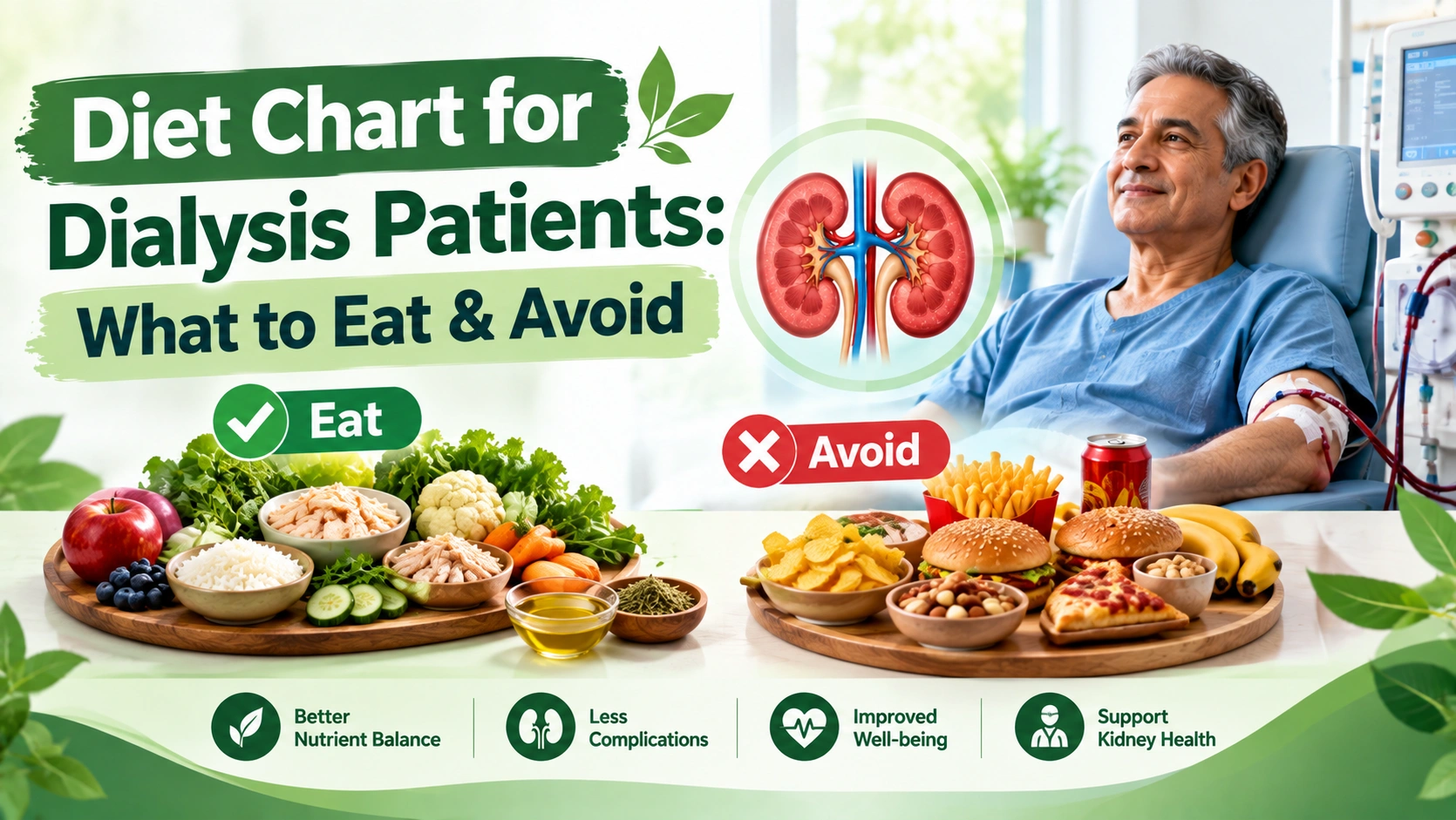

Okay, quick answer first because I know you didn't come here for a novel: dialysis patients should be eating fresh, home-cooked meals that are low in potassium, phosphorus, and salt, and going easy on fruits like bananas and oranges that most of us grew up thinking were "healthy by default." That's the gist. Now let me actually explain why, because this diet chart for dialysis patients gets weird fast and you deserve more than a one-liner.
Why Does the Diet Change So Much Once Dialysis Starts?
So, here's what's actually going on. When the kidneys aren't filtering properly, waste and extra minerals that should leave the body through urine start piling up in the blood instead. Dialysis helps clean some of that out, but this is the part people don't always get told clearly: it doesn't do the job as well as two healthy kidneys running 24 hours a day. It's more like a part-time cleanup crew coming in a few times a week versus a full-time staff that never clocks out.
That gap is exactly why food choices matter so much now. A proper kidney-friendly diet plan basically fills in for what dialysis can't fully cover between sessions. There's actual research backing this up too; not just something dietitians say to sound important. The 2020 KDOQI Clinical Practice Guideline for Nutrition in CKD, published by the National Kidney Foundation, specifically calls out sodium, potassium, phosphorus, protein, and fluids as the big five to watch. And a study published in the Journal of Renal Nutrition found that patients who actually stuck to a personalized eating plan had noticeably fewer complications and hospital visits compared to those who winged it.
And here's the twist that trips everyone up: this has almost nothing to do with regular "healthy eating" as we know it. Whole wheat, extra fruit, more dairy; all the stuff we've been told our whole lives is good for us? A lot of that needs to be dialed back here. Confusing, I know. Stay with me.
Best Foods for Kidneys (Yes, You Can Still Enjoy Food)
Let's get to the fun part. There's still a decent list of foods that are genuinely fine, and some of them are honestly pretty tasty once you stop mentally comparing them to what you used to eat.
- Egg whites – solid protein, none of the phosphorus baggage the yolk carries
- Cauliflower – basically potato's low-potassium cousin, works in almost any curry
- Red bell peppers – low potassium, loads of vitamin C, and they make the plate look less depressing
- Cabbage – cheap, crunchy, and doesn't mess with your mineral levels
- Skinless chicken breast – good quality protein, just keep it fresh and unprocessed
- Apples – one of the rare fruits that's actually low in potassium
- Garlic and onions – your new best friends for flavor when salt is off the table
- White rice and white bread – yes, actually, these are usually preferred over the "healthier" whole grain versions here, since whole grains bring more potassium and phosphorus along with them
Among the best foods for kidneys, this last point genuinely surprises people the most. We spend years being told brown rice beats white rice, and then dialysis flips the script entirely. A small study in the Clinical Journal of the American Society of Nephrology also noted that leaning more on plant-based proteins, in the right amounts, seemed to put less acid strain on the body compared to heavy red meat intake; something worth bringing up with your dietitian based on your own numbers.
Worst Foods for Kidney Patients: The "Please Don't" List
Now the part nobody likes reading. Some of the biggest offenders aren't obviously bad; they're the sneaky ones.
- Bananas, oranges, and potatoes – potassium bombs, even though they seem harmless
- Dairy in large quantities – phosphorus hides here more than people expect
- Packaged and processed foods – phosphorus additives rarely show up clearly on labels
- Pickles and salted snacks – sodium overload, plus they mess with fluid retention
- Nuts, seeds, and chocolate – tasty, sure, but a potassium and phosphorus one-two punch
- Dark colas – the phosphoric acid in these adds up faster than people realize
- Canned soups and ready-made sauces – sodium levels that are almost comically high once you check
A 2017 review in Advances in Chronic Kidney Disease pointed out something worth remembering: phosphorus from food additives gets absorbed by the body far more efficiently than the natural phosphorus in whole foods; almost fully absorbed, versus roughly 40 to 60 percent from natural sources. So that packet of instant noodles is quietly doing more damage than an actual piece of cheese would. Wild, right?
If you're making a list of the worst foods for kidney patients to keep off the kitchen shelf, honestly start with anything in a shiny packet that promises "great taste, no prep needed." That's usually where the trouble lives.
Eat This, Not That (A Slightly Funny Cheat Sheet)
|
Craving |
Skip This |
Try This Instead |
Why It Works |
|
Something crunchy |
Salted chips |
Air-popped popcorn, light salt |
Same couch-potato energy, way less sodium |
|
Fruit fix |
Banana |
Apple or a handful of berries |
Potassium goes from "warning bells" to "totally chill" |
|
Creamy comfort |
A full glass of milk |
A small portion of rice milk |
Less phosphorus, still feels a bit indulgent |
|
Takeout curry |
Restaurant order |
Home-cooked, fresh spices |
You control the salt shaker, not some unknown chef |
|
Fizzy drink craving |
Dark cola |
Sparkling water with a squeeze of lemon |
Skips the sneaky phosphoric acid entirely |
A Sample Diet Chart for Dialysis Patients
Every person's numbers are different; dialysis schedule, weight, lab reports, all of it changes the picture. But here's a rough diet chart for dialysis patients just so you can see what a day roughly looks like in structure, not as a strict rulebook to photocopy.
- Breakfast: Two egg whites, a slice or two of white toast, a small apple
- Mid-morning: Cucumber slices with a light sprinkle of chaat masala
- Lunch: White rice, cauliflower sabzi, grilled skinless chicken or a modest portion of paneer, cabbage salad
- Evening: Puffed rice (light on the salt) with onions and a squeeze of lemon
- Dinner: One or two chapatis, red bell pepper stir-fry, a small, protein-adjusted portion of dal
- Fluids: Whatever your nephrologist has told you, and not a sip more; "just one more glass" adds up faster between sessions than you'd think
I want to be honest here; this is a rough sketch, not a prescription. Your dietitian's version, based on your actual blood work, is the one that actually matters.
So Where Does Ayurveda Come Into All This?
A lot of families dealing with kidney disease start looking sideways at other options too, and Ayurveda comes up in almost every one of those searches. And honestly, it's not surprising; Ayurvedic kidney treatment leans heavily on diet discipline, herbal formulations, and lifestyle correction, which overlaps more with modern renal nutrition advice than people expect. Eat light, eat clean, don't overload the system; turns out both worlds agree on that much.
Some of the best herbs for kidneys in Ayurveda that come up often in this space include Punarnava, Gokshura, and Varun, traditionally used to support fluid balance. If you're looking into kidney disease Ayurvedic treatment, or any kind of natural treatment for kidney disease in general, the smart way to do it- and I really can't stress this enough- is alongside your nephrologist, never instead of your prescribed dialysis. Dialysis keeps someone alive. No herb, however well-regarded, should ever be the reason a session gets skipped or delayed.
Names like Dr. Puneet Dhawan, who runs Karma Ayurveda for kidney disease treatment, come up a lot when people search for this kind of complementary, diet-first approach. If you're curious, that's fine; just make sure whatever you explore stays fully visible to your treating doctor, not something happening quietly on the side.
Key Takeaways
- A kidney-friendly diet plan on dialysis really comes down to five things: sodium, potassium, phosphorus, protein, and fluids
- Fresh, home-cooked meals almost always beat packaged food, mostly because of hidden phosphorus additives
- Small swaps: apple instead of banana, cauliflower instead of potato; keep meals enjoyable without wrecking your numbers
- Any Ayurvedic or complementary approach should be discussed openly with your nephrologist, never used to replace dialysis
- A dietitian who's actually seen your lab reports will always beat a generic chart on the internet; yes, including this one
📩 Ask a Kidney Expert (Free 10-Min Consultation)
FAQs
Can dialysis patients eat fruit at all?
Yes, low-potassium ones like apples and berries in small portions are usually fine.
Why does phosphorus get talked about so much for dialysis patients?
Because too much of it weakens bones and stiffens blood vessels over time, and dialysis alone can't remove enough of it.
Does "no added salt" on a package mean it's low sodium?
Not really; a lot of packaged foods sneak sodium in through preservatives even when the label looks salt-free.
Can Ayurveda be used instead of dialysis?
No; dialysis is life-sustaining, so any Ayurvedic or natural approach should only be added alongside it, never used to replace it.
How much water should a dialysis patient drink daily?
That number is different for everyone and depends on urine output and dialysis schedule, so it really has to come from your doctor.
Disclaimer
This article is meant for general reading, not medical advice. Diets for dialysis patients are extremely individual, based on lab reports that change often. Please talk to your nephrologist or a registered dietitian before changing anything in your diet, and before trying any Ayurvedic or other complementary treatment alongside your existing care.